The Porewater Paradox

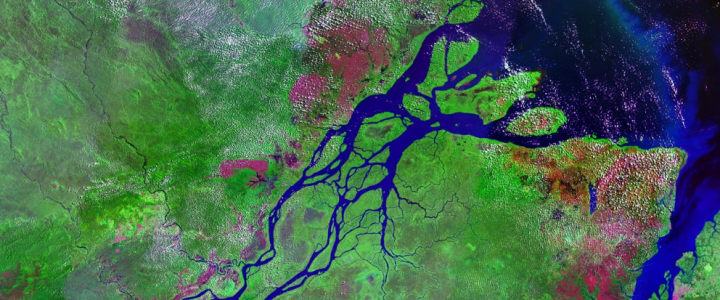
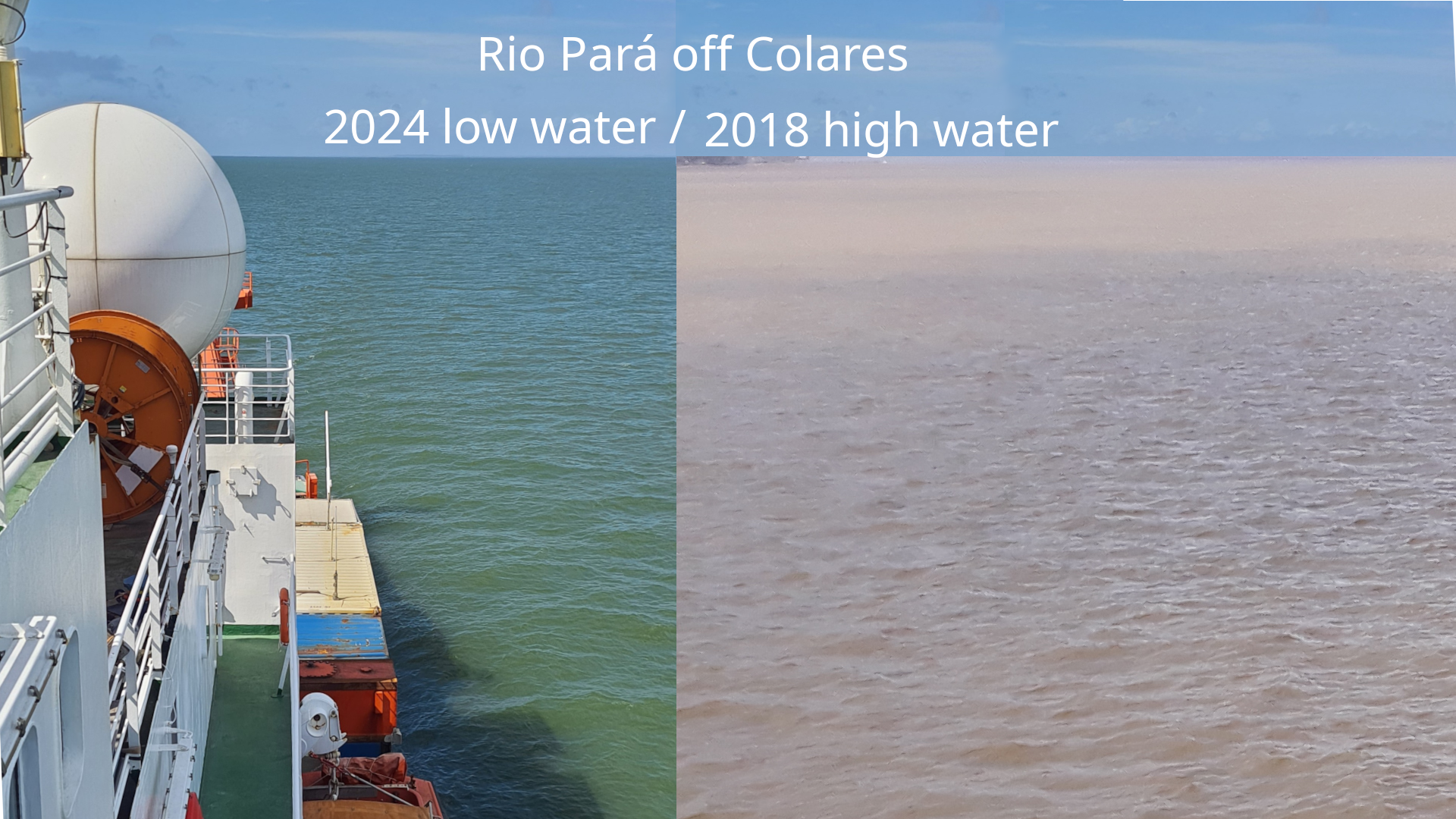
Pará River comparison showing sediment-heavy, brown water in 2018 and current plankton-rich water.

Since conducting my PhD research on the Amazon and Pará River estuary in the wet season, the river mouth, together with the mangrove belt to the south, has been an area of special interest for me. I recently participated in the land-based PROBRAL campaign to collect water from the mangroves and smaller rivers such as the Caeté (see Mud and Mosquitoes).

M206 will add to the results gleaned from research on previous wet-season cruises (M147 in 2018, and M174 in 2021) by gathering a much-needed dataset for the dry season, since the Amazon and Pará River flows vary dramatically in volume (from 120 000 m3/s to 240 000 m3/s for the Amazon; 38 000 m3/s to 9 000 m3/s for the Pará). We have not yet entered the Amazon River estuary itself on M206, but we see is a striking visual difference on the Pará today compared to its appearance in the 2018 wet season (April/May).

In addition, we have made a more extensive transect along the mangrove region in cruise M206 compared to M147 and M174, in some cases running parallel to the region where the PROBRAL samples were collected. The paradoxically higher salinity near the coast in the mangrove-belt region of M206 (as reported in earlier blogs) may reflect what we observed in the mangrove porewater collected during PROBRAL 2-3 weeks ago, which was sometimes much higher than seawater (up to 65 PSU).
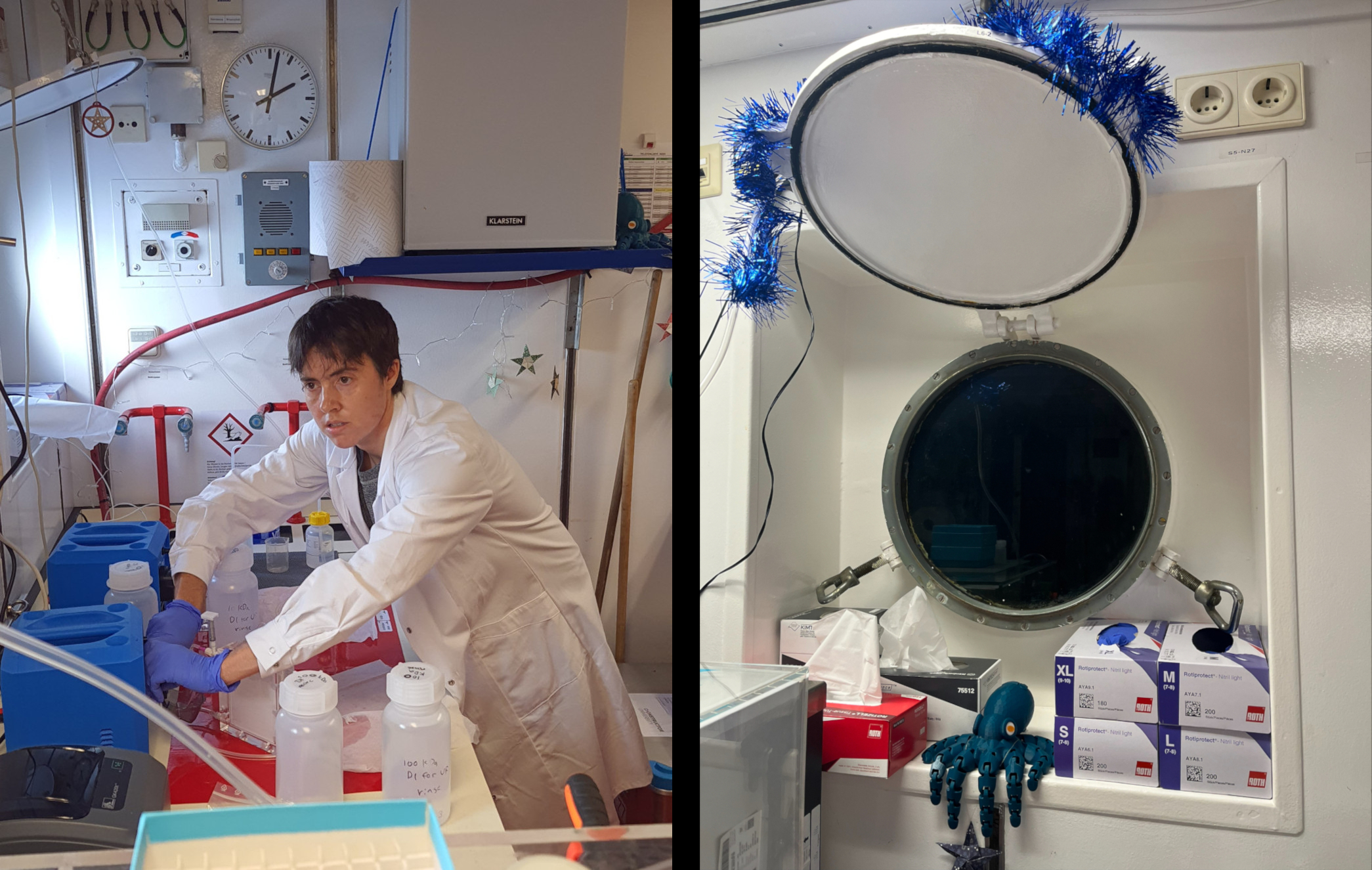
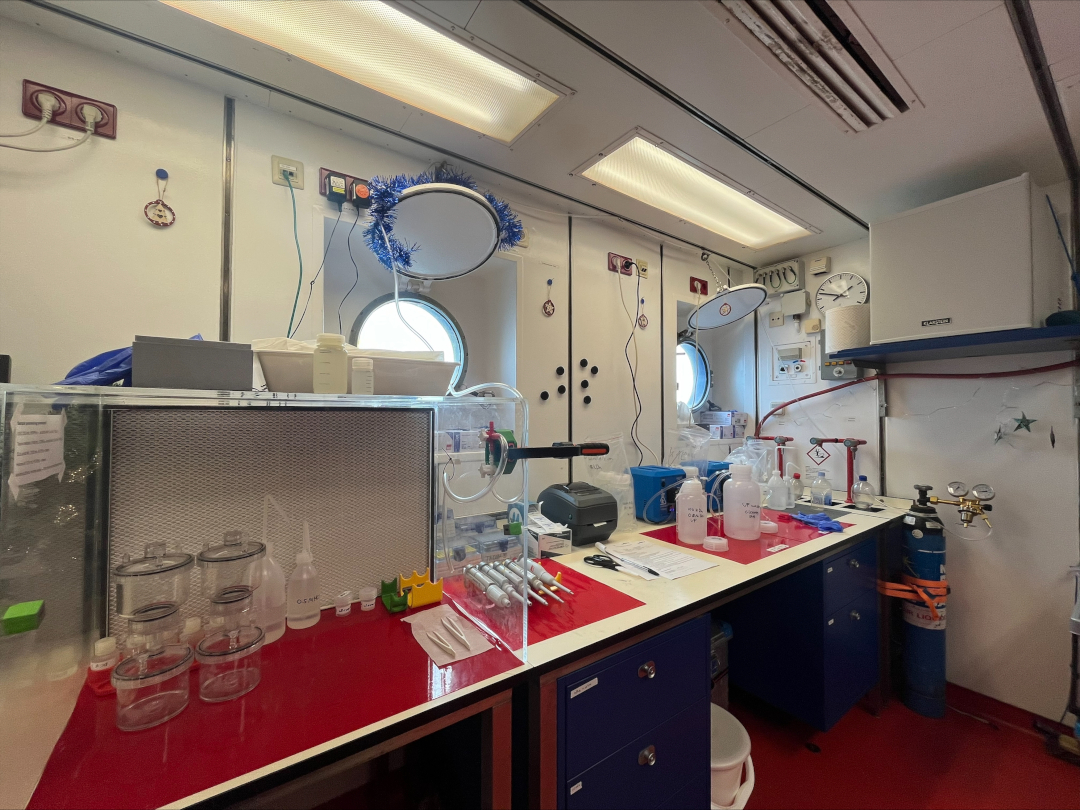
Collecting water samples from the Trace Metal CTD (in background)

Our previous research on the Amazon-Pará estuary has focused on trace metals (Fe, Co, Ni, Cu, Zn, Cd, Pb) and metal-organic matter interaction. Metals such as Fe, Co, Ni and Zn are heavily complexed to organic matter (a.k.a. organic ligands), which can influence their solubility, toxicity, and bioavailability. In addition, metals and organic matter come in different sizes, which influences how much they remain in the water column and eventually reach the ocean during estuary mixing. On the ship lab on M206 as well as PROBRAL, my own work has focused primarily on filtering and processing seawater samples for trace metals, Cu and Ni-binding organic ligands, humic substances (a major fraction of terrestrially-derived organic ligands) and dissolved organic carbon. In addition to the samples that are already filtered by the team in the clean bubble, we also do further filtering at different pore sizes..

This data, combined with the bottom-water and MUC data, will provide a clearer picture of the processes taking place throughout the water column and salinity gradient during estuary mixing.

A Great Day for Sampling in the Pará

A full day today, as we head out from the mouth of the Pará River near Belém on a 10-hour run with sampling stations along the full length of the transect.

River Pará at approximately the same location in 2024 (low water) and 2018 (high water).

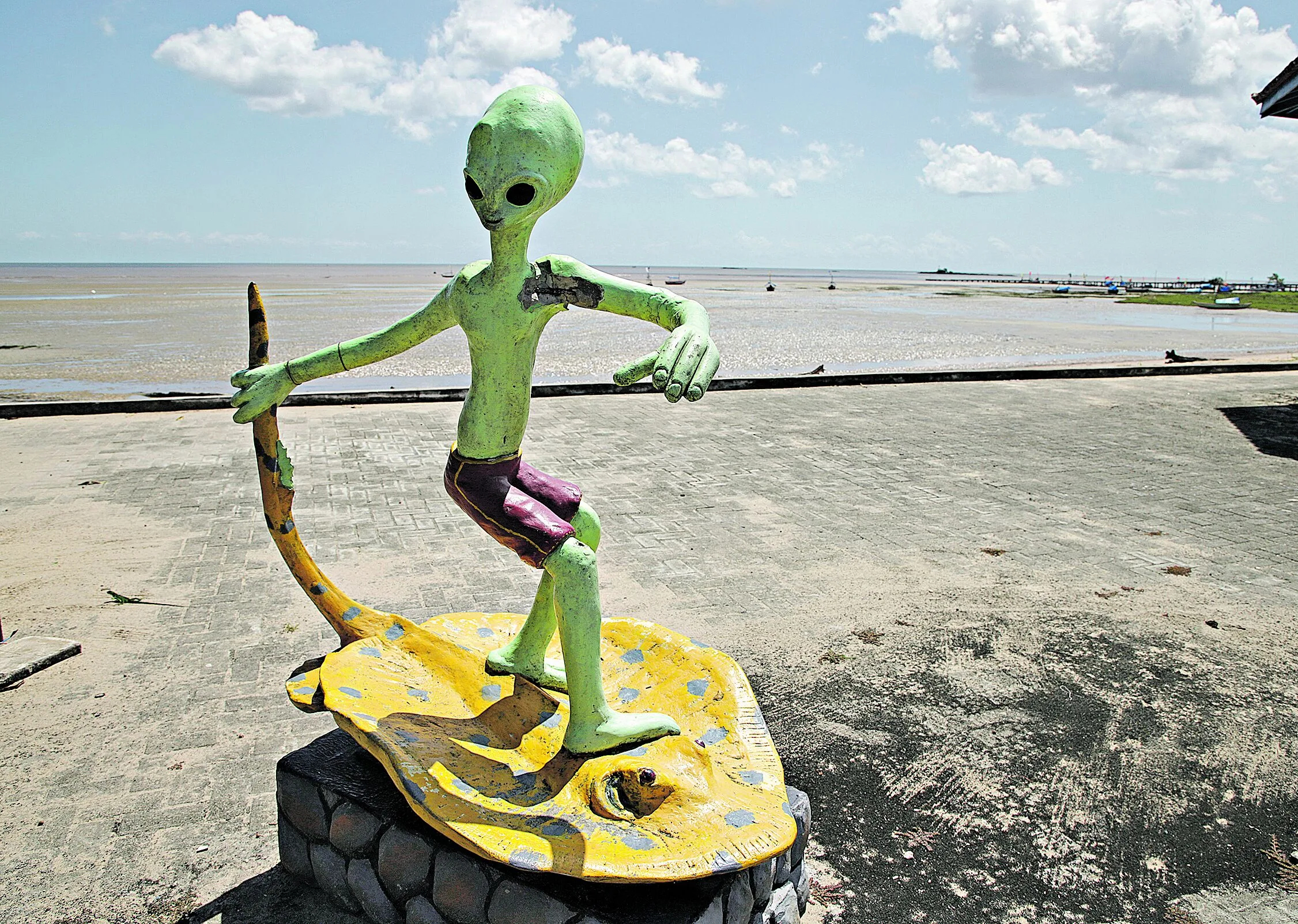
Brought here as always with perfect timing and positioning by Captain Rainer and crew, we start from a point just off the main village of the island of Colares (pop. 12,000, made famous because of the Colares UFO sightings of 1977), with a full complement of stations to perform starting at 09:45 local time. This will include the MUC, when we can be (reasonably) assured this time of finding some interesting samples. Photos to follow!

ET in Pará
Foto: Mauro Ângelo/ Diário do Pará.

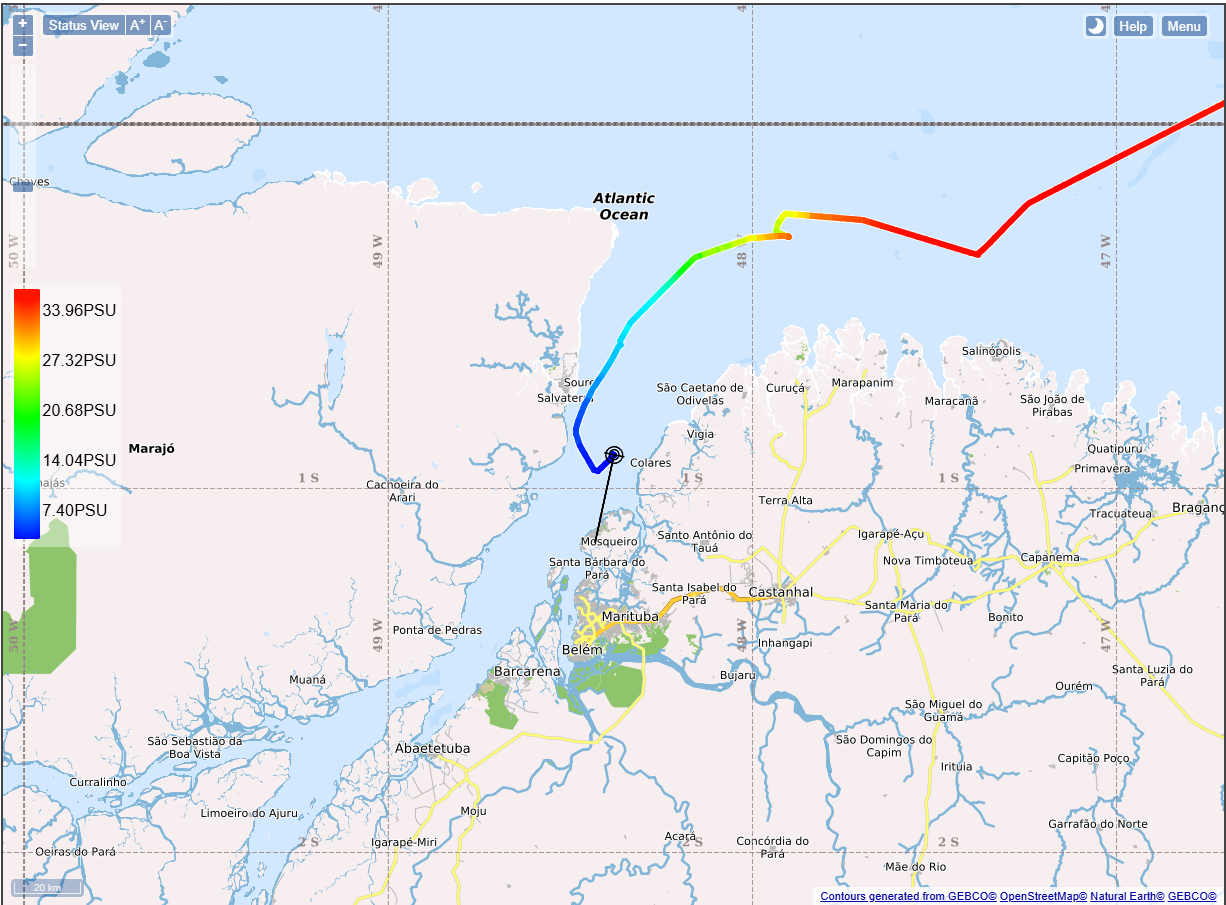
As we sailed upriver, it was interesting to see that the water is relatively green, even now, within 90 minutes of low tide; and in spite of the salinity declining as expected (map). This is quite a contrast with the M147 cruise in 2018, at high water (inset picture).

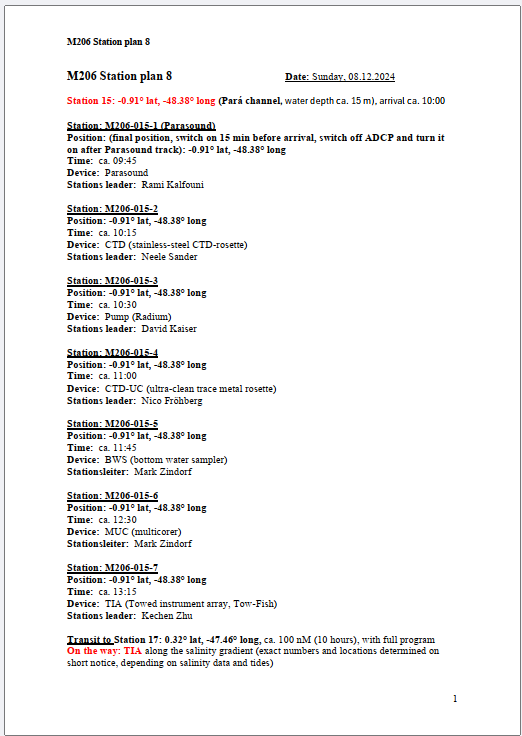
Station Plan 8
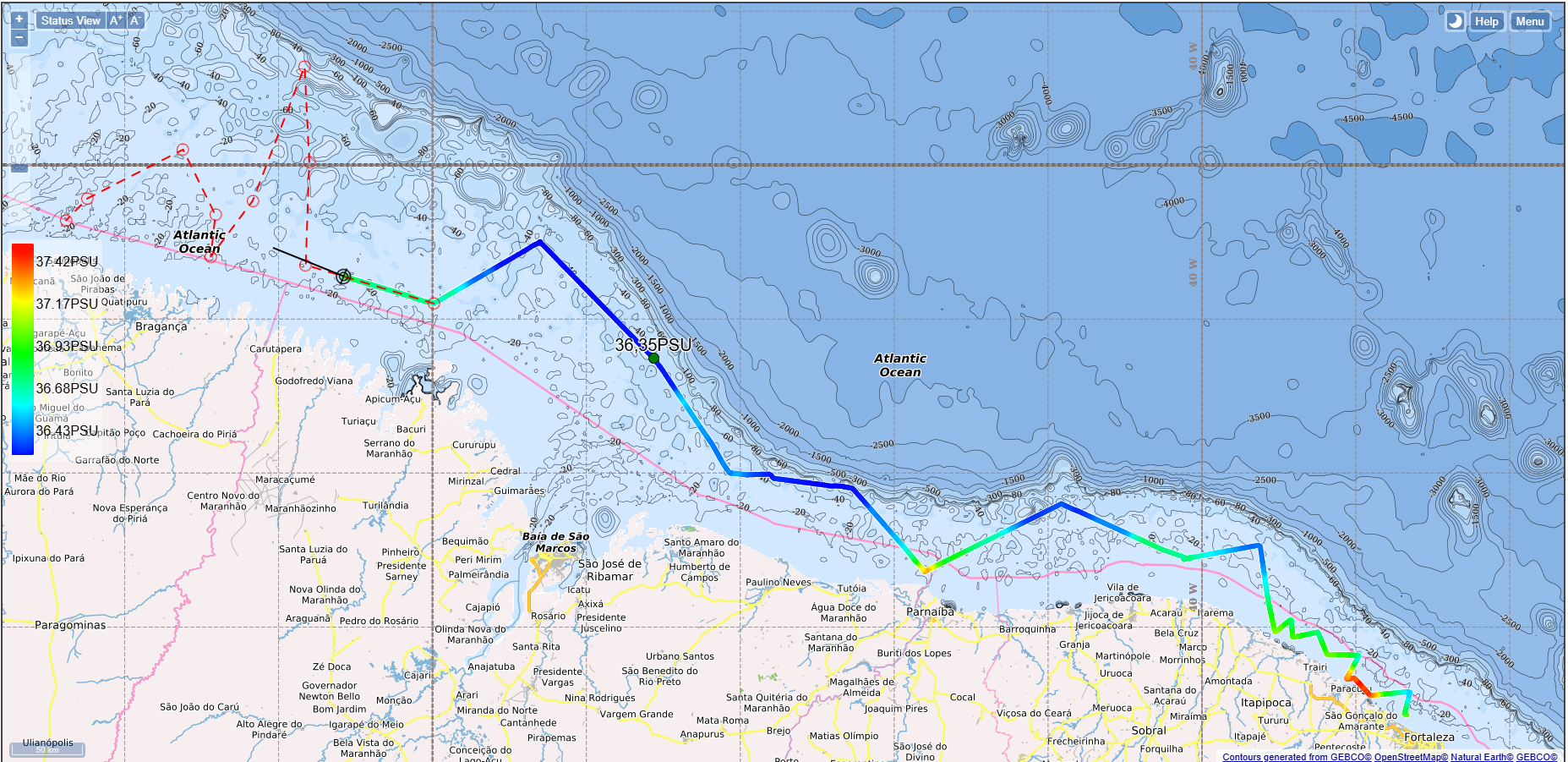
Track showing salinity gradient clearly

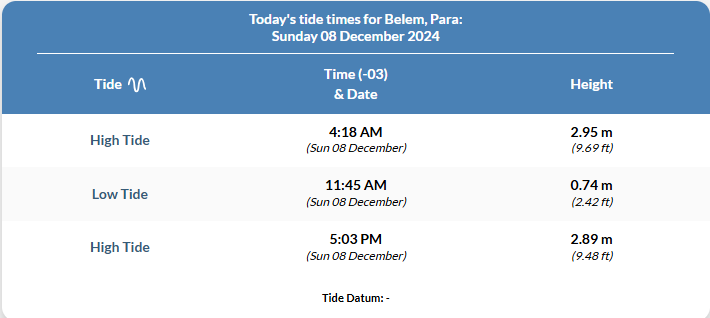
Local tides for today.

The weather has being kind to us so far, although the forecast is for lots of thunder and lightning. For the moment, however, we seem set for a profitable sampling run!

Along the Salinity Gradient

Although we have had a few minor problems with first use of the sampling equipment, this is budgeted for in the station planning, and everything is now tested and functional. Things can still go wrong when dealing with sensitive equipment, but everyone is confident that any small problems can be speedily dealt with.

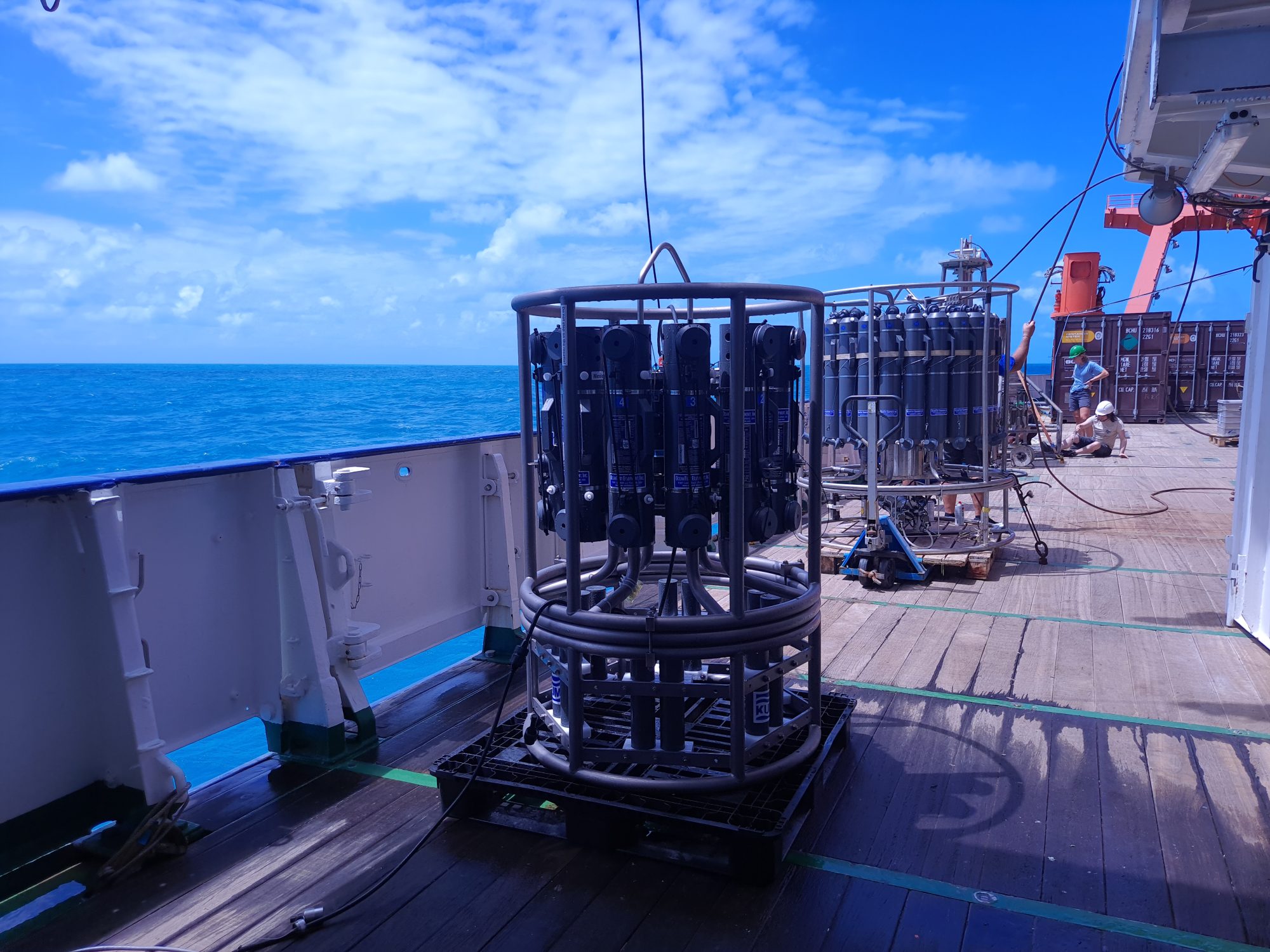
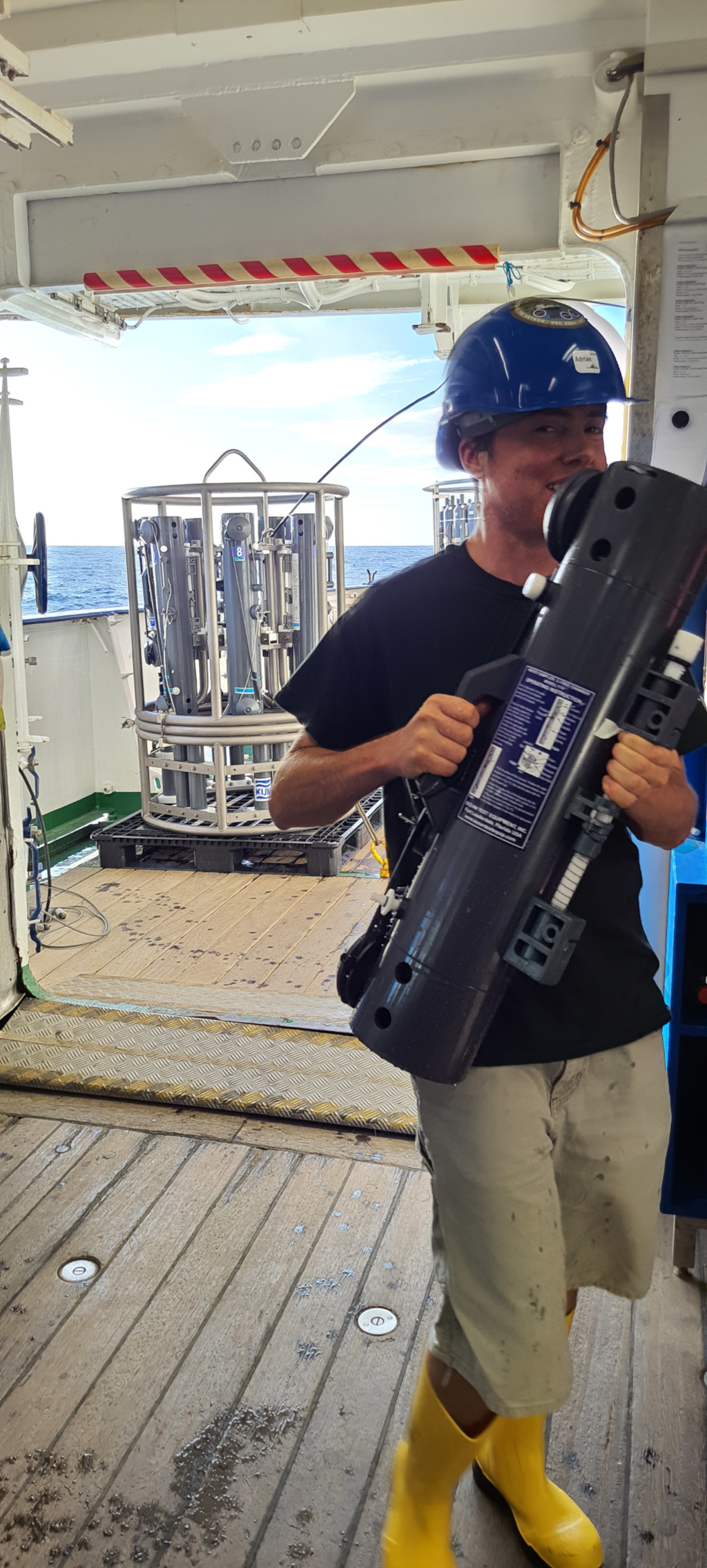
Today and tomorrow, we will be working with all the main sampling instruments: the CTD, the MUC, the BWS, TM-CTD and the tow fish (all pictured). There are two great short videos that show the mechanisms of the MUC and the CTD in operation underwater – one from the Schmidt Institute, here; and the other from Geotraces/PolarTREC, here.

Trace metal (foreground) and normal CTDs on deck.

We have moved now approximately 300nm (550km) west long the coast, zig-zagging in order to sample along the salinity gradient. It is interesting to see that the salinity is extremely high close to the mangrove coastline (on the map, red is most saline and blue is least saline): it is not clear whether this is a normal condition during low water or is exaggerated due to the extreme drought experienced in the Amazon region this year.

Salinity measurements showing higher salinity close to the mangrove coastline

Interview with a young scientist

Interview with a young scientist

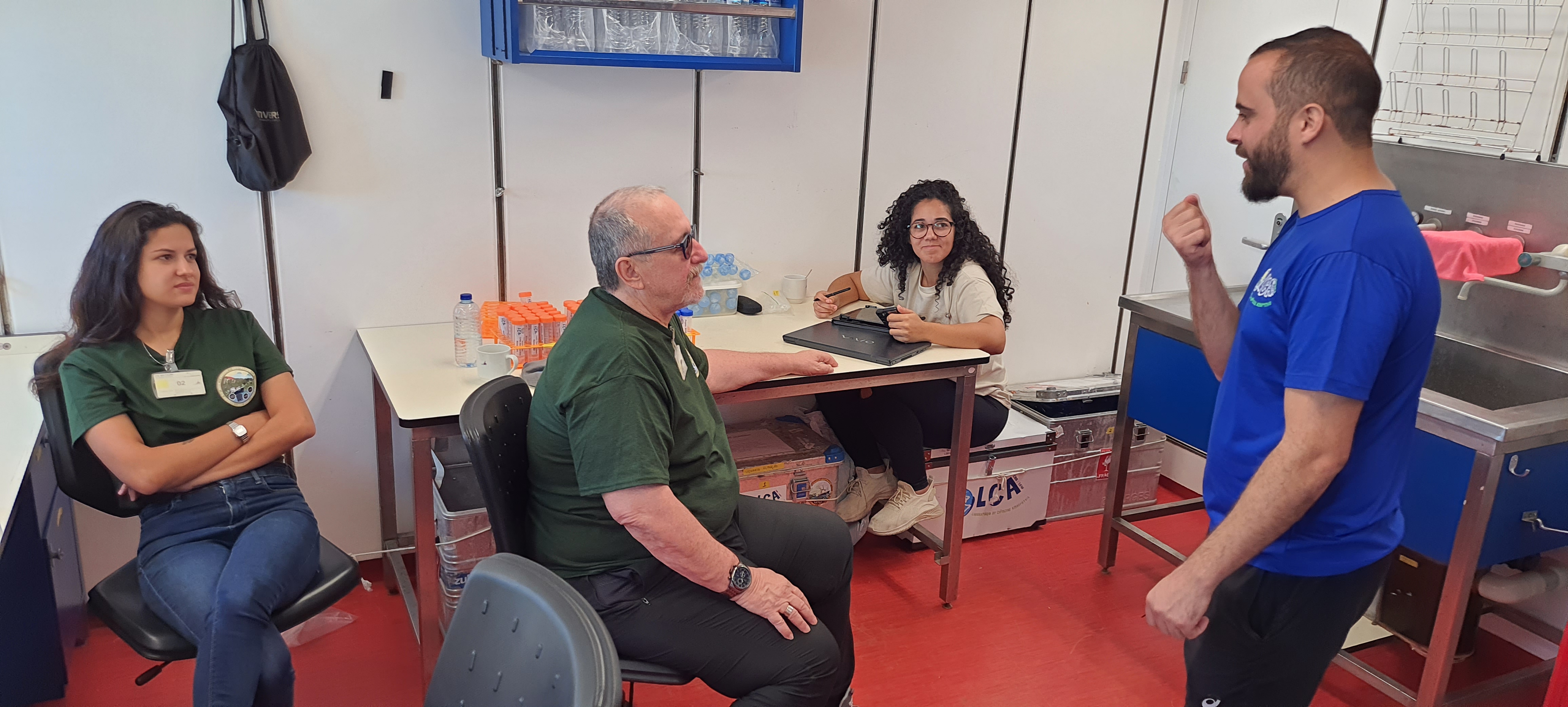
There are 30 scientists aboard, ranging in age from early twenties to …a lot older! Here, I am interviewing Caitlyn Kelly, from South Africa, who is studying at Constructor University and is on her first Geotraces research cruise. (By the way, we did the interview in the small library on board, using a gimbal to steady the camera, and you can see the strange effect this has on the image when the ship rolls a little). Please welcome Caitlyn..!

Caitlyn Kelly of Constructor University talks about M206

Brackish Water

Brackish Water

We will be navigating to the mouth of the Amazon and taking hundreds of samples of water as we go. We are looking at how the freshwater from the Amazon mixes with the sea water of the Atlantic, along what is called the ‘salinity gradient’.

We all know that the Amazon houses thousands and thousands of species of fauna and flora, some of them threatened with extinction. They include the infamous piranha, the capybara, the jaguar, the giant otter and giant anteater, the black caiman and the poison dart frog. However, at the mouth of the Amazon, little is known about the unique flora and fauna that can live in this environment where the saltiness of the water (the salinity) varies constantly with the tides and can range from 0 (no salt in the water – pure river water) to 7 or 10 on a scale where 35 is pure sea water.

Animals that can tolerate this strange environment are called ‘euryhaline’ (eury comes from the Greek, meaning ‘wide’ and haline is another word for saline), and probably the best known animal is the much-feared bull shark. A bull shark has reportedly been encountered more than 4,000km up the Amazon, but is equally at home in saltwater. Various eels are also known to tolerate salty and pure waters, and there are probably many other animals and plants that are unique to the river mouth.

The huge island at the mouth of the Amazon, Marajó, has 400 recorded species of bird, and 100 mammals. It is famous for its water buffalo, and has more buffalo than anywhere else in Brazil, with 430,000 head. It is used for an awful lot of things in Marajó, including day-to-day transport and for Police patrols, as famous explorer Pete Casey found out when he started his 7-year walk and swim up the Amazon!

Water buffalo in Pesqueiro, Marajó. Photo: Pete Casey, ascentoftheamazon.com

Perhaps we will spot a shark or a dolphin as we approach the Amazon – bookmark us and find out!

We’re off!

The Meteor unmoored and left Fortaleza this morning before 09:00, and we are now sailing for our first sampling station. We are leaving the coast 10 km behind, and in the bright sunshine the water is very blue. We expect to to encounter first green water and then brown water as we go north and get closer to the Amazon river mouth. As we approach our stations along the mangrove region, and close to within a kilometre or two of the coast, we may also see a change in water colour.

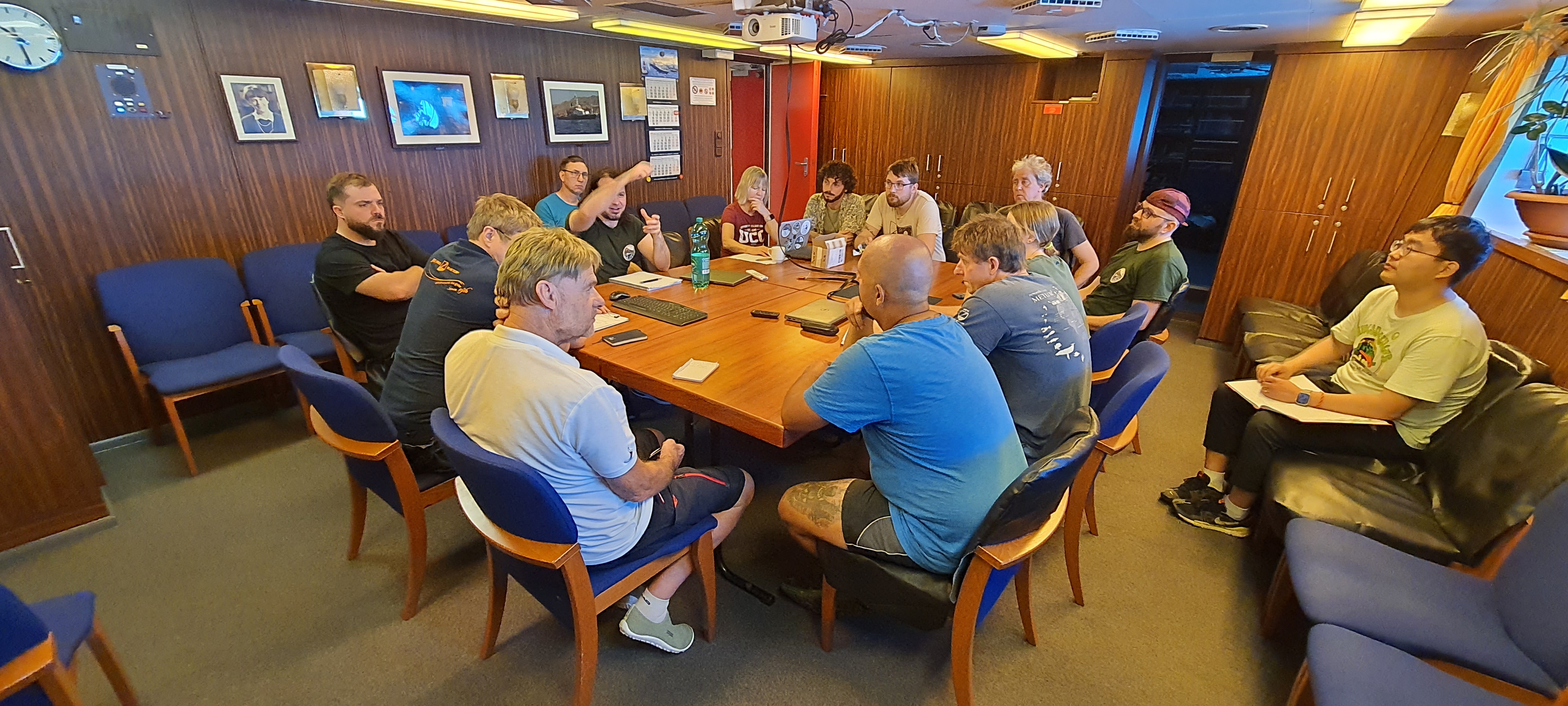
Station meeting in progress in the conference room

Meanwhile, the scientists have been hard at work and most of the equipment and labs are now organised and ready for the sampling stations. This includes the CTD and MUC samplers, which we will detail in the next posts, and there is a buzz of excitement around the ship as we begin our work in earnest, and this requires careful planning to make the best use of time and money. There is also already some filtering and analysis being done of water samples taken during the PROBAL programme just before M206. Here, a station meeting is in progress to discuss the details of the correct deployment of equipment for the first station tomorrow morning at 08:20.

Our approximate locations after leaving Fortaleza.

Outside, work goes on all day and night for the captain and crew. Although we are at the beginning of the wet season in the Amazon, here, further south, we have wall-to-wall sunshine, and temperatures even 10km from the land are around 30 degrees, and a lot more if you’re not in the shade. We have to be careful and take suitable precautions when we go on deck for any length of time.

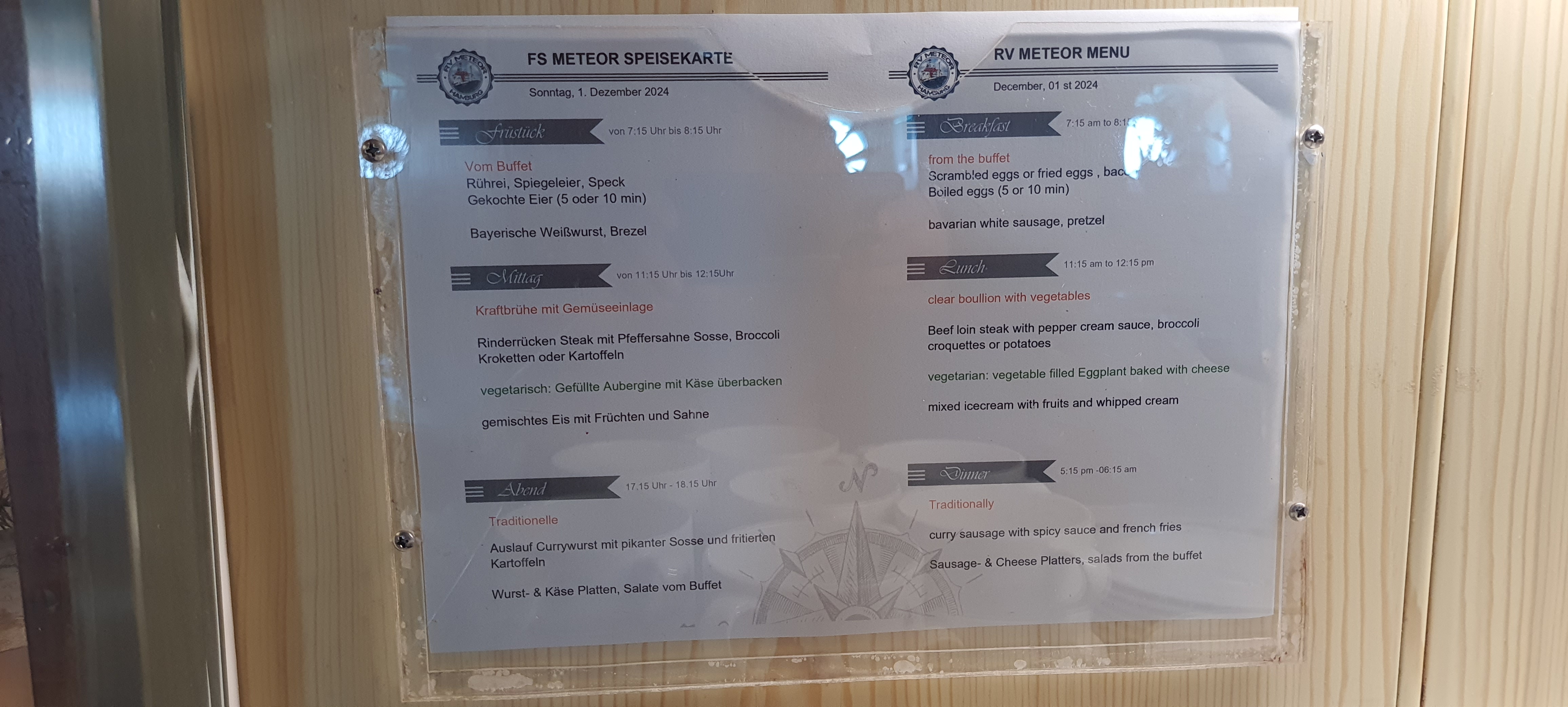
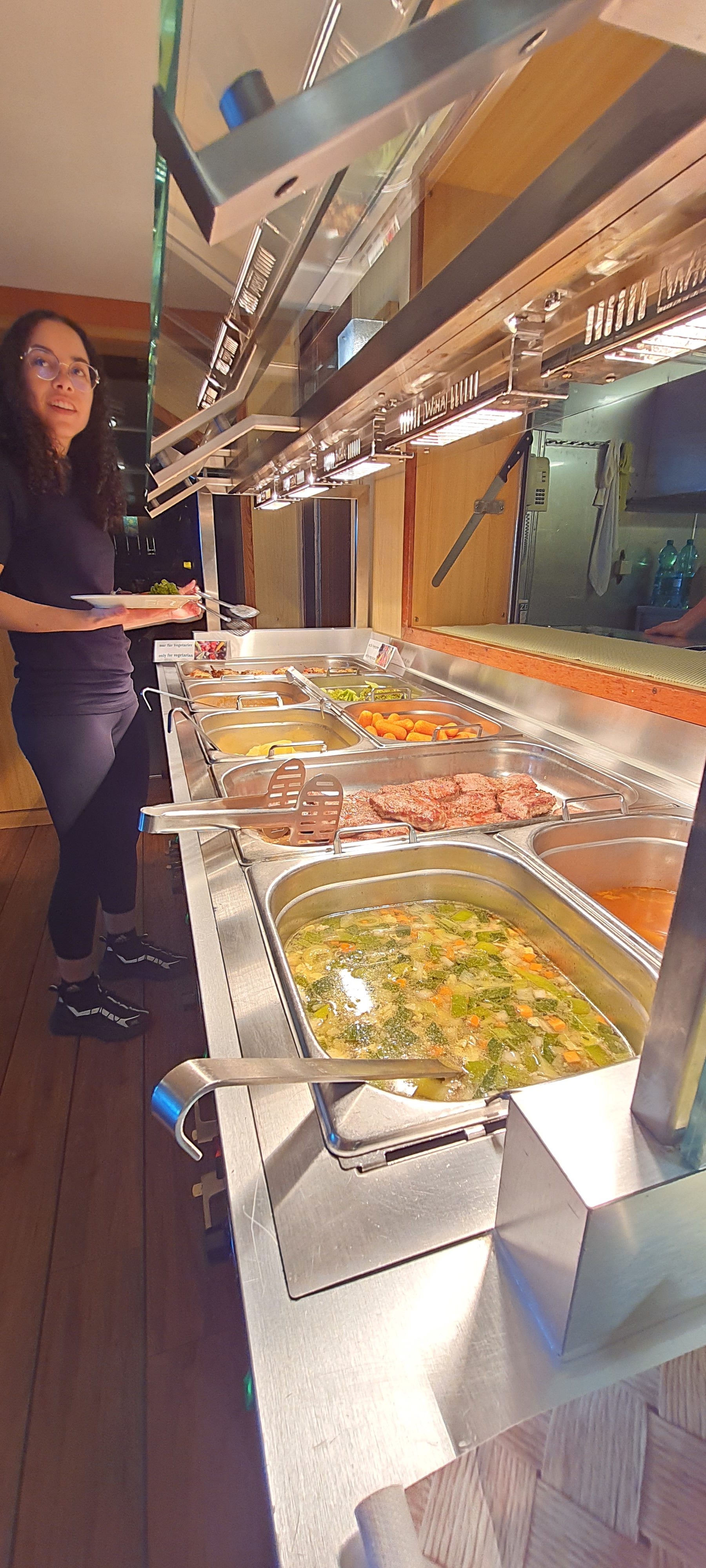
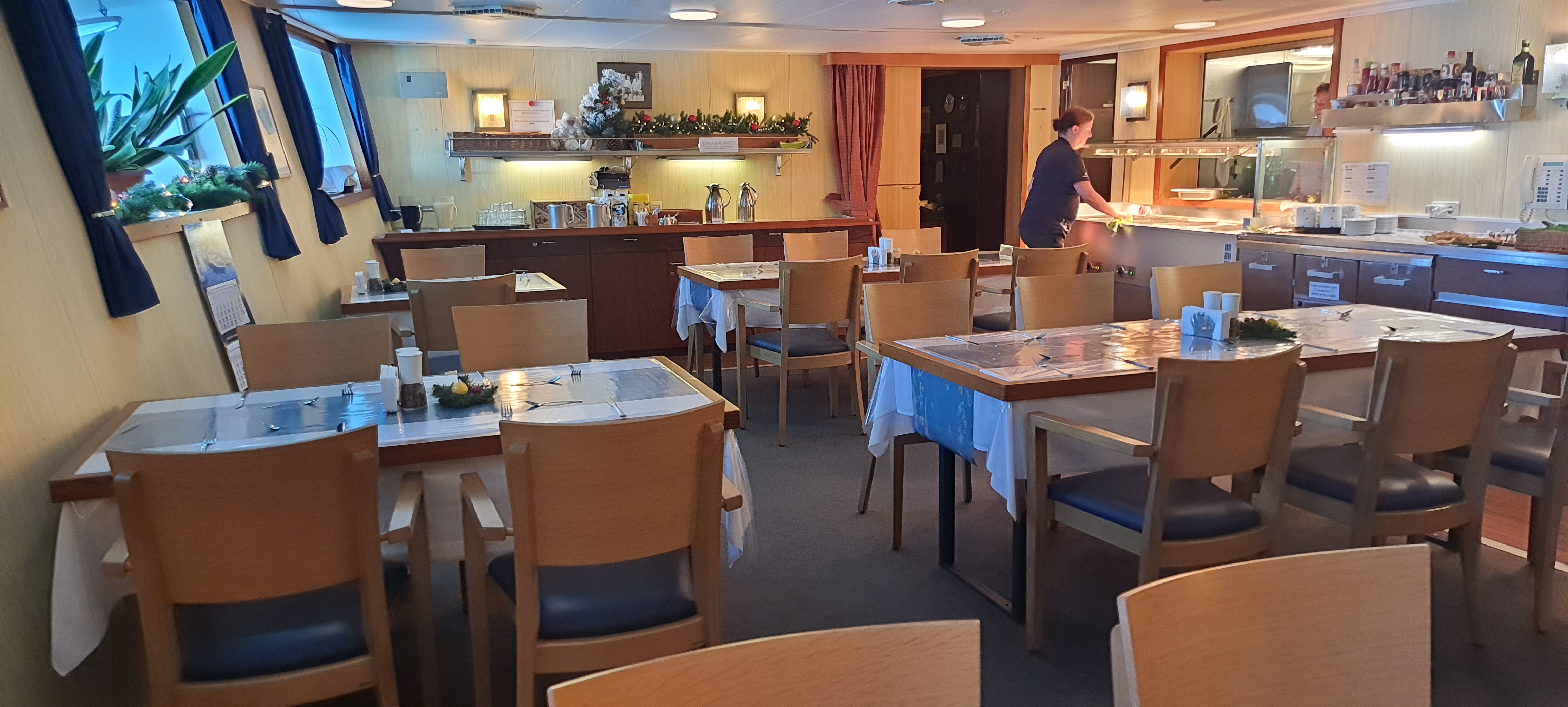
Throughout the day, with such a lot of energy being expended, the chief steward and her staff have to feed over 60 hungry mouths. The times may seem odd to some people, but we soon get used to breakfast at 07:15, lunch at 11:15 and dinner at 17:15. The food is both tasty and nutritious.

  • On the menu today...