Following the sampling of the Caeté river for the PROBRAL project, during the last days, we sampled porewater from the mangroves in the area. Large mangroves exist on the coast of northern Brazil and contribute organic matter and trace metals to the coastal ocean, as well as the Amazon-Pará river estuaries to the north (as observed in 2018 on Meteor cruise M147).
We collected water in both healthy mangroves and a degraded area that was cut off from the sea by construction of a road. To sample water, we dug holes in the ground at low tide and waited for them to fill with porewater. We then scooped the water out, waited for the holes to fill again, and repeated the process to ensure that we sample porewater rather than surface water and let most of the particles settle out. After a minimum of three times, we filtered the water for our samples, as well as collecting mud for sediments. The water was slightly acidic and highly saline, far surpassing the salinity of seawater. The holes smelled distinctly sulfidic, and the water was often a yellow-brown color, indicative of the organic matter present.
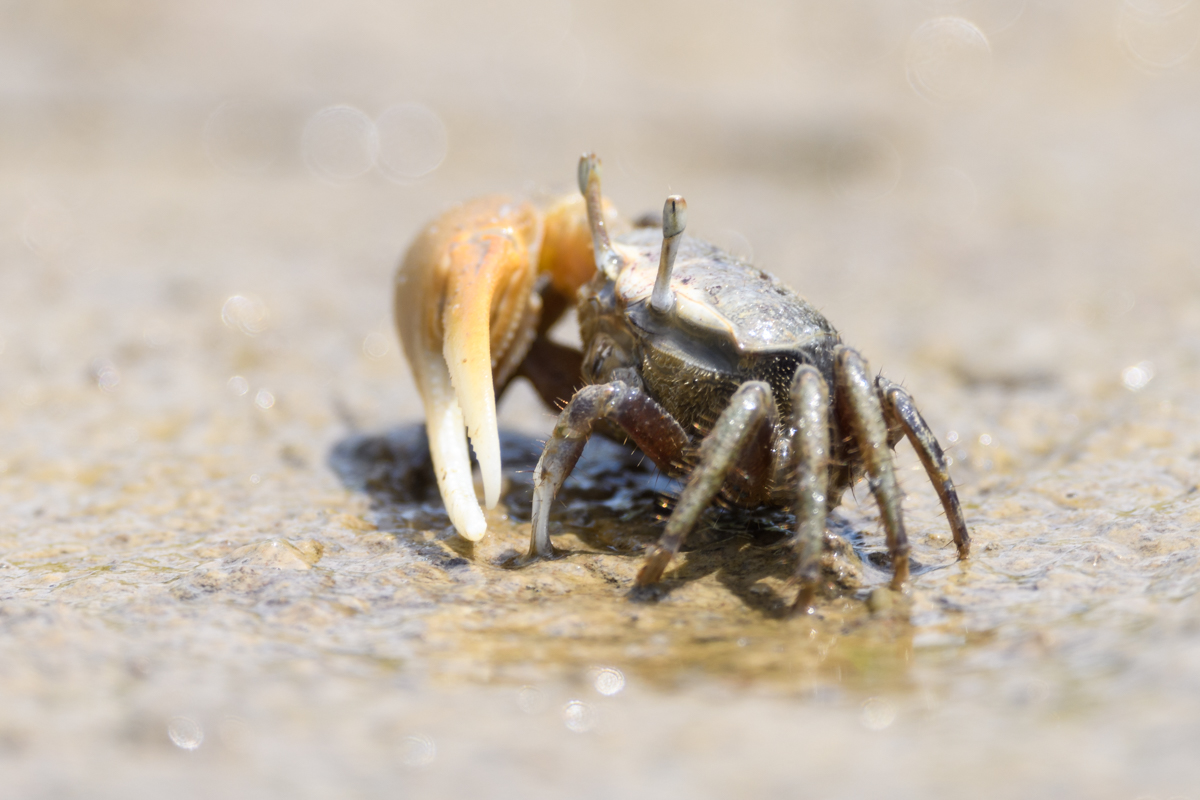
The mangroves also offered a unique view of wildlife: the ground was filled with crabs, and we even sampled water inside a crab burrow to investigate whether the fermentation of leaves inside contributes metal-binding ligands to the water. We saw and heard birds throughout the forest and found a set of unknown animal footprints in the mud. We were also swarmed by friendly wasps, which fortunately didn’t sting or bite. After sampling, we were caked in mud (sometimes sinking in up to our knees when walking). It really is a very different kind of work environment compared to an oceanographic research vessel! We successfully sampled 5 stations and are excited to analyze this unique environment for trace metals and organic matter once we are back in the home laboratory!
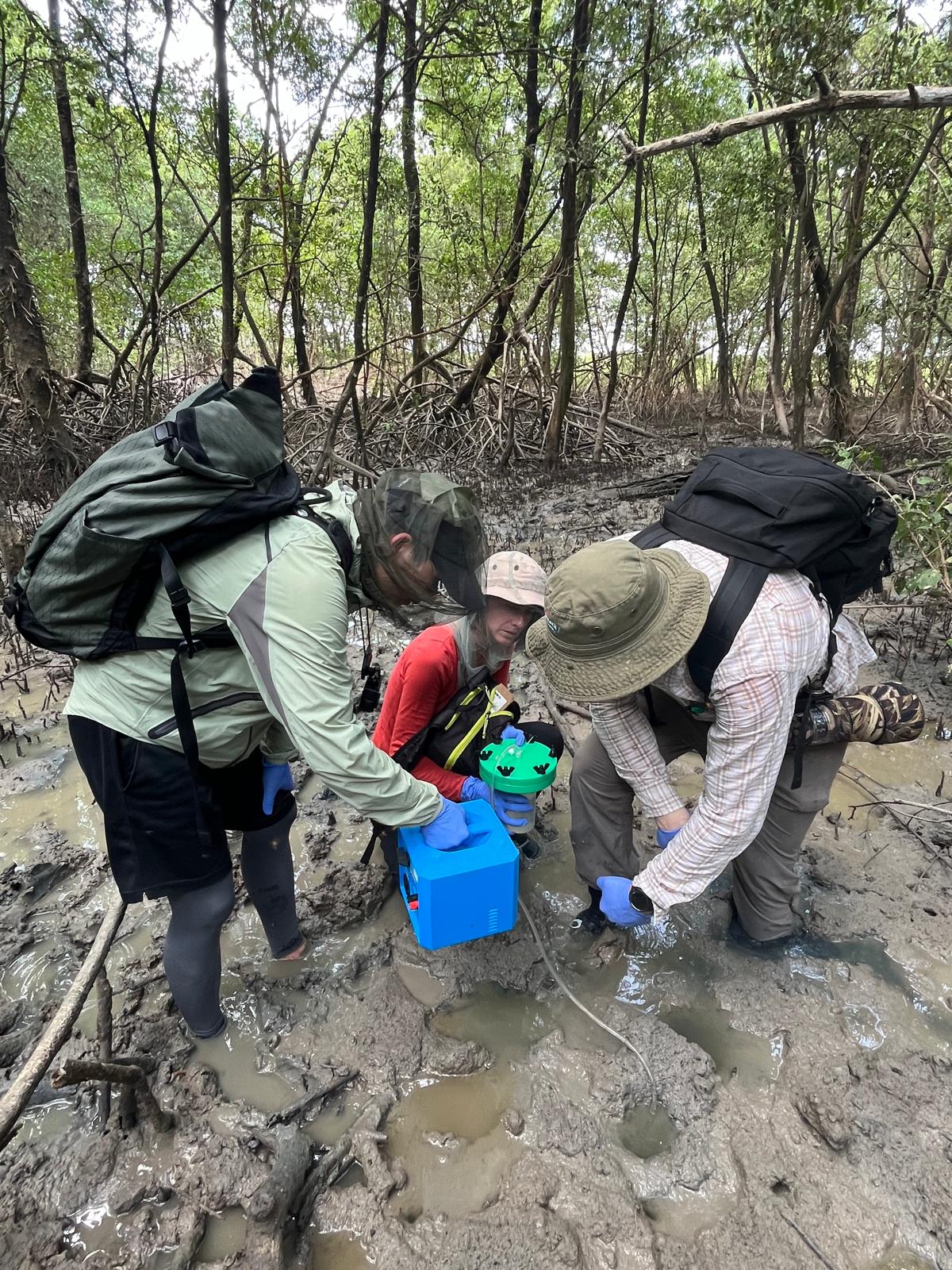
Filtering water directly from a crab burrow in the mangroves. 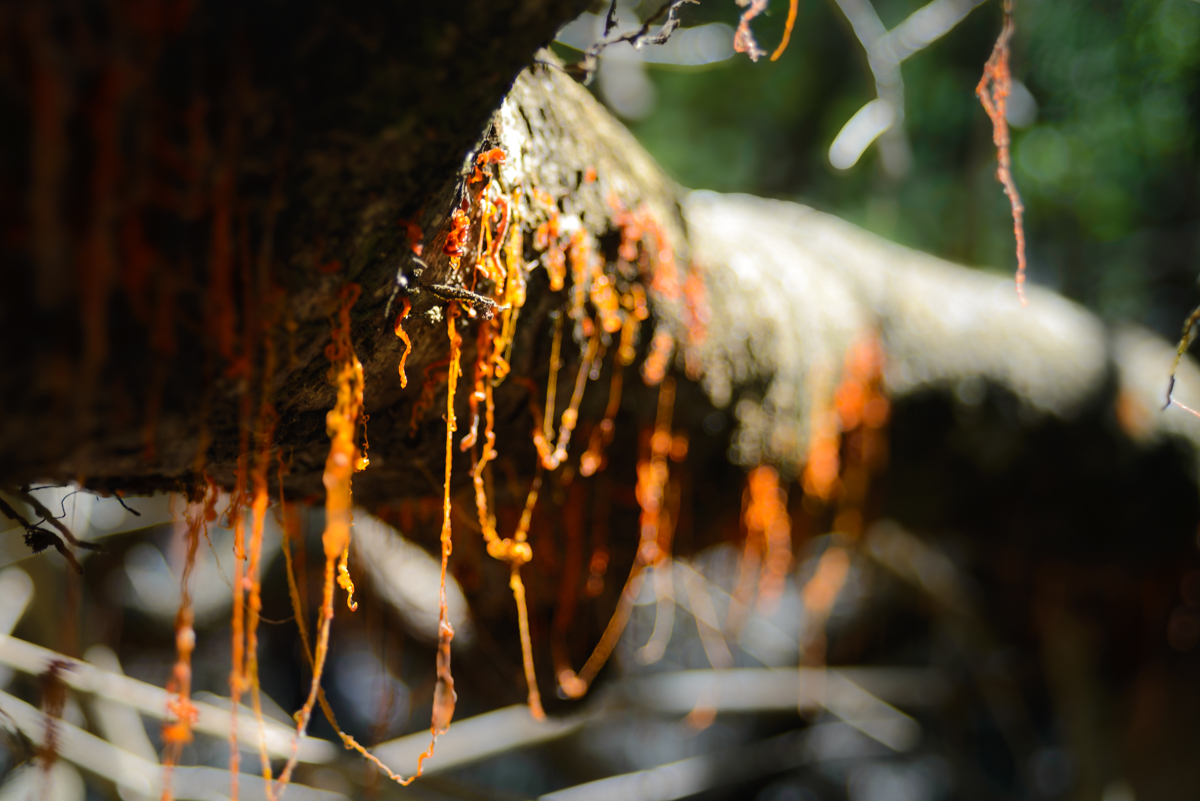
Fungi/lichen (?) hanging from a mangrove. 
Trekking through the mud to our sampling locations 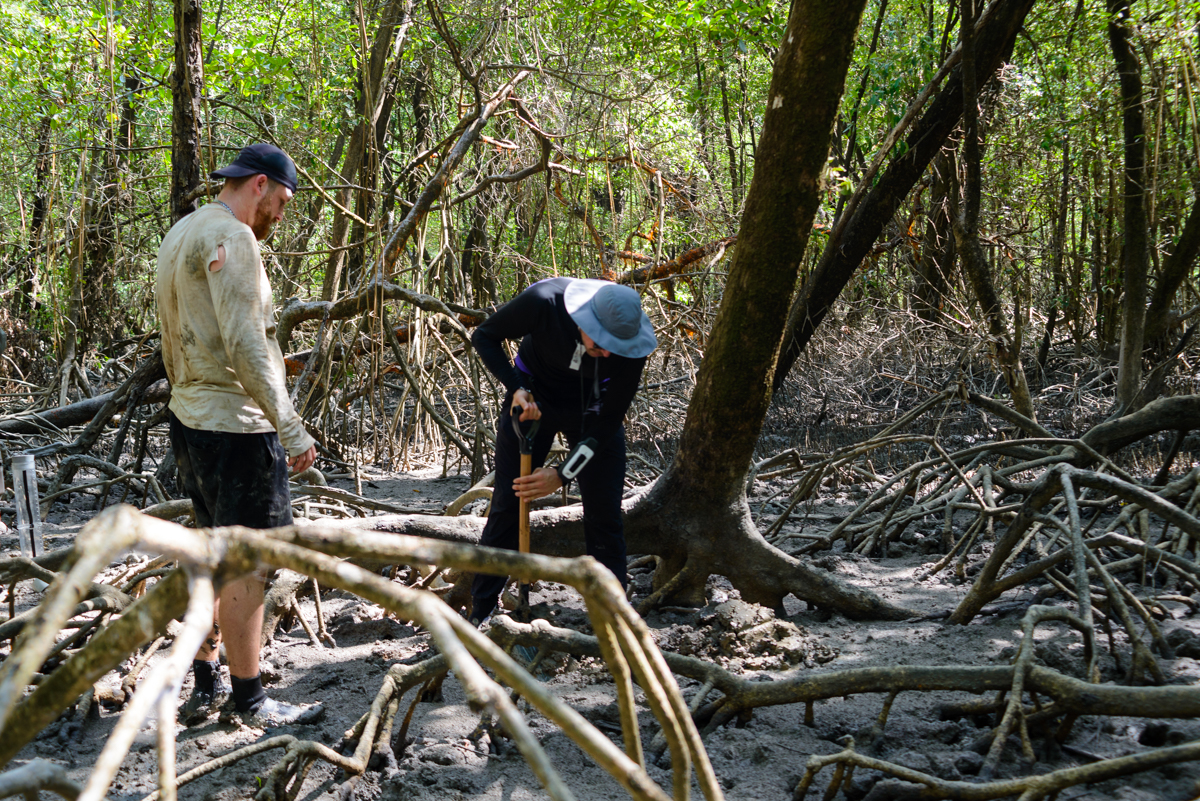
Excavating a hole for porewater sampling. 
Removing the first water from the excavated hole to get a fresh/clean porewater sample. 
Filtering porewater directly from the hole in the ground. 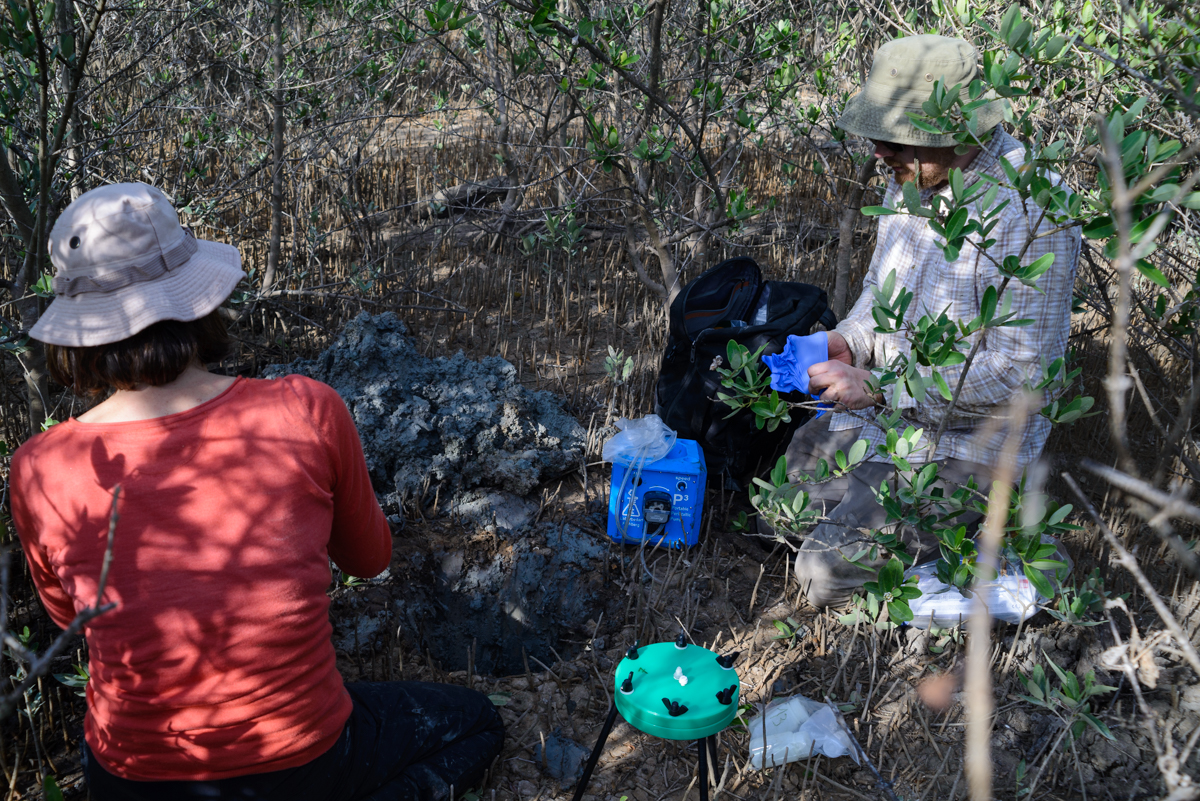
Filtering porewater directly from the hole in the ground. 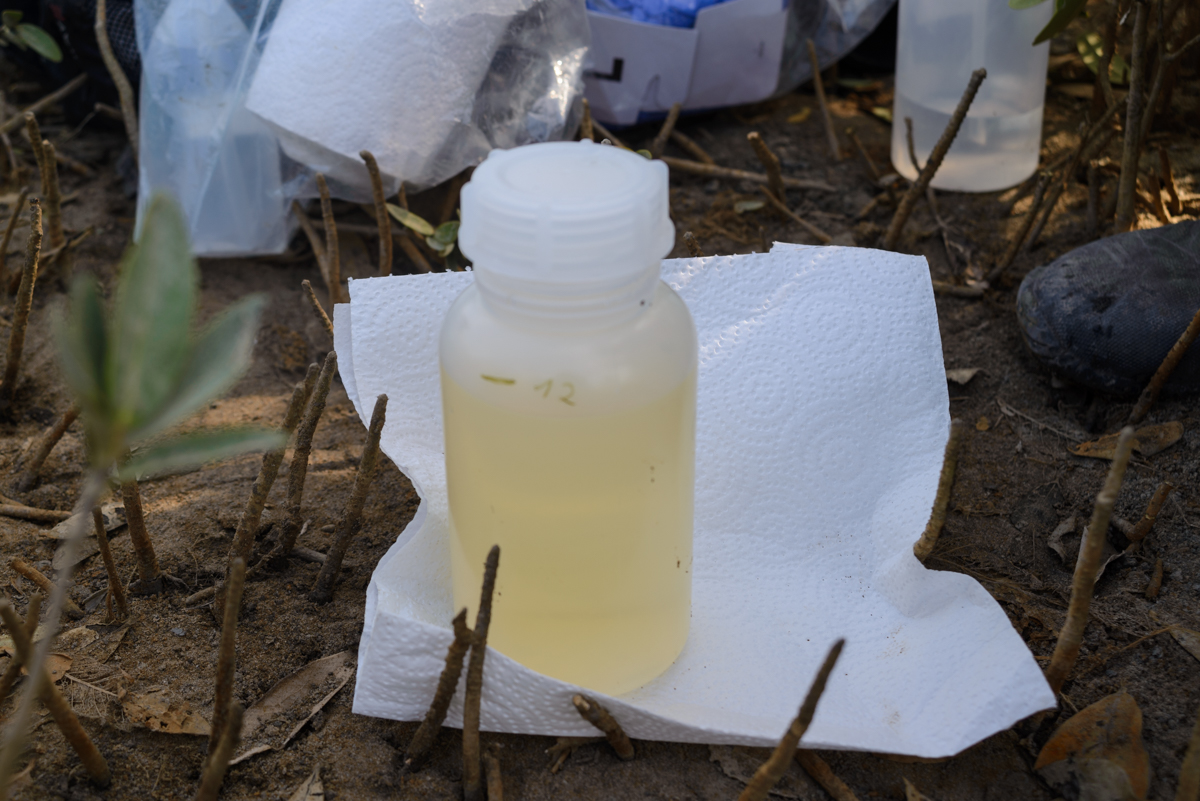
Even after filtration, a strong color remains in the water, indicating high content of colloids/dissolved organic matter. 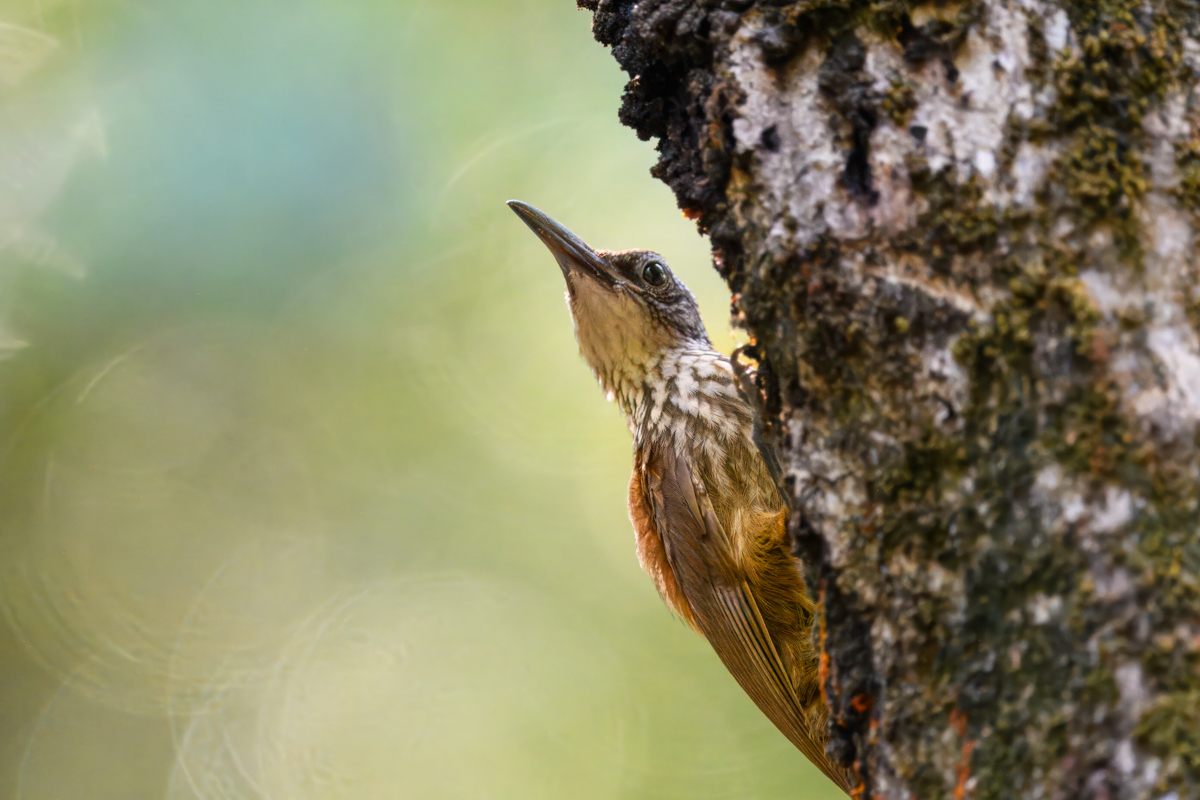
A woodcreeper inspecting adherence to the trace metal sampling protocol. 
Another curious guest: lineated woodpecker.
