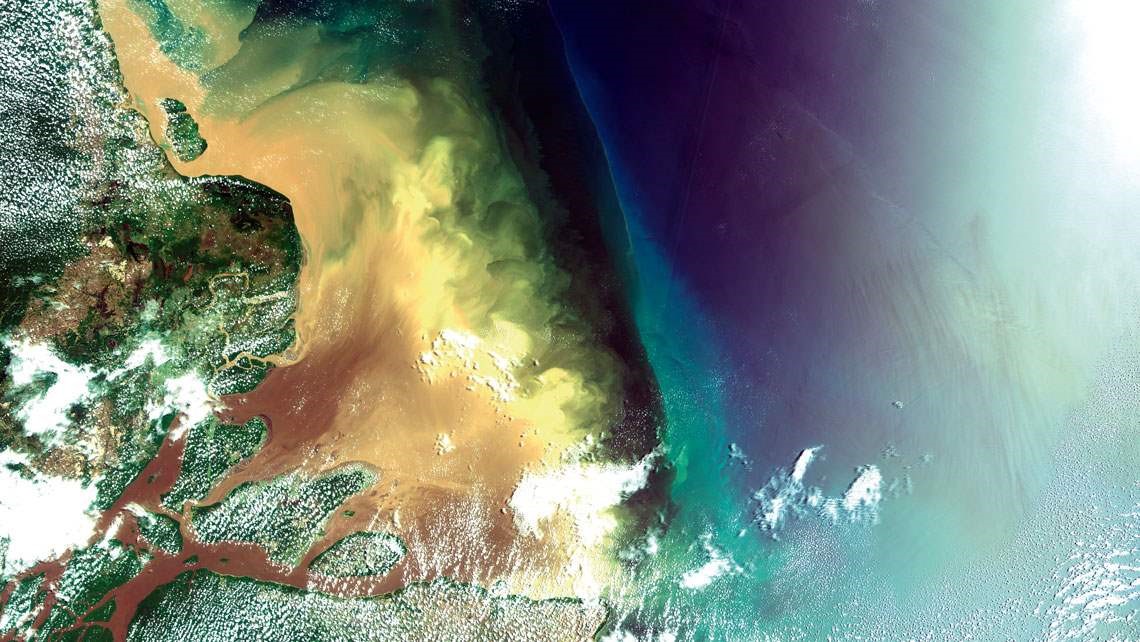
A full day today, as we head out from the mouth of the Pará River near Belém on a 10-hour run with sampling stations along the full length of the transect.
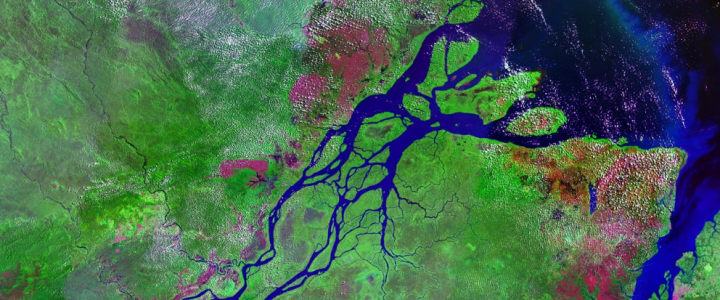
River Pará at approximately the same location in 2024 (low water) and 2018 (high water).
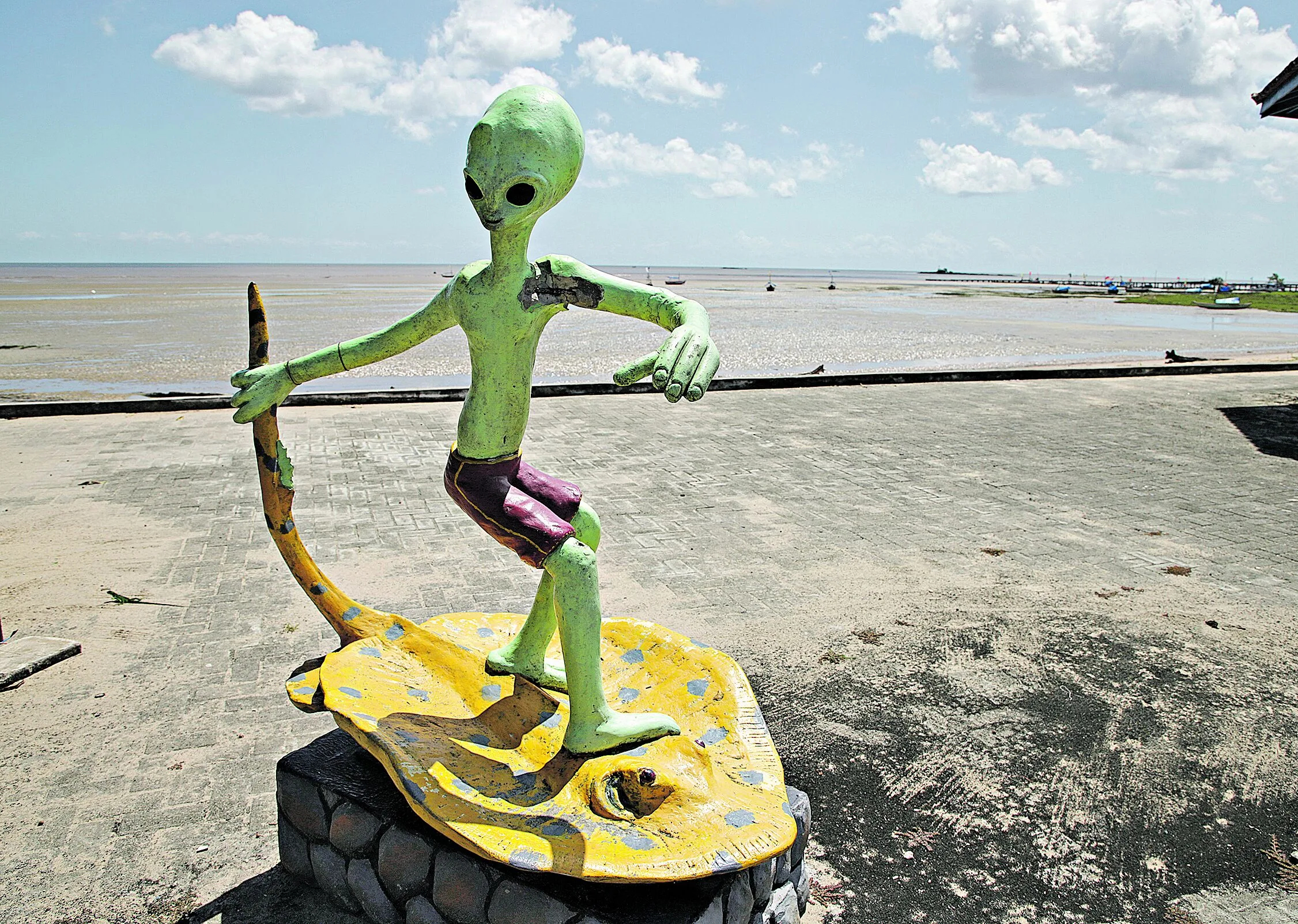
Brought here as always with perfect timing and positioning by Captain Rainer and crew, we start from a point just off the main village of the island of Colares (pop. 12,000, made famous because of the Colares UFO sightings of 1977), with a full complement of stations to perform starting at 09:45 local time. This will include the MUC, when we can be (reasonably) assured this time of finding some interesting samples. Photos to follow!
ET in Pará Foto: Mauro Ângelo/ Diário do Pará.
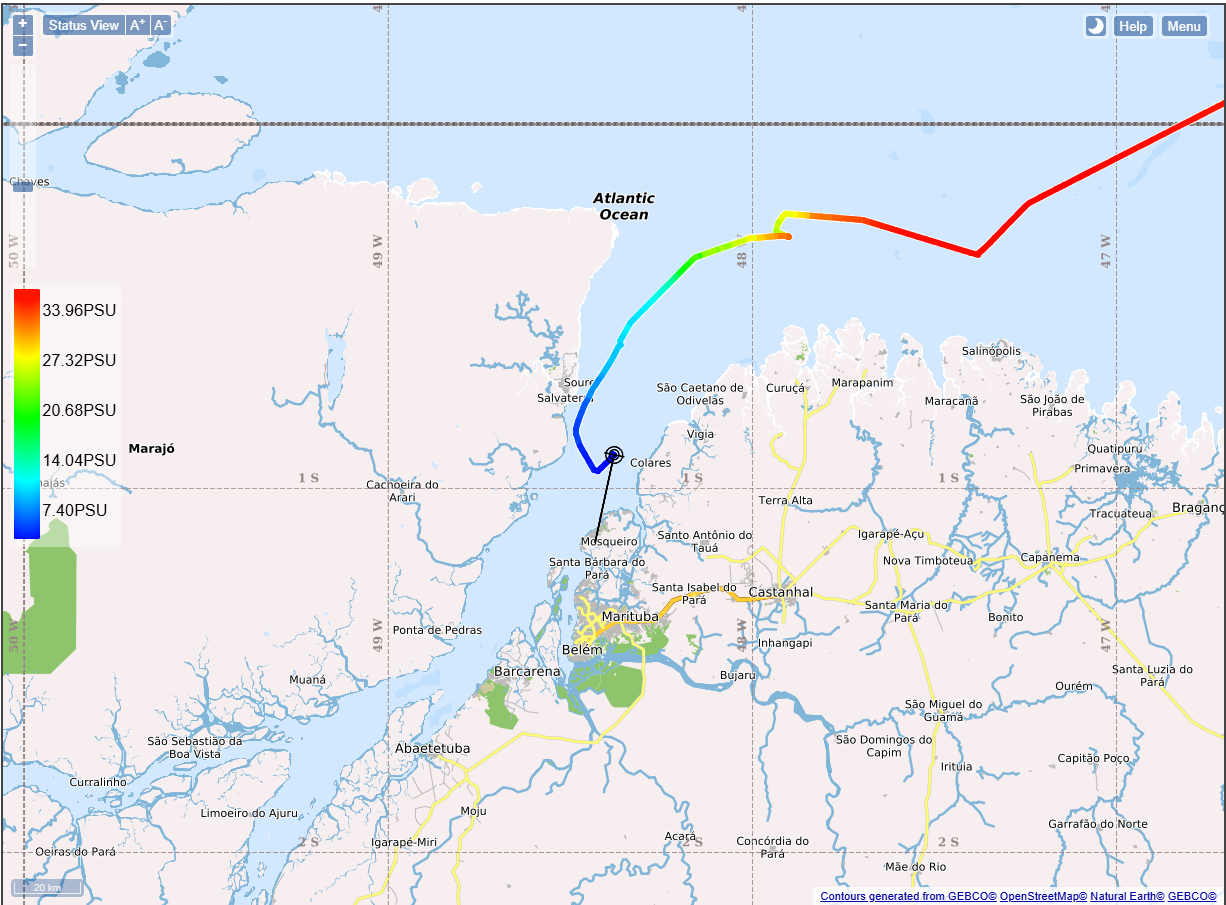
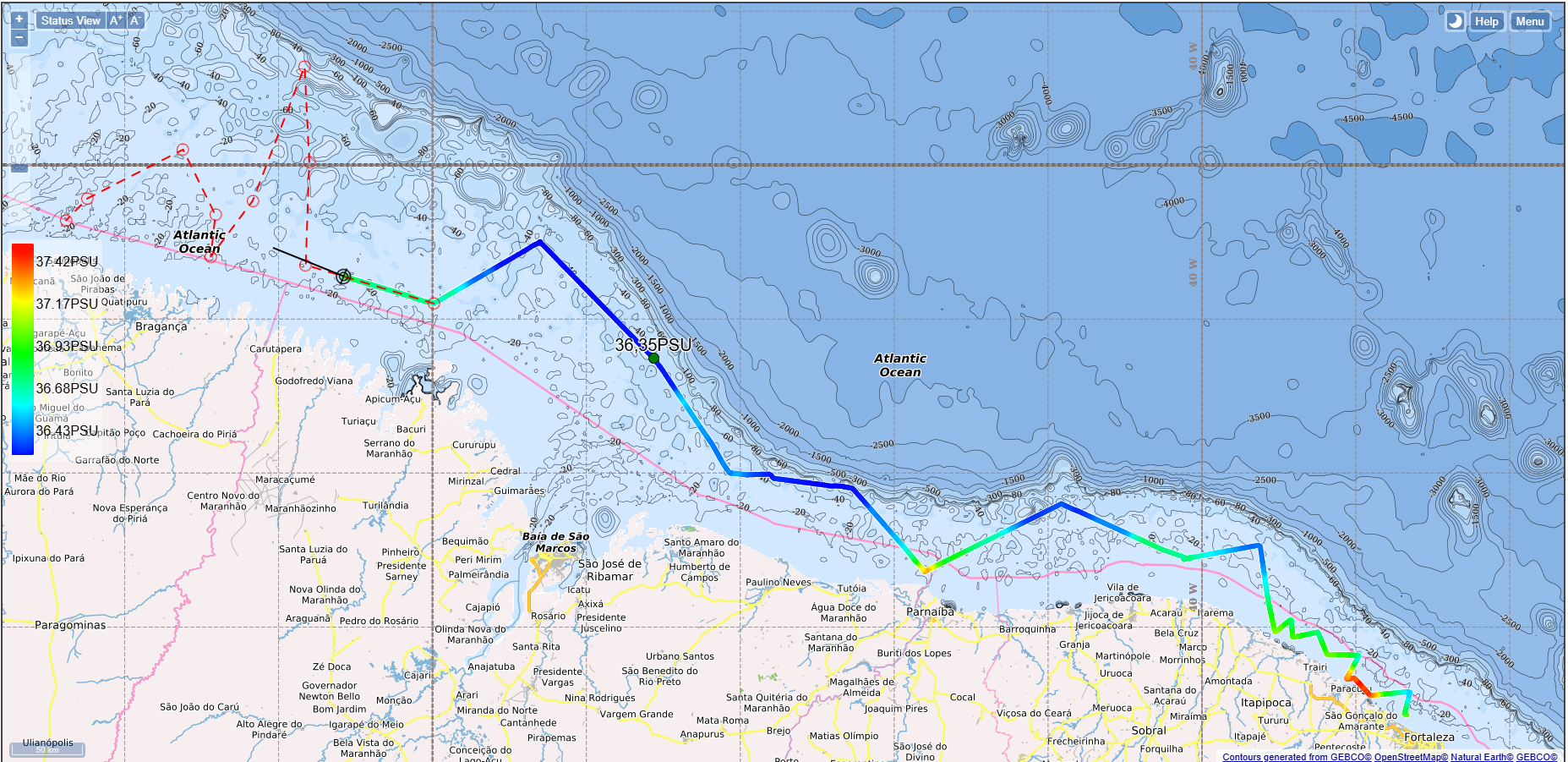
As we sailed upriver, it was interesting to see that the water is relatively green, even now, within 90 minutes of low tide; and in spite of the salinity declining as expected (map). This is quite a contrast with the M147 cruise in 2018, at high water (inset picture).
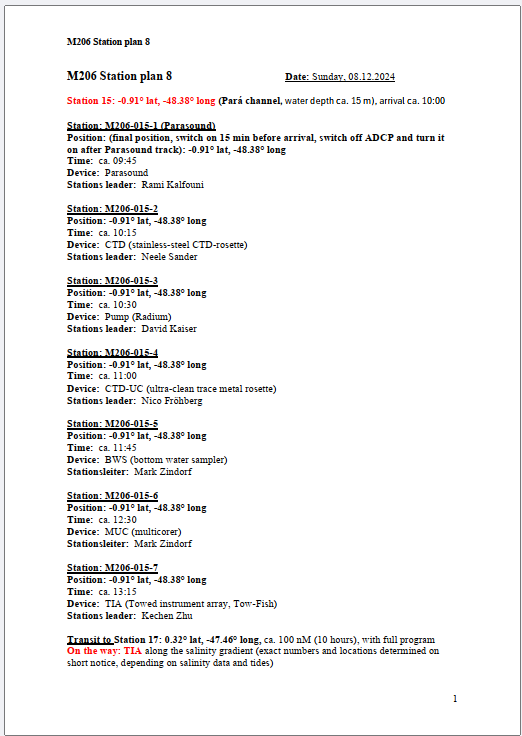
Station Plan 8
Track showing salinity gradient clearly
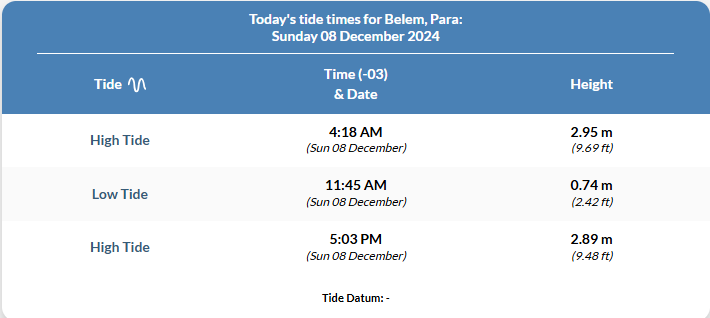
Local tides for today.
The weather has being kind to us so far, although the forecast is for lots of thunder and lightning. For the moment, however, we seem set for a profitable sampling run!
Our second interview is with Albert Firus of Geomar. Many thanks to him for telling us a bit about himself and his studies, and about his role on M206. As in the previous video, the gimbal mechanism on the camera was not disabled, so the motion of the ship is perceptible.
Although we have had a few minor problems with first use of the sampling equipment, this is budgeted for in the station planning, and everything is now tested and functional. Things can still go wrong when dealing with sensitive equipment, but everyone is confident that any small problems can be speedily dealt with.
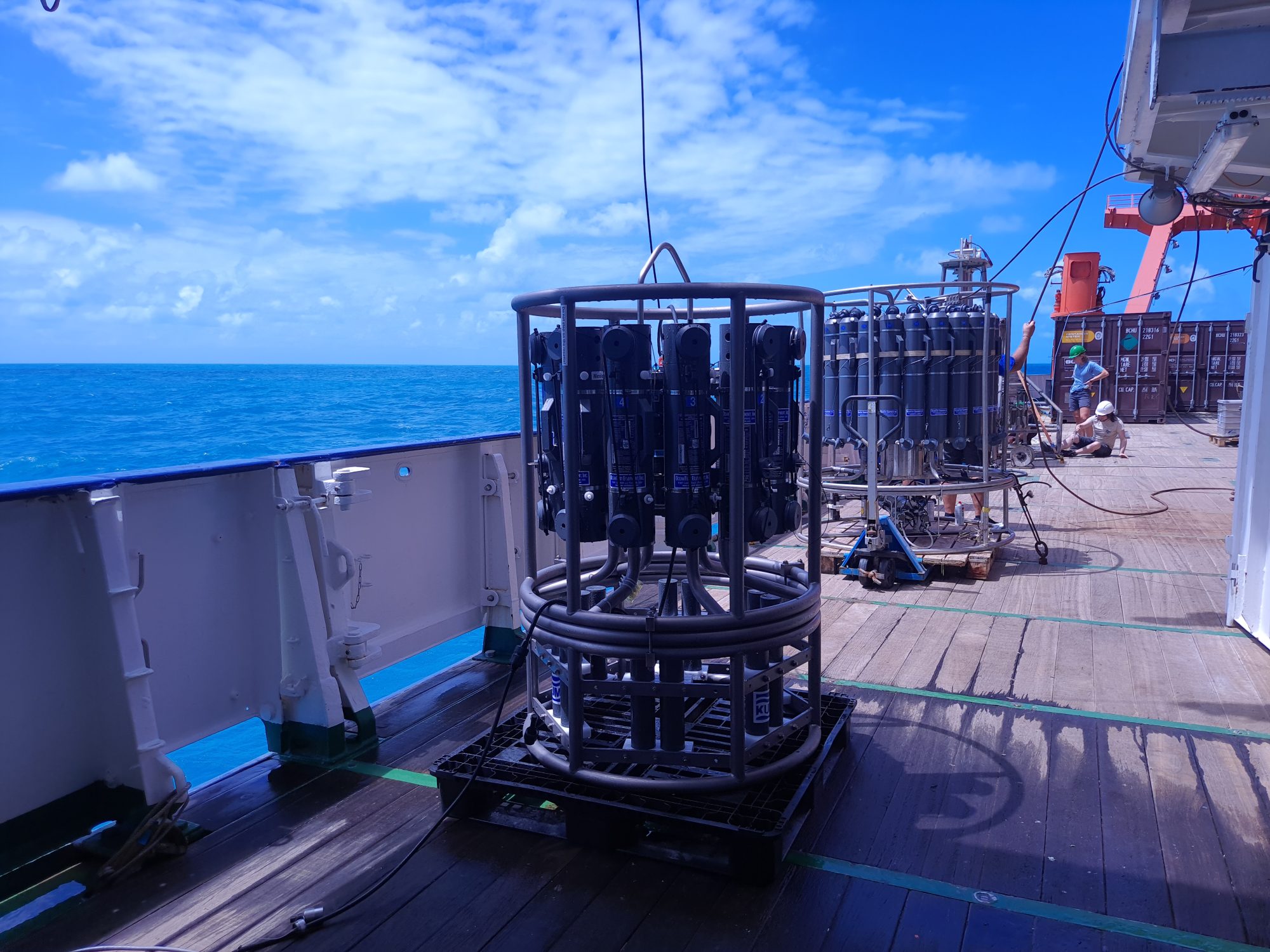
Today and tomorrow, we will be working with all the main sampling instruments: the CTD, the MUC, the BWS, TM-CTD and the tow fish (all pictured). There are two great short videos that show the mechanisms of the MUC and the CTD in operation underwater – one from the Schmidt Institute, here; and the other from Geotraces/PolarTREC, here.
Trace metal (foreground) and normal CTDs on deck.
We have moved now approximately 300nm (550km) west long the coast, zig-zagging in order to sample along the salinity gradient. It is interesting to see that the salinity is extremely high close to the mangrove coastline (on the map, red is most saline and blue is least saline): it is not clear whether this is a normal condition during low water or is exaggerated due to the extreme drought experienced in the Amazon region this year.
Salinity measurements showing higher salinity close to the mangrove coastline
There are 30 scientists aboard, ranging in age from early twenties to …a lot older! Here, I am interviewing Caitlyn Kelly, from South Africa, who is studying at Constructor University and is on her first Geotraces research cruise. (By the way, we did the interview in the small library on board, using a gimbal to steady the camera, and you can see the strange effect this has on the image when the ship rolls a little). Please welcome Caitlyn..!
Caitlyn Kelly of Constructor University talks about M206
We will be navigating to the mouth of the Amazon and taking hundreds of samples of water as we go. We are looking at how the freshwater from the Amazon mixes with the sea water of the Atlantic, along what is called the ‘salinity gradient’.
We all know that the Amazon houses thousands and thousands of species of fauna and flora, some of them threatened with extinction. They include the infamous piranha, the capybara, the jaguar, the giant otter and giant anteater, the black caiman and the poison dart frog. However, at the mouth of the Amazon, little is known about the unique flora and fauna that can live in this environment where the saltiness of the water (the salinity) varies constantly with the tides and can range from 0 (no salt in the water – pure river water) to 7 or 10 on a scale where 35 is pure sea water.
Animals that can tolerate this strange environment are called ‘euryhaline’ (eury comes from the Greek, meaning ‘wide’ and haline is another word for saline), and probably the best known animal is the much-feared bull shark. A bull shark has reportedly been encountered more than 4,000km up the Amazon, but is equally at home in saltwater. Various eels are also known to tolerate salty and pure waters, and there are probably many other animals and plants that are unique to the river mouth.
The huge island at the mouth of the Amazon, Marajó, has 400 recorded species of bird, and 100 mammals. It is famous for its water buffalo, and has more buffalo than anywhere else in Brazil, with 430,000 head. It is used for an awful lot of things in Marajó, including day-to-day transport and for Police patrols, as famous explorer Pete Casey found out when he started his 7-year walk and swim up the Amazon!
Water buffalo in Pesqueiro, Marajó. Photo: Pete Casey, ascentoftheamazon.com
Perhaps we will spot a shark or a dolphin as we approach the Amazon – bookmark us and find out!
The Meteor unmoored and left Fortaleza this morning before 09:00, and we are now sailing for our first sampling station. We are leaving the coast 10 km behind, and in the bright sunshine the water is very blue. We expect to to encounter first green water and then brown water as we go north and get closer to the Amazon river mouth. As we approach our stations along the mangrove region, and close to within a kilometre or two of the coast, we may also see a change in water colour.
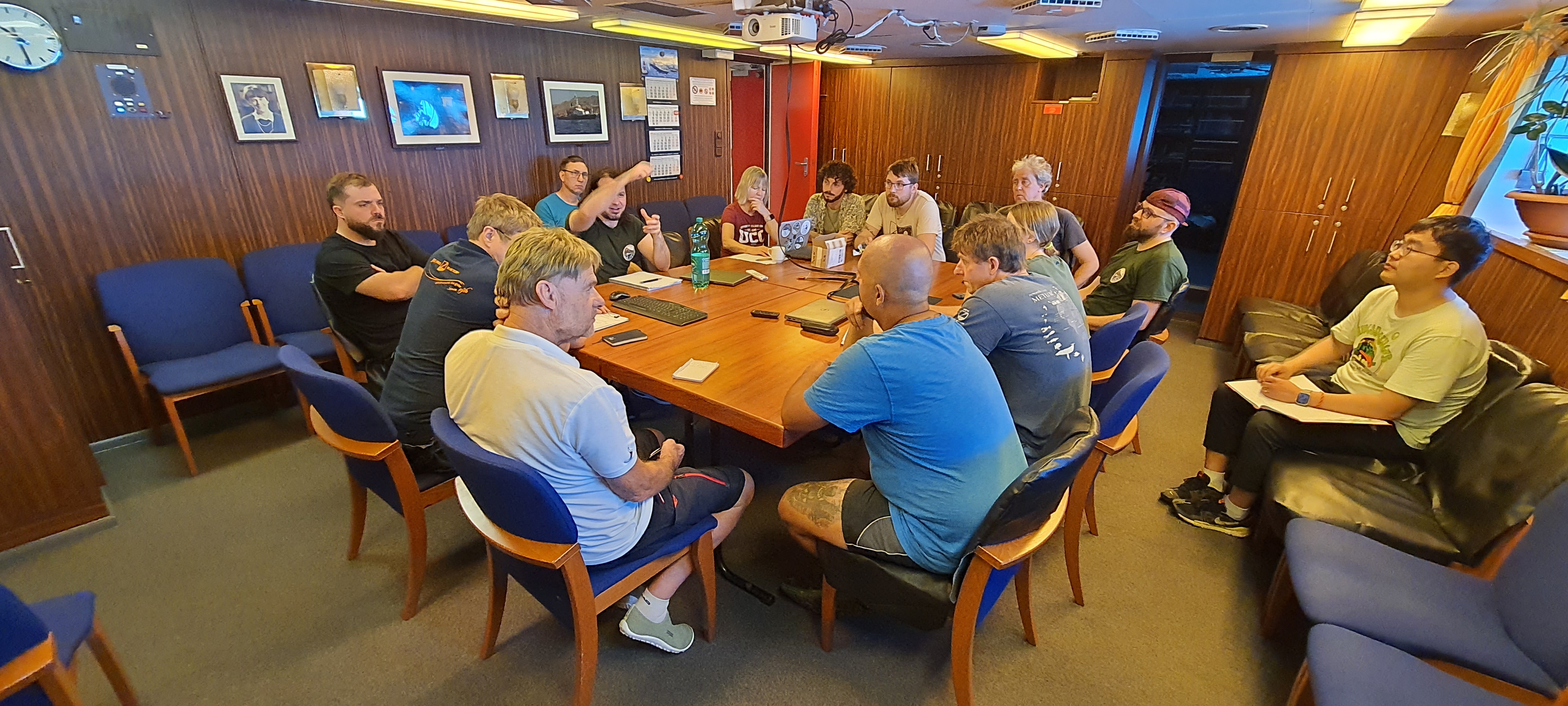
Station meeting in progress in the conference room
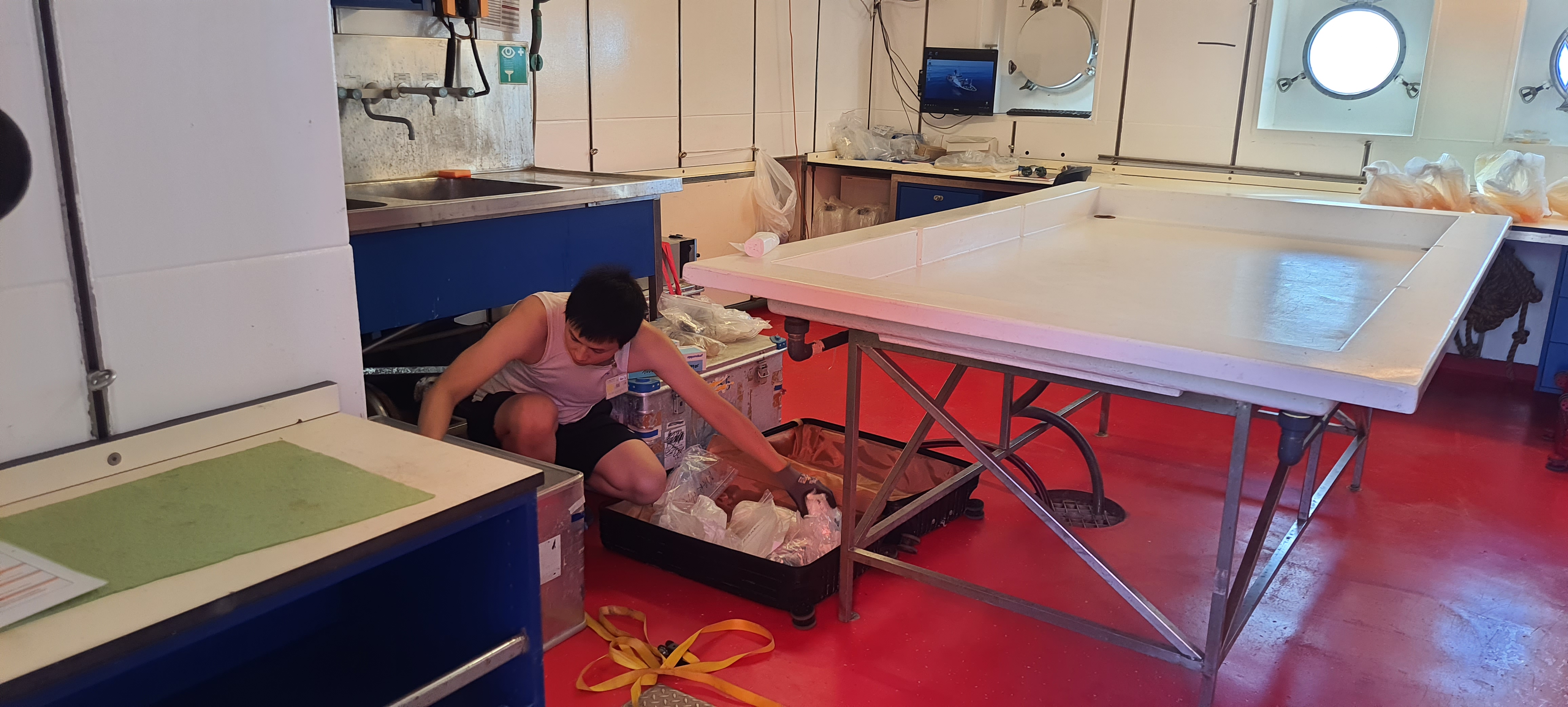
Meanwhile, the scientists have been hard at work and most of the equipment and labs are now organised and ready for the sampling stations. This includes the CTD and MUC samplers, which we will detail in the next posts, and there is a buzz of excitement around the ship as we begin our work in earnest, and this requires careful planning to make the best use of time and money. There is also already some filtering and analysis being done of water samples taken during the PROBAL programme just before M206. Here, a station meeting is in progress to discuss the details of the correct deployment of equipment for the first station tomorrow morning at 08:20.
Our approximate locations after leaving Fortaleza.
Outside, work goes on all day and night for the captain and crew. Although we are at the beginning of the wet season in the Amazon, here, further south, we have wall-to-wall sunshine, and temperatures even 10km from the land are around 30 degrees, and a lot more if you’re not in the shade. We have to be careful and take suitable precautions when we go on deck for any length of time.
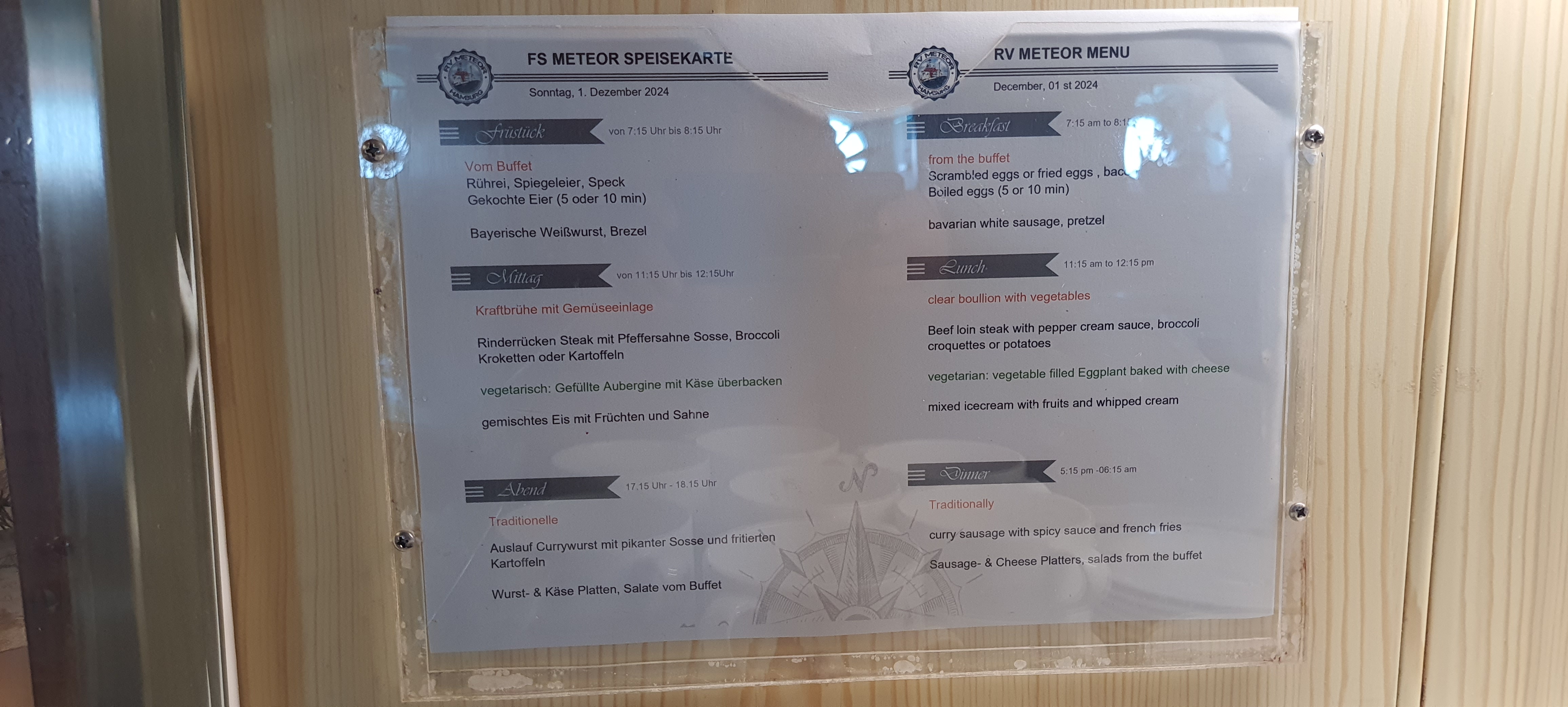
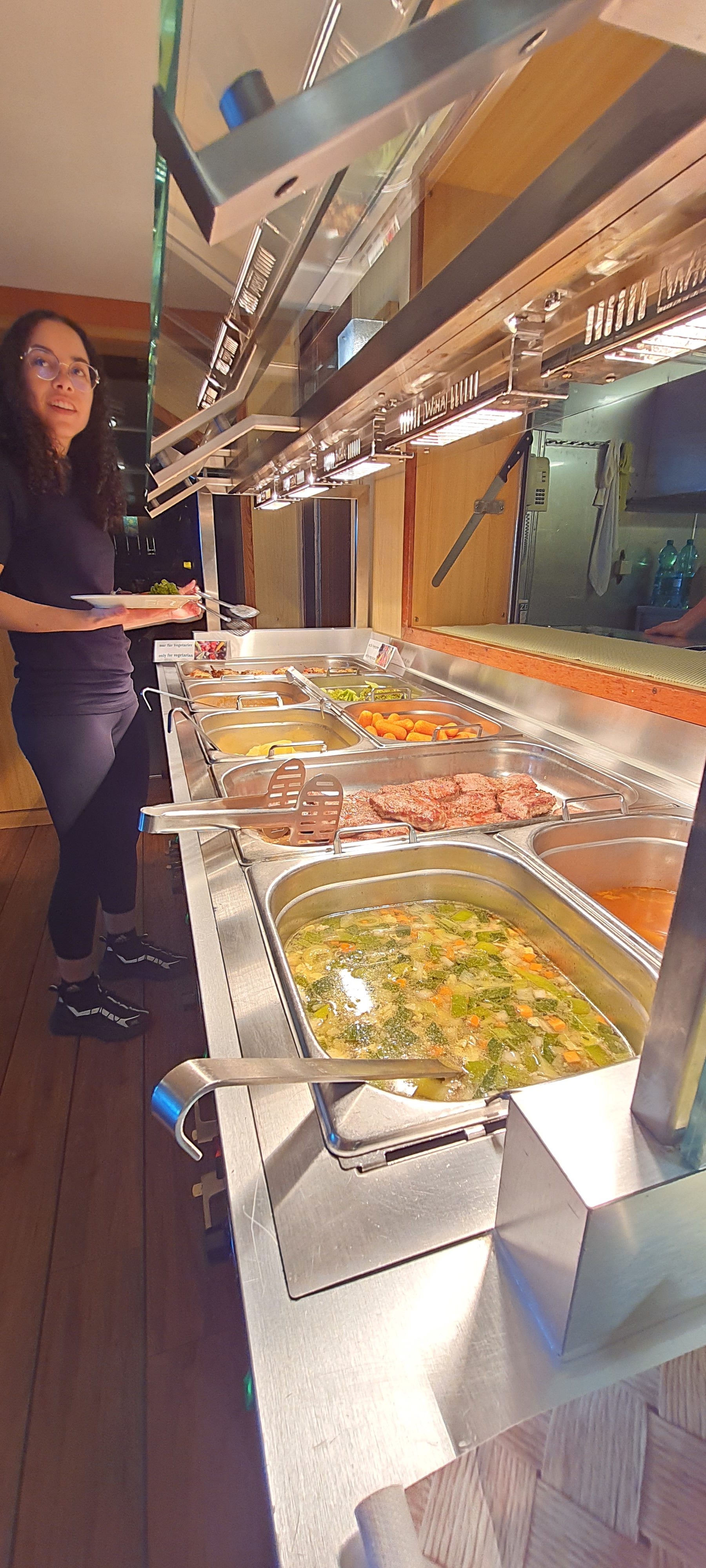
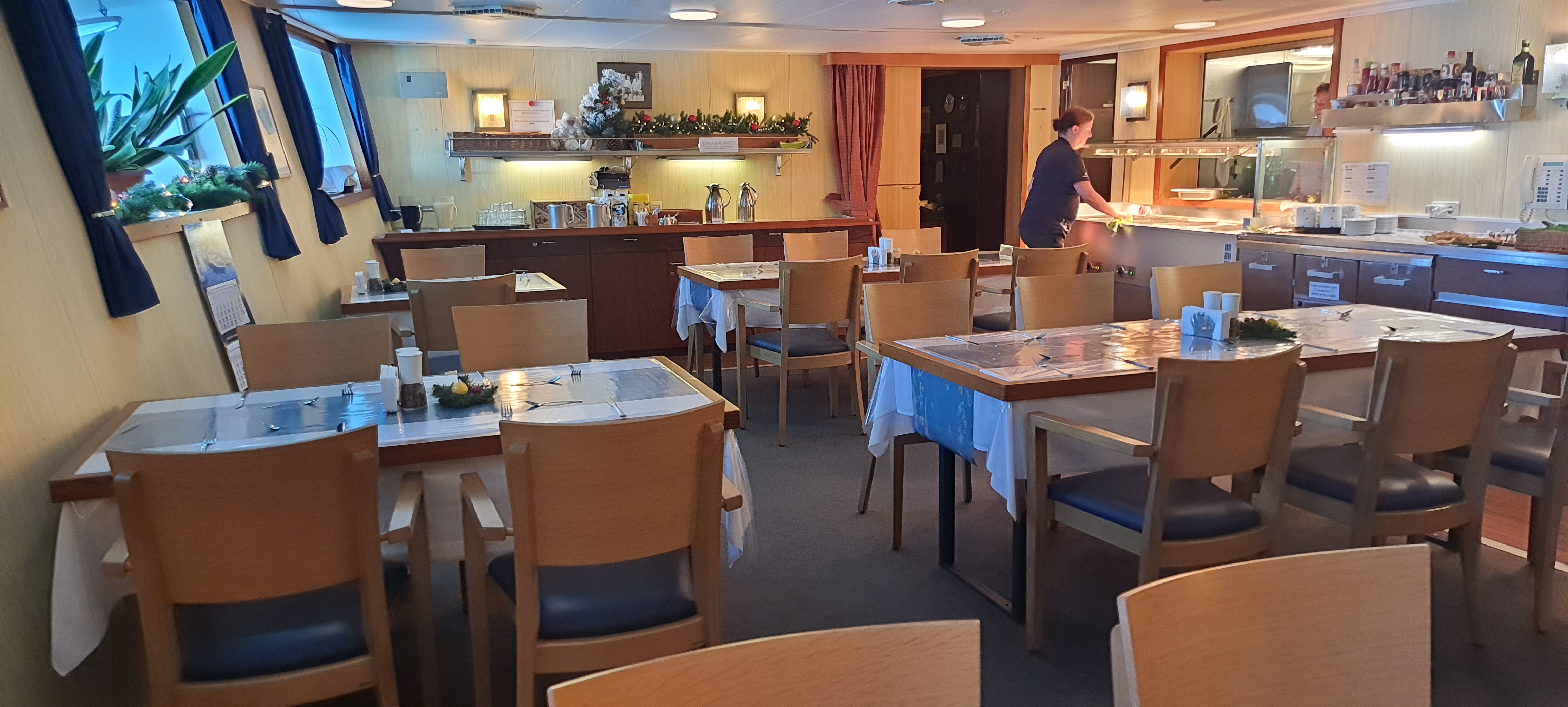
Throughout the day, with such a lot of energy being expended, the chief steward and her staff have to feed over 60 hungry mouths. The times may seem odd to some people, but we soon get used to breakfast at 07:15, lunch at 11:15 and dinner at 17:15. The food is both tasty and nutritious.
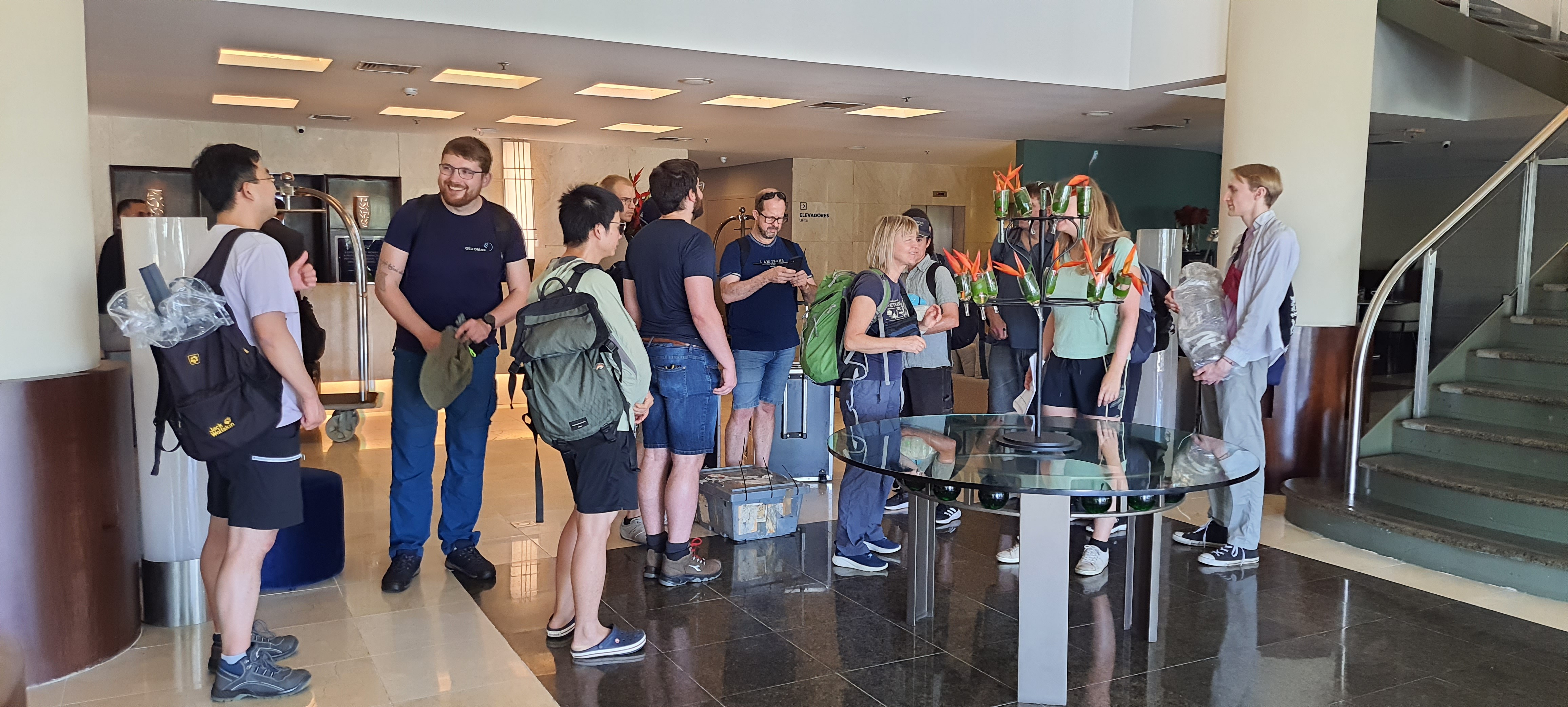
All present and correct! Ready to depart our Hotel.
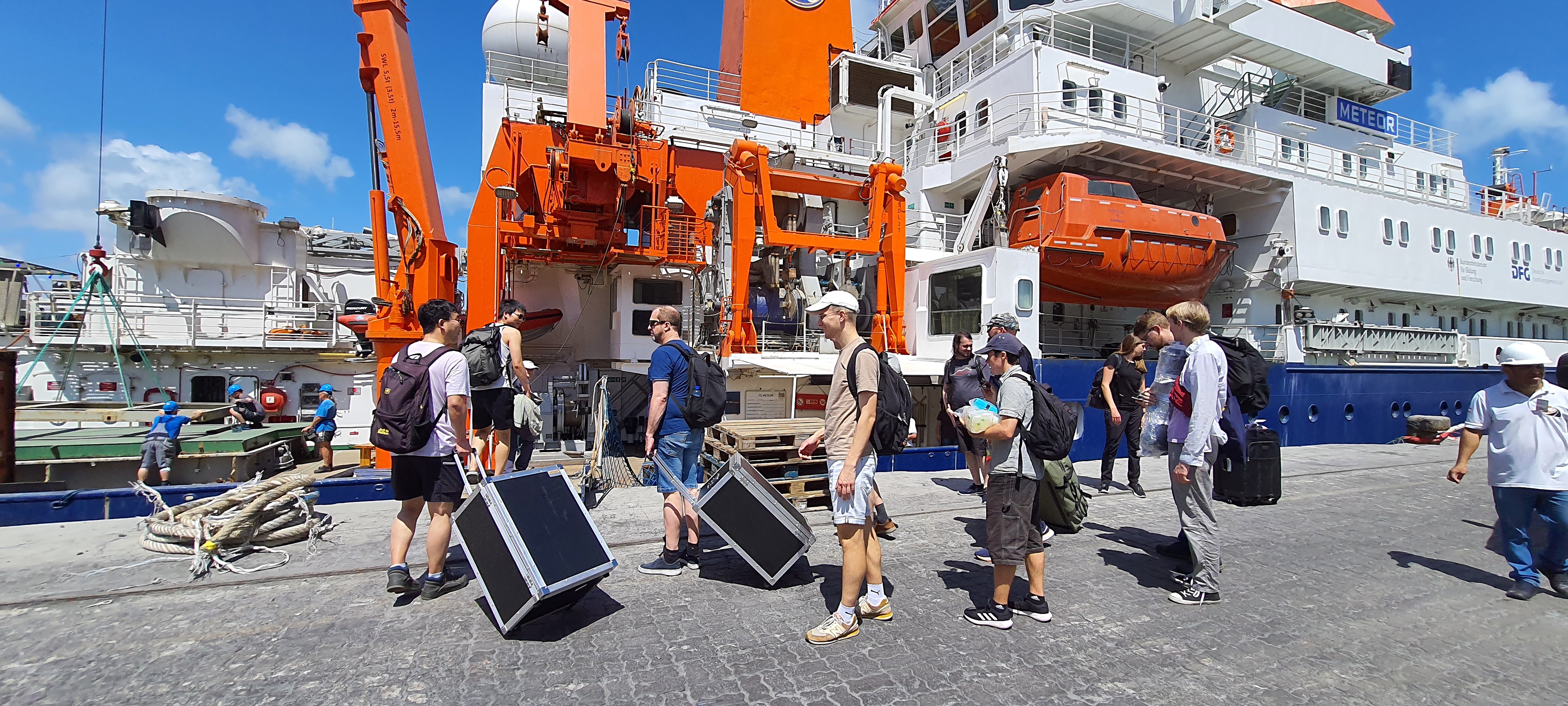
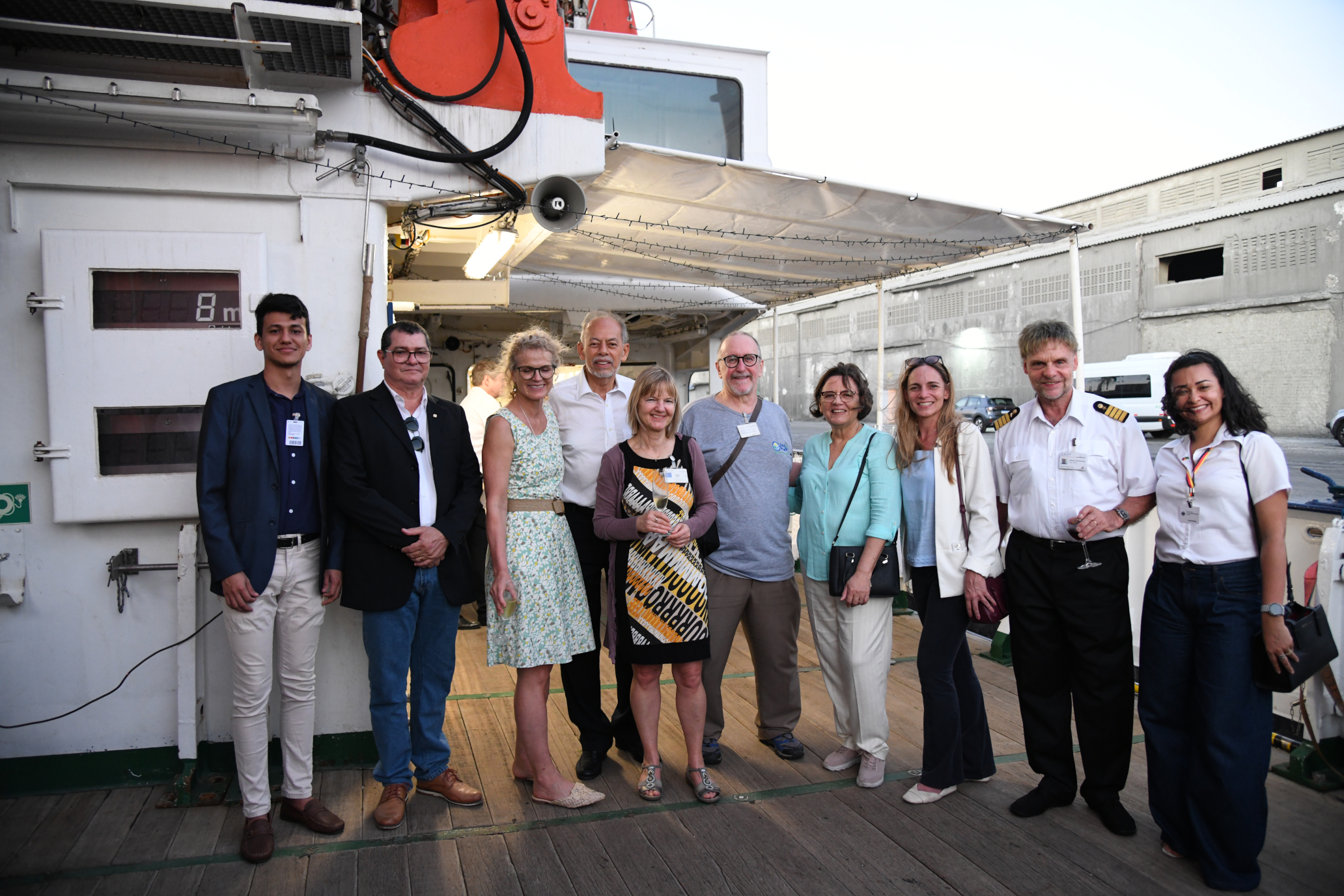
It has been a busy two days – and we haven’t even left port yet! Firstly, there was equipment to get aboard and stow, and a reception to be organised for local German and Brazilian dignitaries. This included a presentation by the scientists, a tour of the ship and some canapés on the main deck. It all went very well, and we were pleased that all our visitors enjoyed being tested on what they had learned with a short Kahoot, before being taken around and shown what a great ship and crew we have to look after the cruise. Many thanks to all who honoured us with their presence.
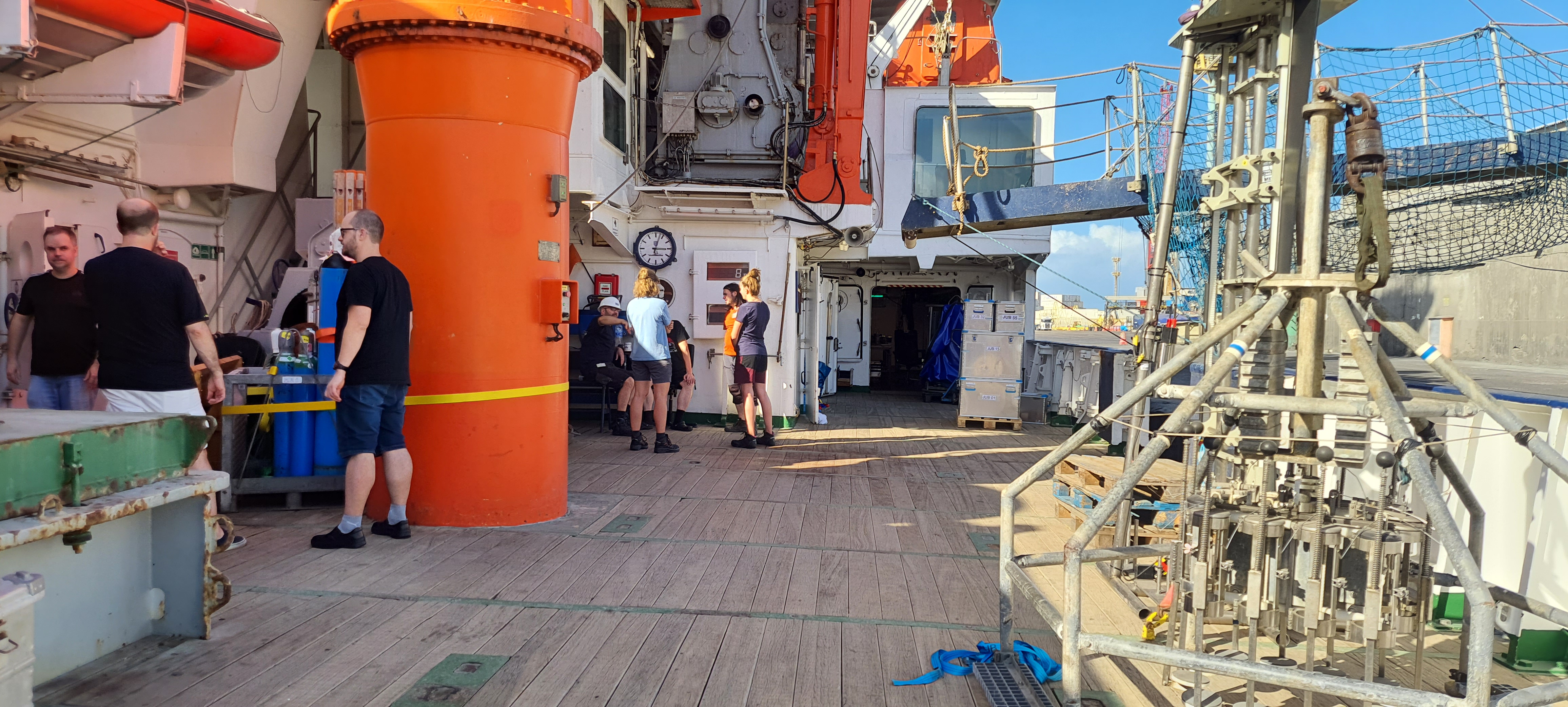
The following day, all the scientists embarked early in order to begin the task of moving specific equipment and supplies into the labs that will function as hubs for all their analytical work. We also had important meetings with the Chief Scientist, the Captain and the ship’s Safety Officer. This included a short tour of the ship to show us the relevant safety stations, lifeboats and life rafts. We hope these will not be necessary, but it is important to know how to act and where to go in the event of need.
It is late afternoon now and everyone is still at work setting up their posts in the labs, and preparing for the long sampling run ahead. This will begin tomorrow, as soon as we leave port, interrupted only by more safety training. Details of individual labs and the work of all the groups will be coming soon – bookmark us to find out more!
All scientists embarkPresentation of M206 Outreach ProgrammeReceptionPreparation on deck completePreparing a lab
All photos Clive Maguire except ‘Reception’ and ‘Presentation of M206’ – Photos Mark Zindorf, with thanks.
NASA Goddard Visualisation of the surface currents of the global oceans.
We are all connected, wherever we are on the planet, by the seas that encircle us. They cover 71% of our planet, extend to a depth of up to 10km, and act as the Earth’s heart – and yet we still don’t fully understand what goes on under the waves. Since 2010, the Geotraces programme has been filling some of the gaps in our knowledge. Funded by the International Science Council, and involving 36 countries and 153 research cruises over fourteen years (so far), it is perhaps the longest, biggest, most complex, most important international research programme you’ve never heard of.
Geotraces M206
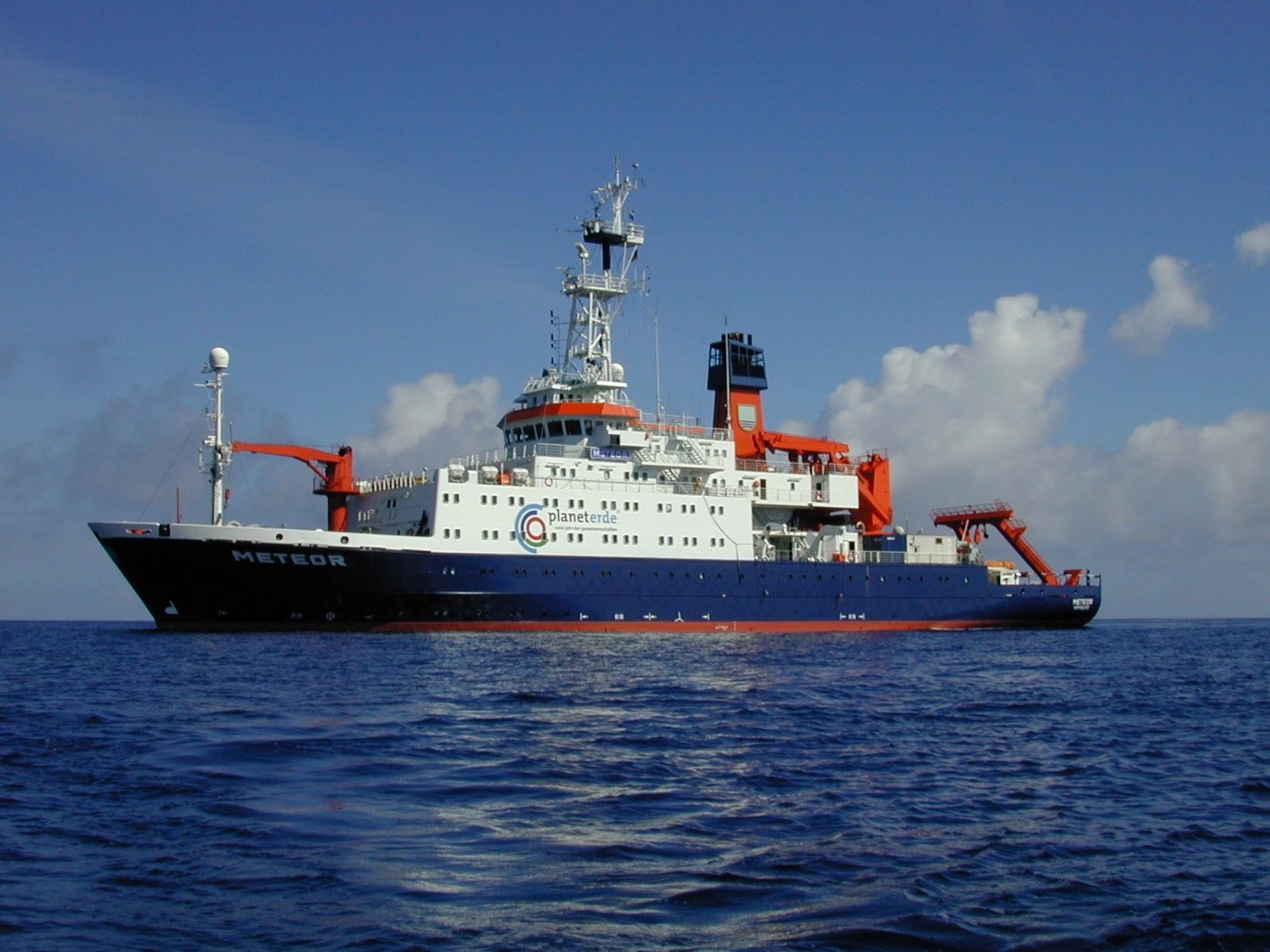
In December, a top team of international scientists will join the ship RV Meteor to investigate the area around the mouth of the amazing Amazon river. With a highly-experienced crew of 33, the RV Meteor is a well-known German research vessel that has journeyed around the planet many times. Geotraces research cruise M206 sets off from the Brazilian port of Fortaleza and will work its way north along the coast to the mouth of the Amazon, where sampling will begin.
You can follow the progress of the cruise here, where we will be posting about various aspect of the programme, including:
The RV Meteor – all about the ship and life aboard her.
The GEOTRACES Programme – what it is, and the role it plays
M206: the people, the places, the organisation
Research: aims, activities, processes, results
Geosciences and their importance
Education – facts and figures, projects, information, lesson plans
On 30th November, the Amazon Geotraces-2 interdisciplinary research cruise M206, with RV Meteor, led by Prof. Andrea Koschinsky of Constructor University will sail from the Brazilian port of Fortaleza to begin work examining the distribution of trace elements, organic matter and isotopes discharged into the Atlantic from the Amazon’s mouth. The cruise is carried out in collaboration with GEOMAR in Kiel, the University of Oldenburg, the University of Hamburg, and the Brazilian Universities Universidade Estadual do Norte Fluminense, Universidade Federal de Santa Maria and Universidade Federal do Rio Grande do Sul.
The Amazon Plume
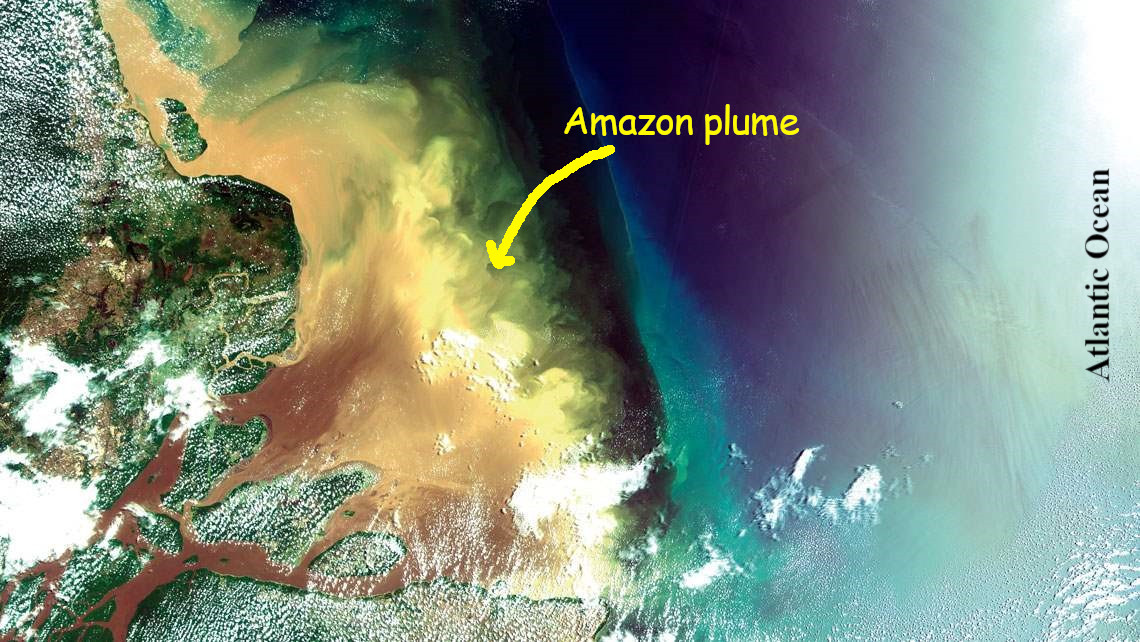
The Amazon River is almost 7.000 km long and in the wet season transports an incredible 300,000 cubic metres of water into the Atlantic Ocean every second. It is responsible for about 20% of the world’s fresh water entering the ocean, and the water spreads into the ocean in a huge plume covering an area of 80,000 square kilometres. As it pushes into the sea, it brings with it huge quantities of trace metals such as iron and copper and dissolved organic materials, and it is these materials and the processes they undergo during mixing of river water and seawater that interest the team.
The sediment plume from the river penetrates thousands of kilometers into the Atlantic, home to its own fauna that differs to other regions of the ocean. Source: Ricardo Zorzetto, http://www.revistapesquisa.fapesp.br
“We need a much better understanding of the material cycle in the ocean,” says Prof. Koschinsky about the research trip’s aims. “We will only be able to reliably predict the human impact on the cycle if we can succeed in this.” Elements such as carbon, nitrogen, and phosphorus play an important role in our oceans, as they are essential elements for the formation of biomass. However, all life needs iron – even the smallest marine organism. In addition, many other trace elements such as copper, cobalt and zinc are essential while some other elements such as mercury are toxic elements of high environmental concern.
This is the second time the team will have studied the area. In 2018, they visited during the wet season, and this year they will study what happens in the dry season. They will take comparative water and sediment samples throughout the plume area and beyond, at depths from less than 100m to more than 2,000m and across the mixing area from pure seawater to pure freshwater. The research is very important, particularly now, when the whole of the Amazon region has experienced the worst drought in living memory. Humans are intervening in the fragile ecosystem of the Amazon and changing it significantly by building dams and through deforestation, and intensive agriculture. In addition, climate change will alter the fluxes from the Amazon to the ocean. All of this will in turn impact the biological productivity and health of the coastal ocean.
The Geotraces Programme
This cruise is an acknowledged process study (cruise number GApr21) of the international GEOTRACES program carried out by teams from 35 countries. For M206, Brazilian team members will play a critical role in the analysis of trace metals and microbial diversity, and the results of the research will feed into the wider global Geotraces programme that seeks to fill our knowledge gaps in trace metals and their isotope in the global oceans and help us understand the marine biogeochemical cycles. Ultimately, it is part of the jigsaw that contributes to our understanding of ocean ecosystems, the global carbon cycle, climate change and the earth’s ocean currents.
NEW Young Learner Outreach
This year we are focused on helping young learners and their teachers engage with M206, Geotraces, and the wider geoscientific community. In addition to adding regular blog posts here, we will be adding posts we hope students and teachers will find interesting, and building up an online library of free factsheets, fun activities and quizzes, lessons/lesson plans, links and other useful or fun material. Bookmark and keep an eye on the blog, or take a look at our young learner pages here.
RV Meteor (I, Studgeogr, wikimedia cc)Amazon plume water temperatures (NASA)Amazon plume from space (FAPESP)