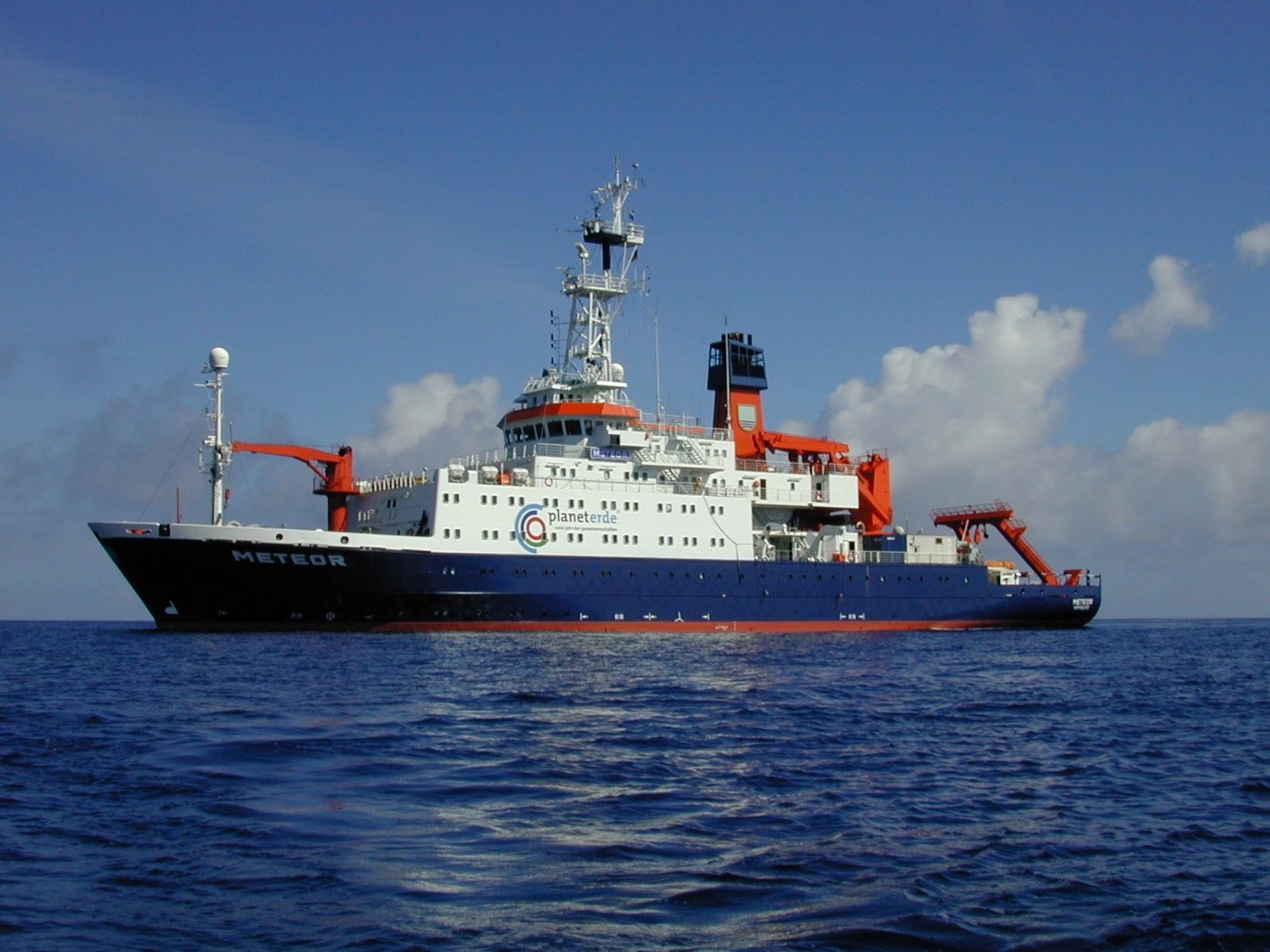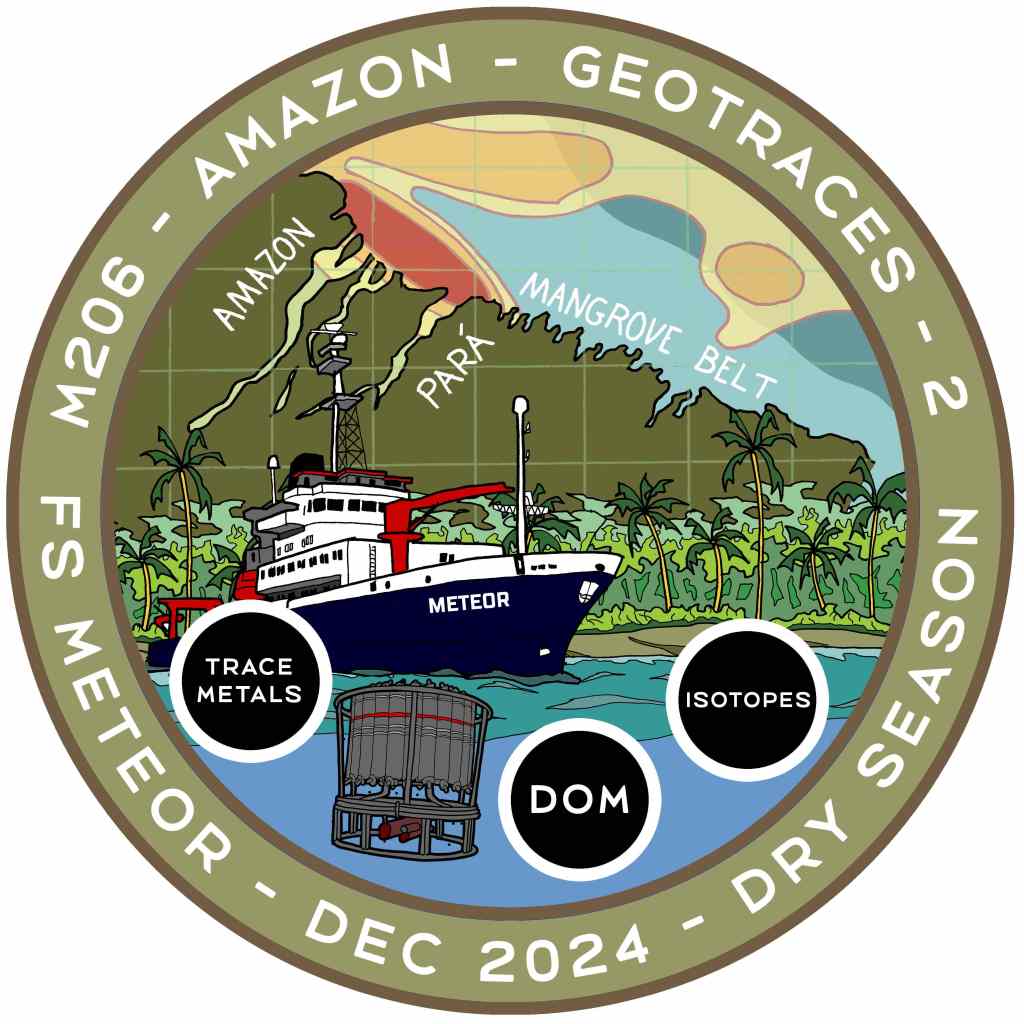
On 30th November, the Amazon Geotraces-2 interdisciplinary research cruise M206, with RV Meteor, led by Prof. Andrea Koschinsky of Constructor University will sail from the Brazilian port of Fortaleza to begin work examining the distribution of trace elements, organic matter and isotopes discharged into the Atlantic from the Amazon’s mouth. The cruise is carried out in collaboration with GEOMAR in Kiel, the University of Oldenburg, the University of Hamburg, and the Brazilian Universities Universidade Estadual do Norte Fluminense, Universidade Federal de Santa Maria and Universidade Federal do Rio Grande do Sul.
The Amazon Plume
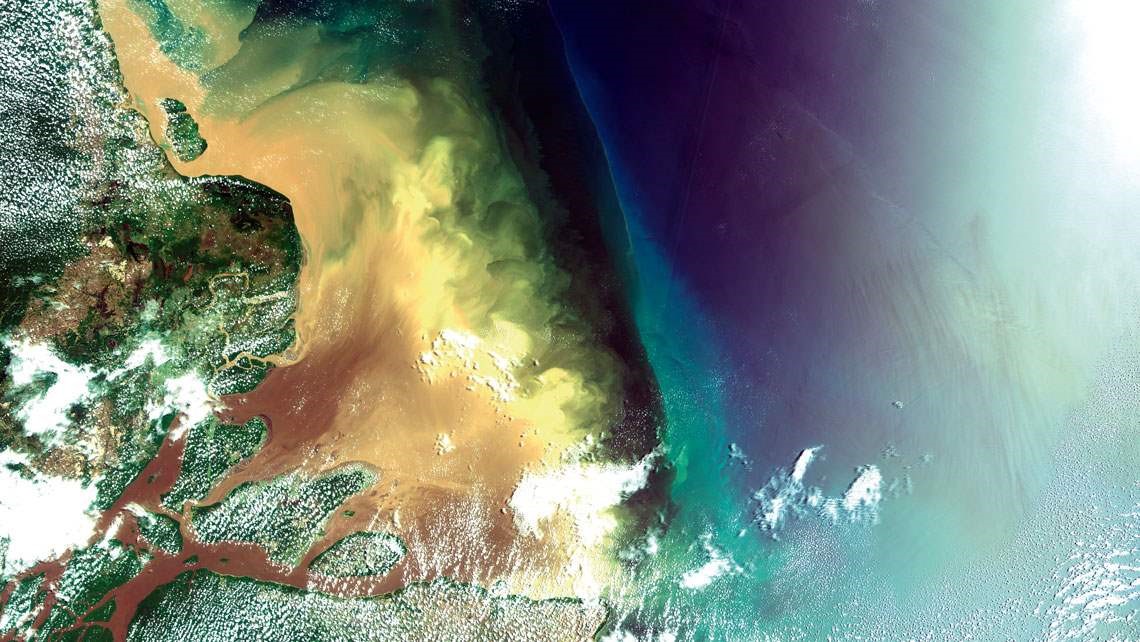
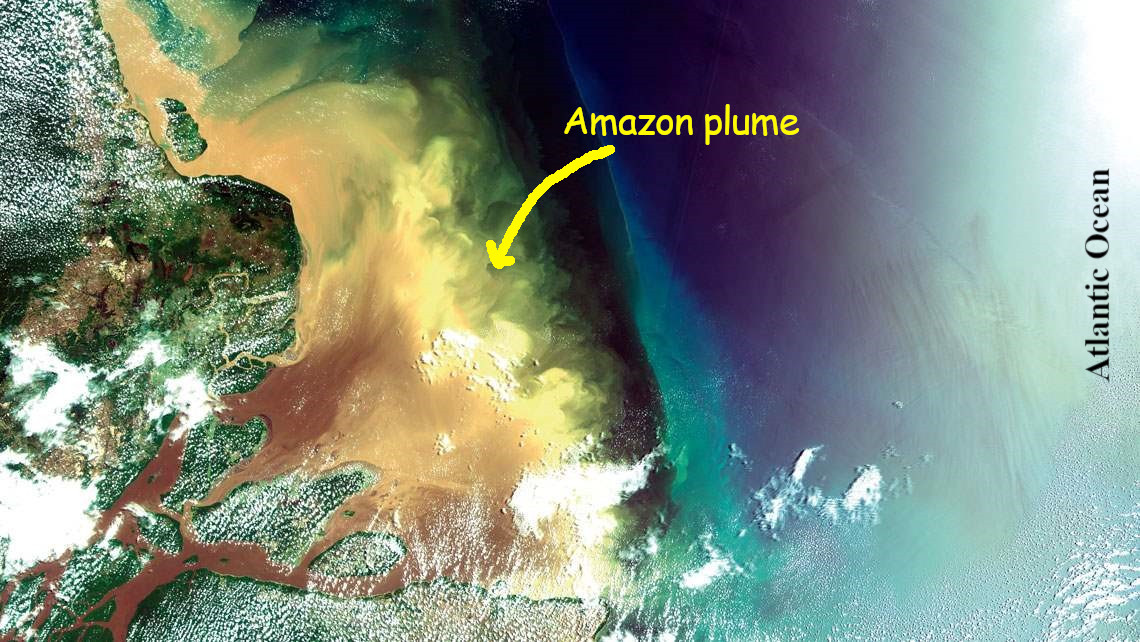
The Amazon River is almost 7.000 km long and in the wet season transports an incredible 300,000 cubic metres of water into the Atlantic Ocean every second. It is responsible for about 20% of the world’s fresh water entering the ocean, and the water spreads into the ocean in a huge plume covering an area of 80,000 square kilometres. As it pushes into the sea, it brings with it huge quantities of trace metals such as iron and copper and dissolved organic materials, and it is these materials and the processes they undergo during mixing of river water and seawater that interest the team.
“We need a much better understanding of the material cycle in the ocean,” says Prof. Koschinsky about the research trip’s aims. “We will only be able to reliably predict the human impact on the cycle if we can succeed in this.” Elements such as carbon, nitrogen, and phosphorus play an important role in our oceans, as they are essential elements for the formation of biomass. However, all life needs iron – even the smallest marine organism. In addition, many other trace elements such as copper, cobalt and zinc are essential while some other elements such as mercury are toxic elements of high environmental concern.
This is the second time the team will have studied the area. In 2018, they visited during the wet season, and this year they will study what happens in the dry season. They will take comparative water and sediment samples throughout the plume area and beyond, at depths from less than 100m to more than 2,000m and across the mixing area from pure seawater to pure freshwater. The research is very important, particularly now, when the whole of the Amazon region has experienced the worst drought in living memory. Humans are intervening in the fragile ecosystem of the Amazon and changing it significantly by building dams and through deforestation, and intensive agriculture. In addition, climate change will alter the fluxes from the Amazon to the ocean. All of this will in turn impact the biological productivity and health of the coastal ocean.
The Geotraces Programme
This cruise is an acknowledged process study (cruise number GApr21) of the international GEOTRACES program carried out by teams from 35 countries. For M206, Brazilian team members will play a critical role in the analysis of trace metals and microbial diversity, and the results of the research will feed into the wider global Geotraces programme that seeks to fill our knowledge gaps in trace metals and their isotope in the global oceans and help us understand the marine biogeochemical cycles. Ultimately, it is part of the jigsaw that contributes to our understanding of ocean ecosystems, the global carbon cycle, climate change and the earth’s ocean currents.
NEW Young Learner Outreach
This year we are focused on helping young learners and their teachers engage with M206, Geotraces, and the wider geoscientific community. In addition to adding regular blog posts here, we will be adding posts we hope students and teachers will find interesting, and building up an online library of free factsheets, fun activities and quizzes, lessons/lesson plans, links and other useful or fun material. Bookmark and keep an eye on the blog, or take a look at our young learner pages here.