We will soon be arriving in Belém and, given the season, it is very likely to be raining. We must not grumble, though – at least it is warm rain and generally falls on your head or your bumbershoot, rather than hitting you in the face like the windblown, horizontal winter rain, sleet, hail and snow with which we shall soon be reacquainting ourselves.
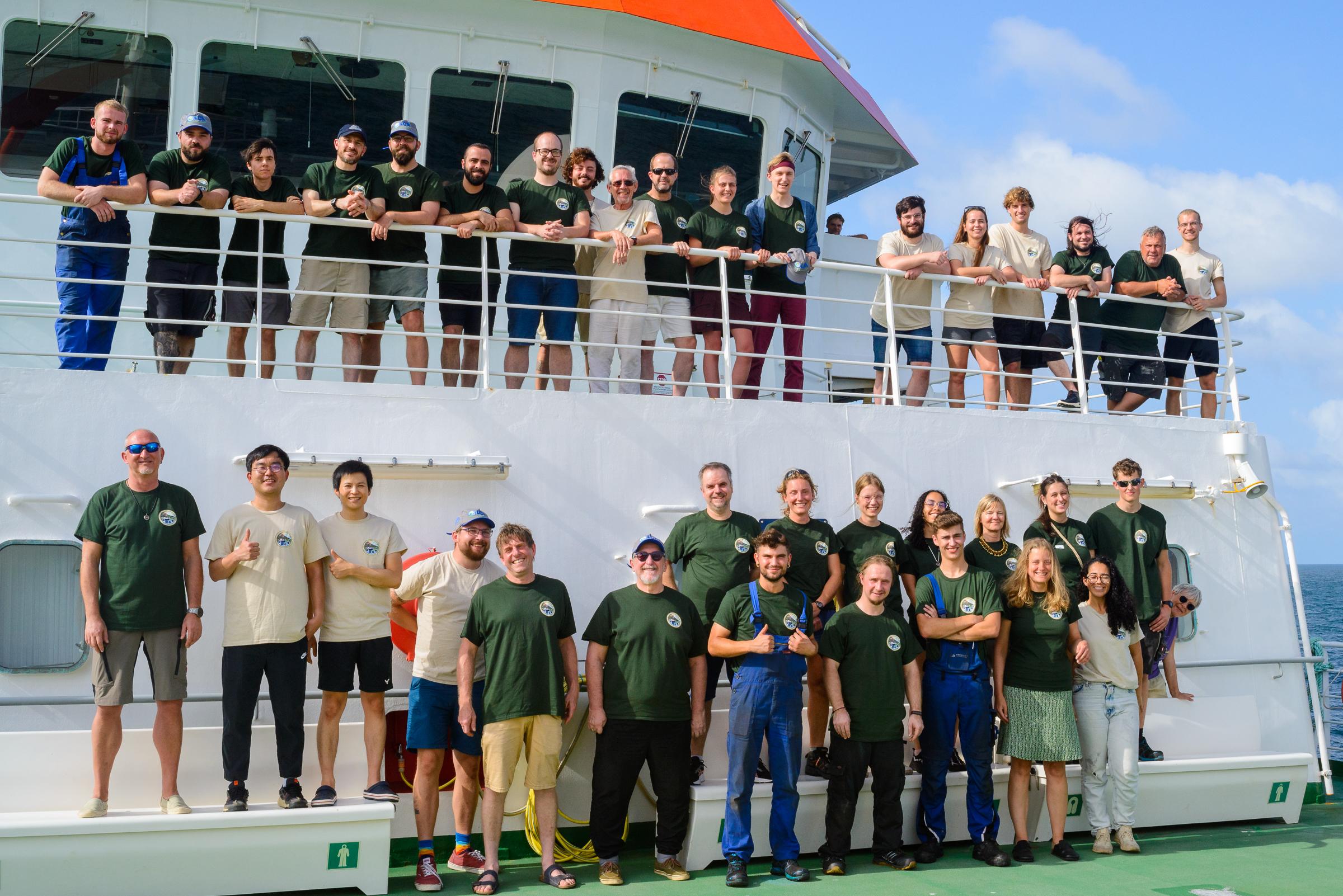
Scientists+ (Nico Fröhberg)
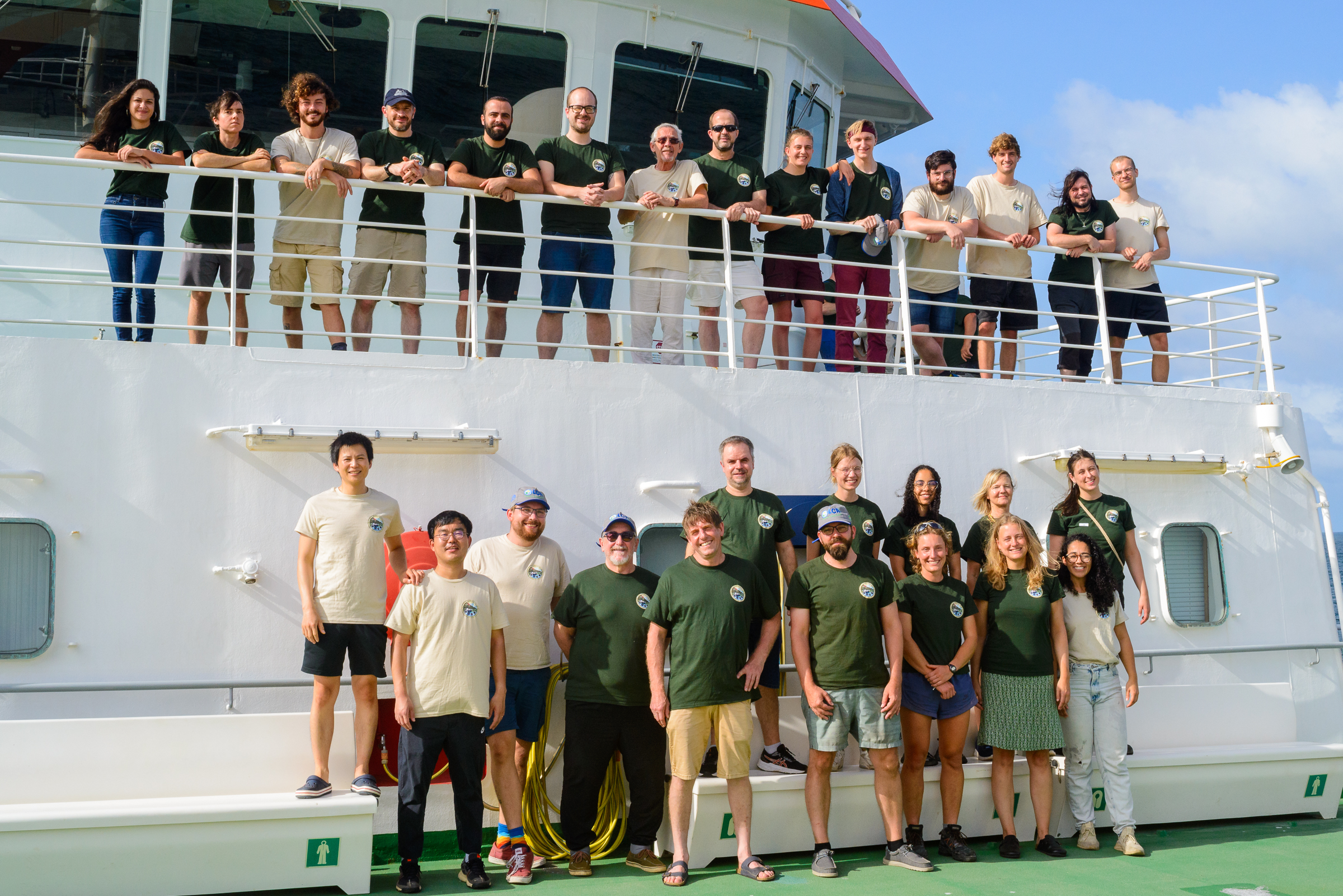
Scientists only (Nico Fröhberg)
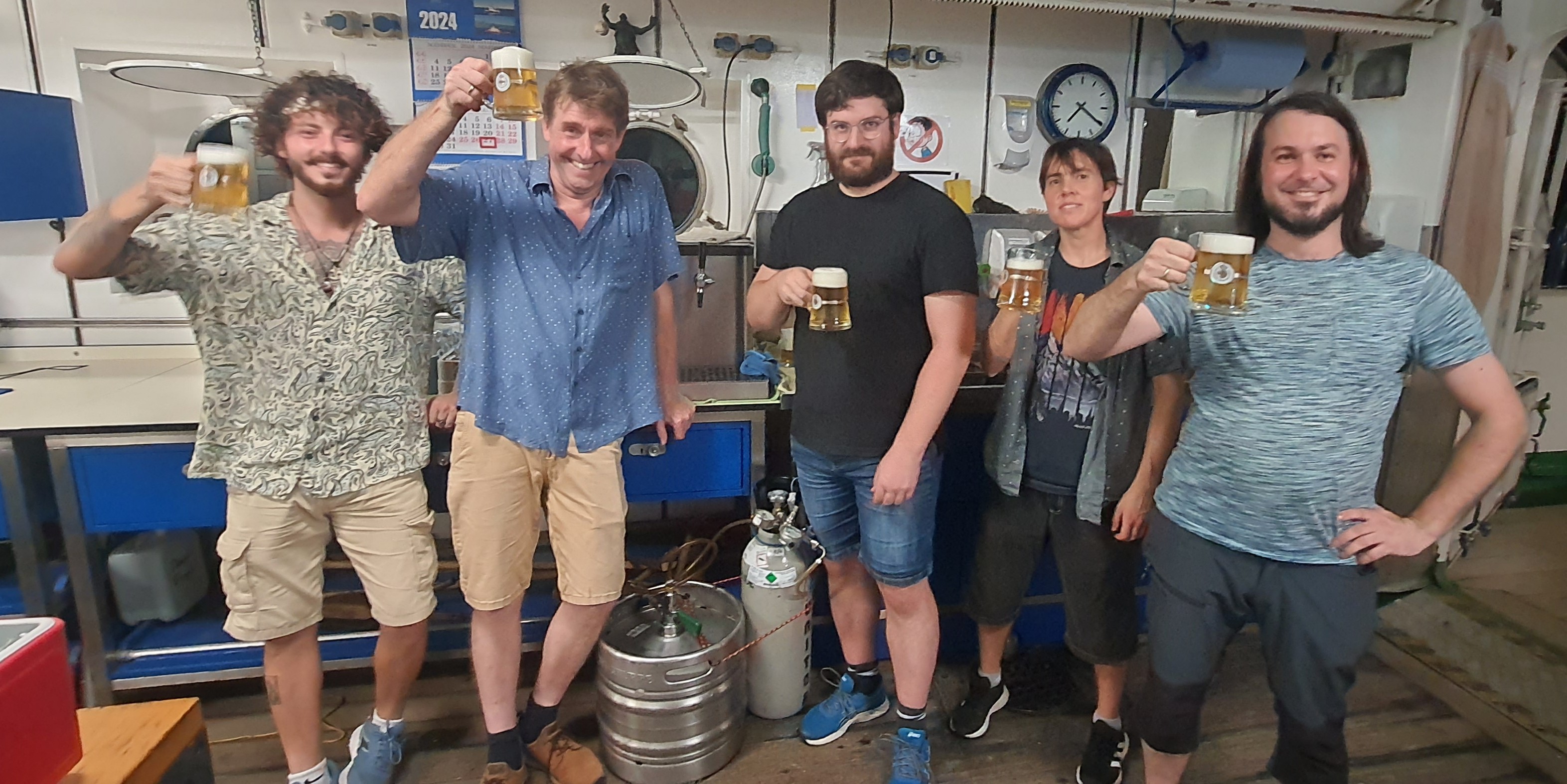
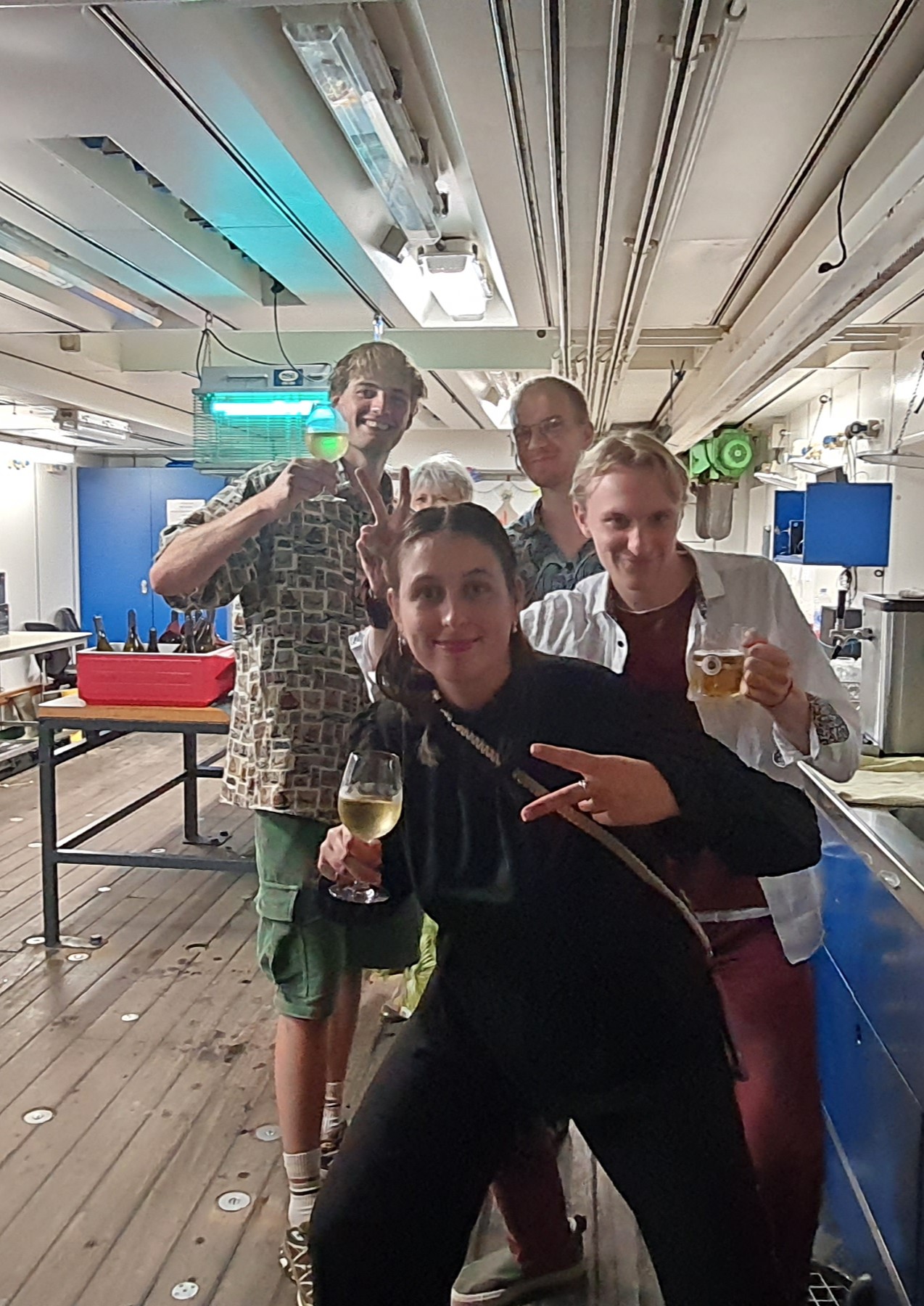
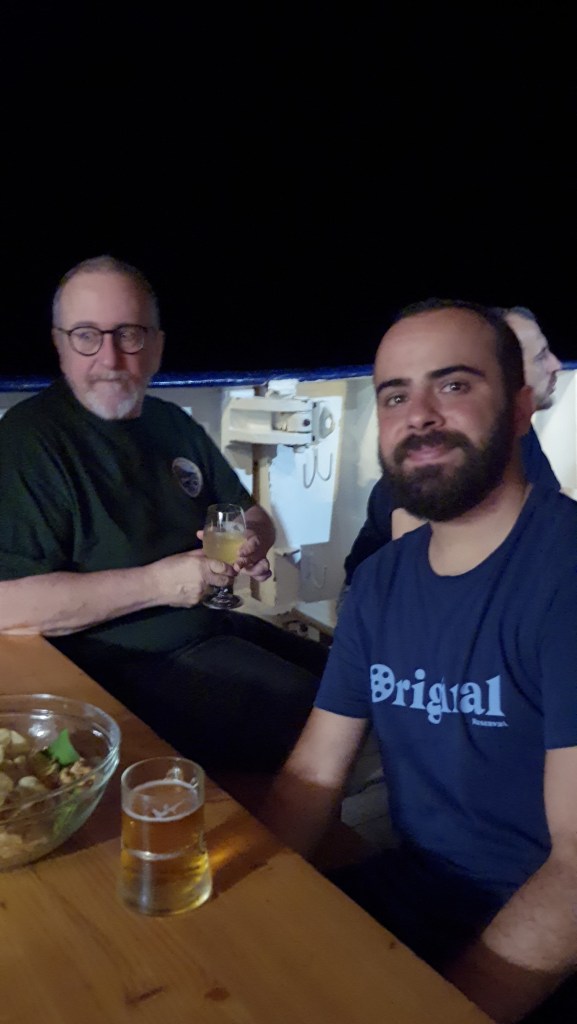
To distract ourselves for a moment, it is good to take a look at the group photos taken by Nico as well as a handful of other ‘making of the’ photos. It will be a relatively quiet day now, I think, although we may visit Belém tonight for a meal. The Captain and crew will be concerned with the inevitable formalities of arriving in port, Chief Scientists Andrea and Martin will be doing their admin., and we will all have our own formalities to deal with over the next day or so.
Some people will be leaving the ship tomorrow to fly home in time for the New Year’s celebrations, and some will stay an extra night and either celebrate in Belém or, in at least one case, on the plane. A few people have arranged to take some leave and spend extra time in Brazil, either in and around Belém or Algodoal, or further into the Amazon. For the moment, however, we’re all still together on board 🙂
Road Crew. From left: Rami, Martin, Sebastian, Adrian & Mark
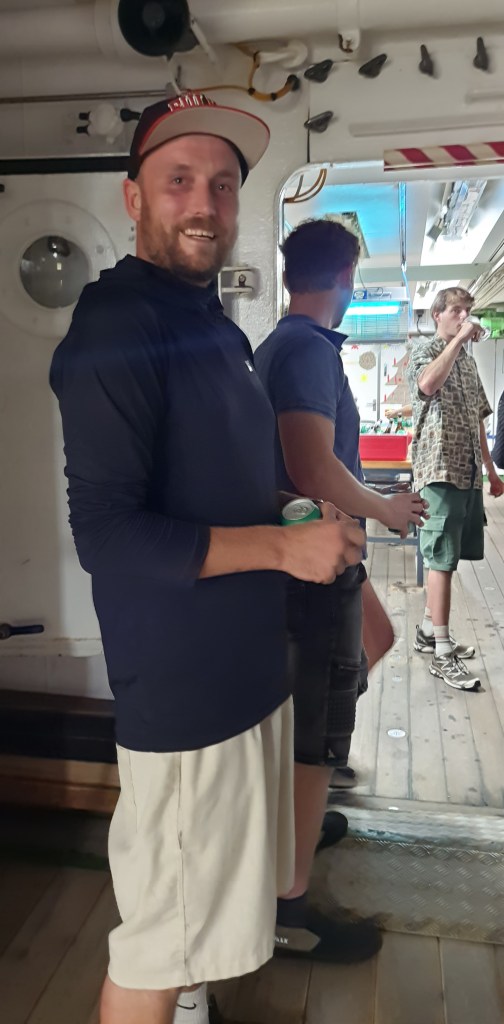
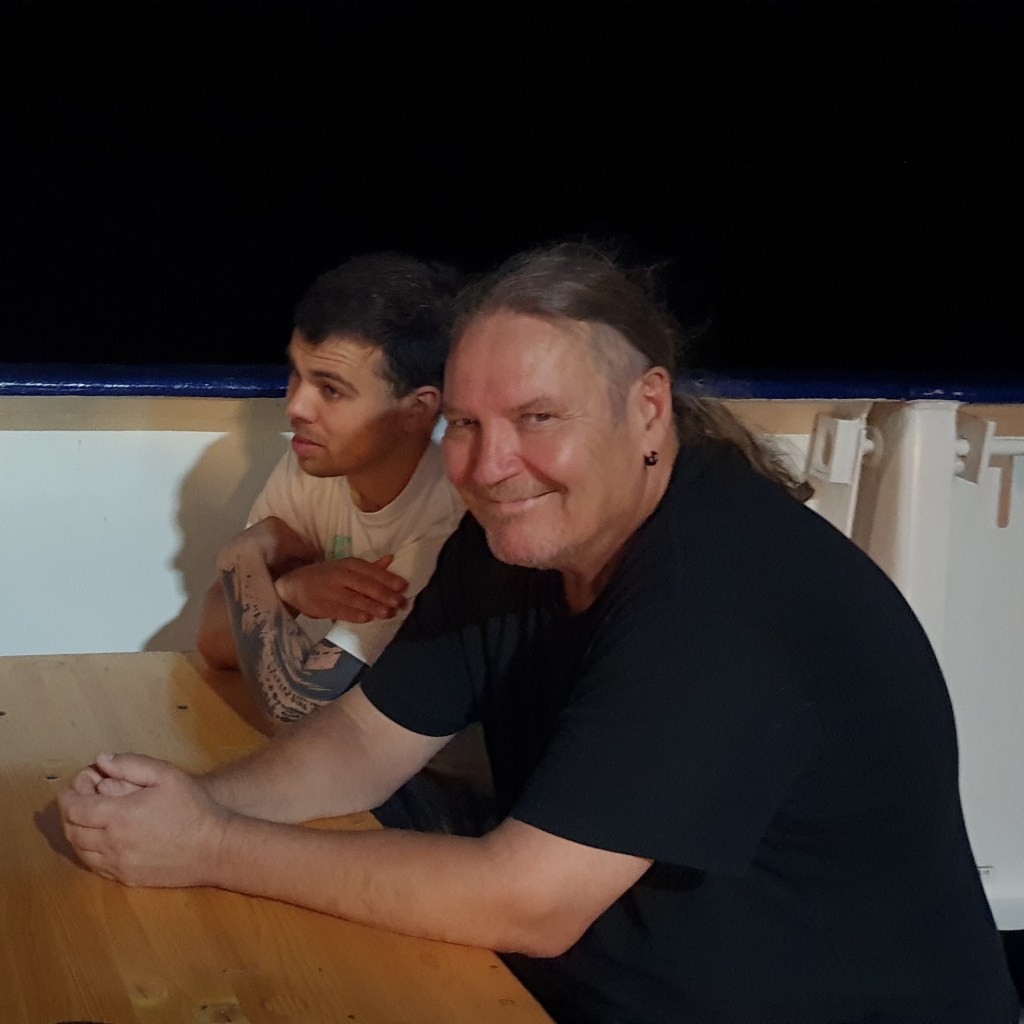
After a perfect pre-party pasta meal, a small but select band of men gathered together to organise the drinks for the delayed Christmas get-together for scientists and crew (photo).
‘Cool & the Gang’ From front: Gwendolyn, Elias, Lourenz & Albert
The organisation of all the tables and snacks, plus the Secret Santa and arrangements for the speeches by the Captain and Chief Scientist were handled by the crew with their customary efficiency, and the party was launched by the Captain at 19:30. In addition to the Secret Santa exchange of gifts, the scientists gave M206 T-shirts to the crew, to which Nico Fröhberg thoughtfully added some tiny M206 souvenir sample bottles.
The delayed party also marks the end of a successful cruise, as now we will be making our way back to the port of Belém and labs will be packing and stowing samples and equipment.
It was a fine evening, warm and dry and with little wind, and the party was a great success and a fitting end to all the hard work done over the past weeks.
Thanks to everyone who made it possible, and below are a few photos for the record.
Captain’s speech
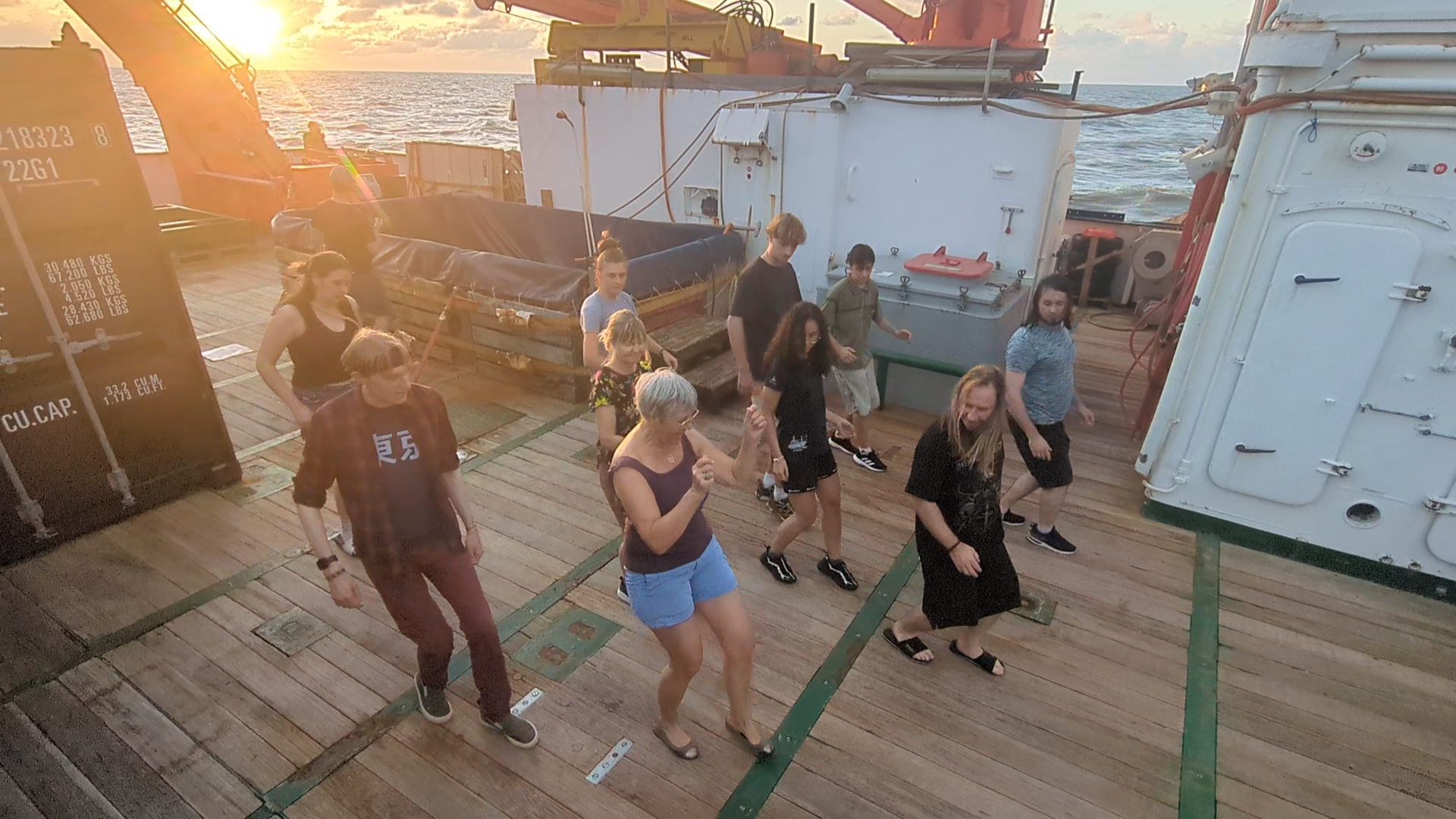
Line dancers were: Andrea, Elias, Christine, Lourenz, Caitlyn, Melanie, Mariana, Alana, Mark, Adrian
Work hard, play hard, they say. Toiling up and down the Brazilian coast collecting and filtering water samples involves a lot of late nights, early mornings and long afternoons – and sometimes a lot of sitting or standing in one place for long periods.
Line Dancing with Christine Hammacher aboard the Meteor! (Special thanks to Stefan Seidel for the original video)
But the antidote is here! Yesterday afternoon in a quiet period, there was an impromptu line dance organised and led by redoubtable ‘trainee deck hand’ Christine Hammacher (aka the Captain’s wife).
It was, by all accounts, a lot of fun – and thankfully the sea was quiet, which meant no-one fell in (although from the evidence, it seems that some of the participants were a little directionally challenged at times).
Thanks to Christine for her organising skills and excellent training!
(Flash Mob, definition: “a group of people who organize on the Internet and then quickly assemble in a public place, do something bizarre, and disperse.”)
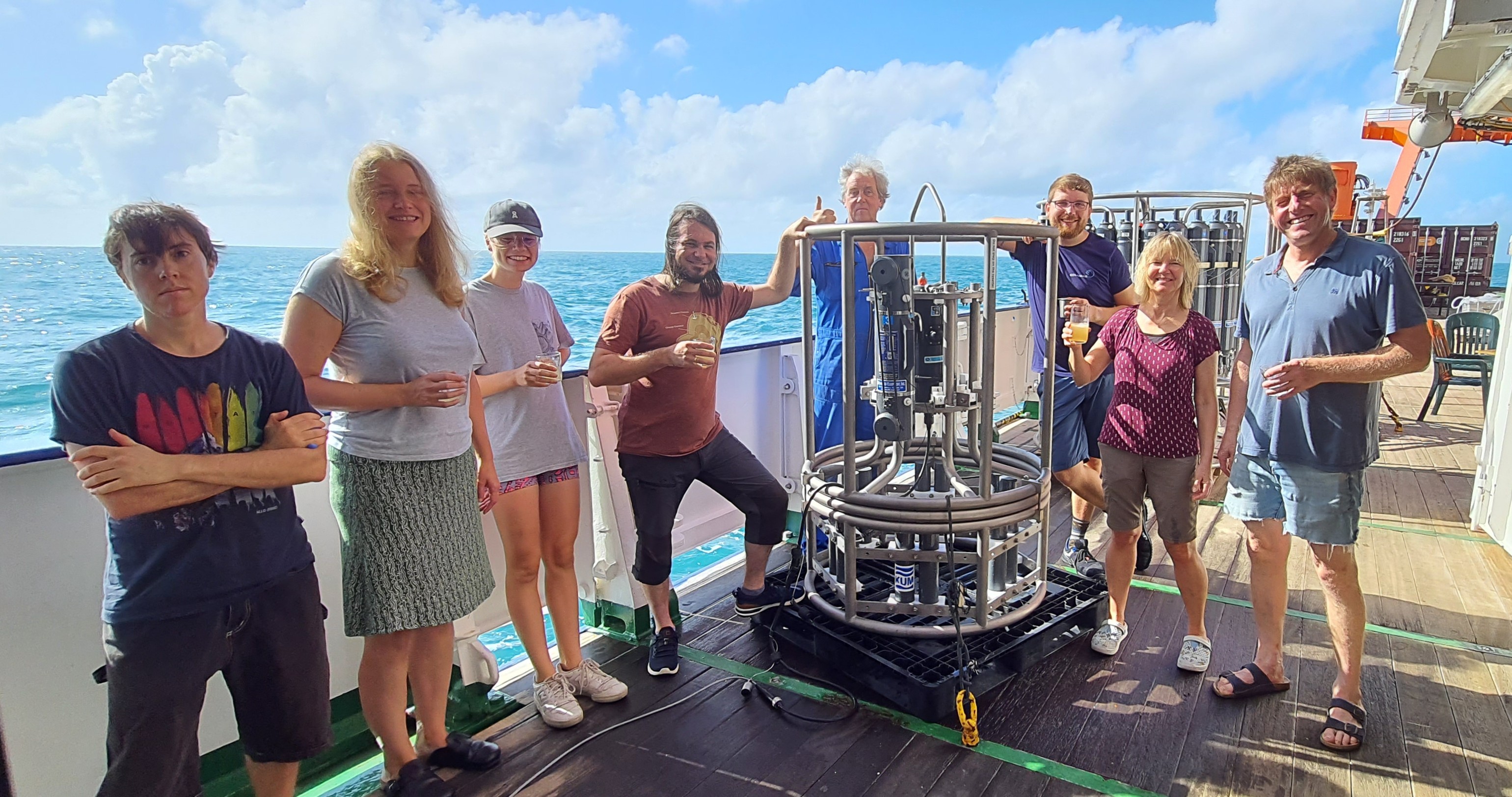
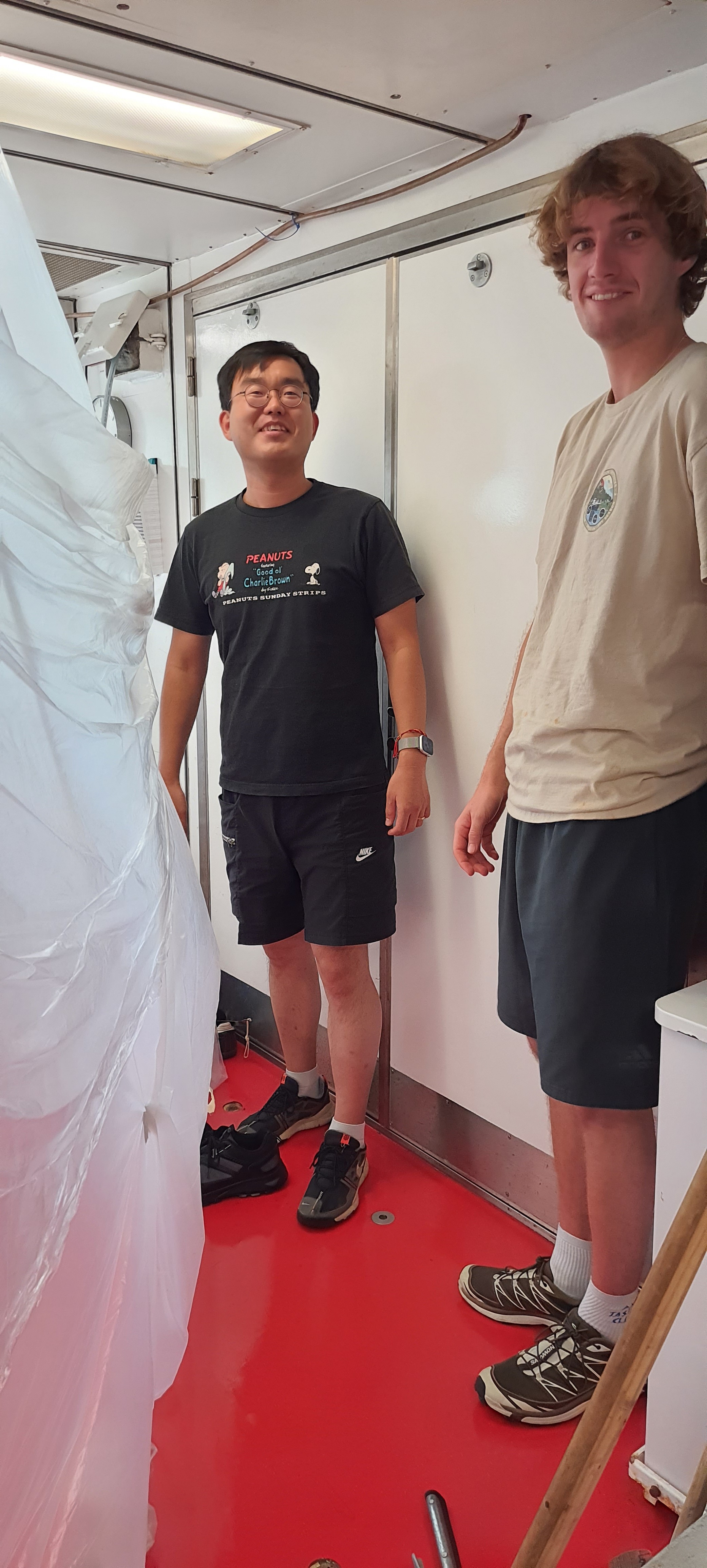
From left: Adrian, Annika, Neele, Mark, Volker, Nico, Andrea, Martin
With the final CTD rosette sampling completed, and as tradition dictates, a final round of drinks must be taken from the bottles before the equipment is cleaned and mothballed. On this occasion, bitter lemon is the ‘poison’, with the toast arranged from the Clean CTD by Nico at 09:00hs on Friday 27th December 2024.
I’ve had to spend the last few days grappling with the arcane machinations of Instagram (grrr), so I’ve missed a blog post or two. Let’s have a quick catch-up!
Well, firstly, HAPPY CHRISTMAS from everyone aboard the Meteor! Although we miss family and friends back home, we know that we will soon be home again to see them.
Now, after a successful sampling run along the coast of French Guiana, we are back in Brazilian waters and have just reached the point furthest into the mouth of the Amazon and struck fresh water, which has been eluding us for some time. Happy sampling times are here! (is there a song about that?) It is currently raining and overcast, but it’s still pleasantly warm.
There are various other things to note, not in any particular order:
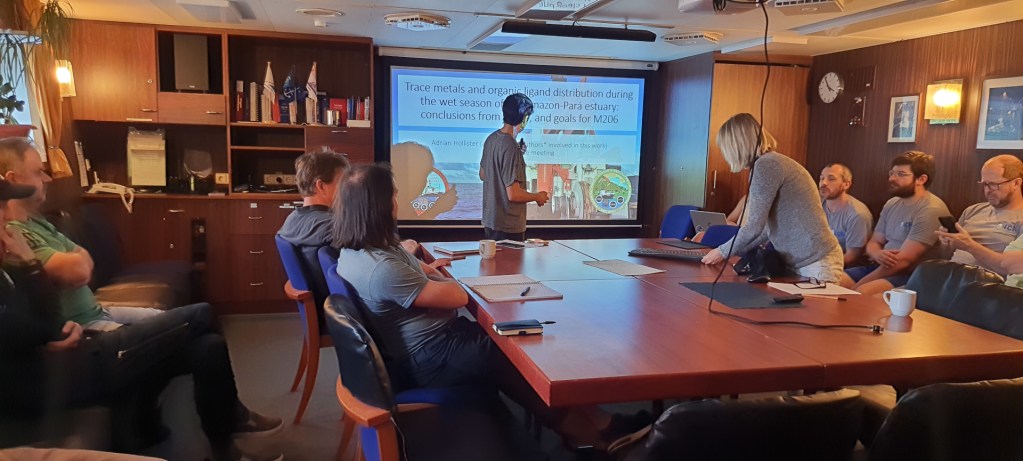
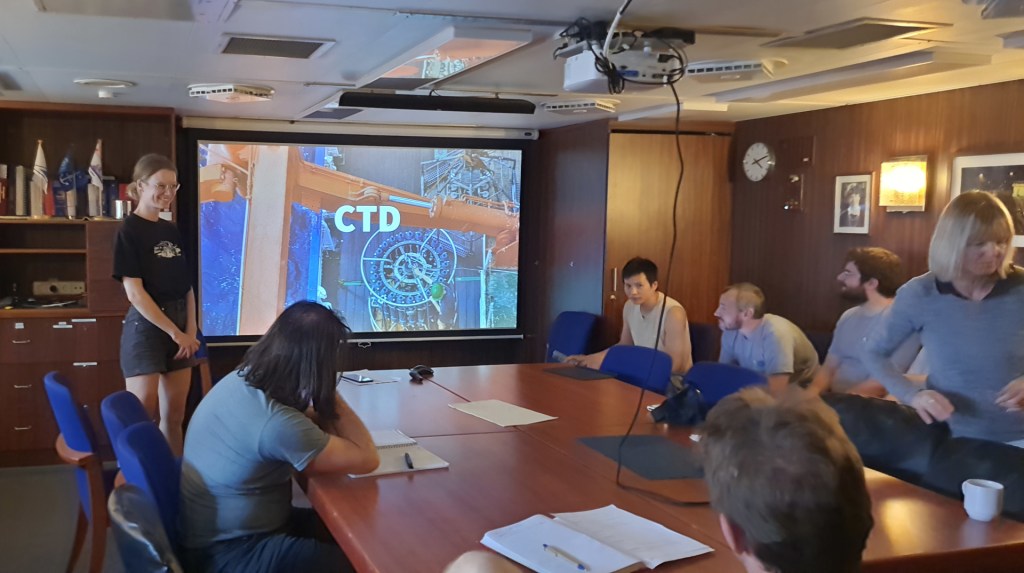
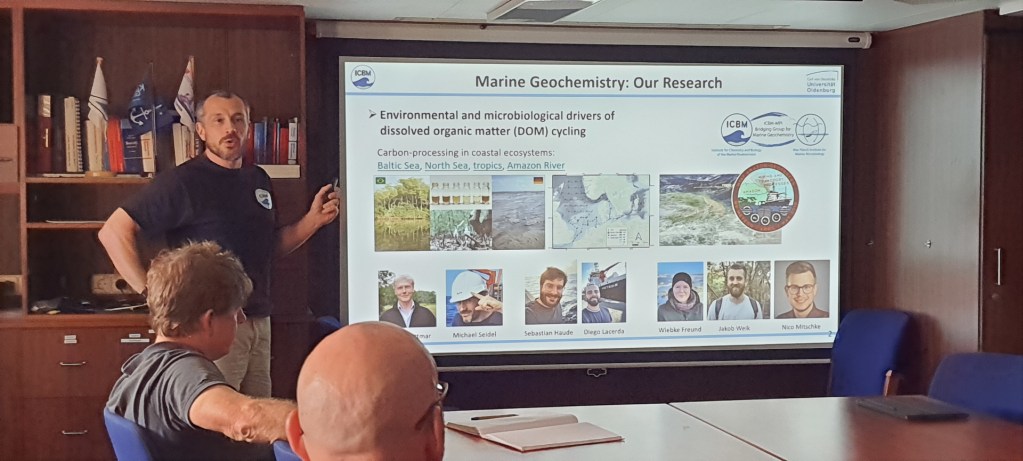
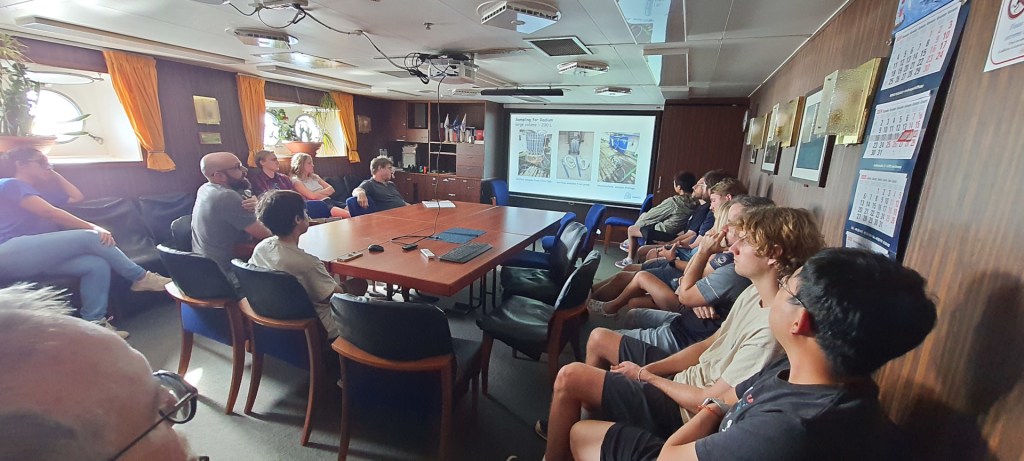
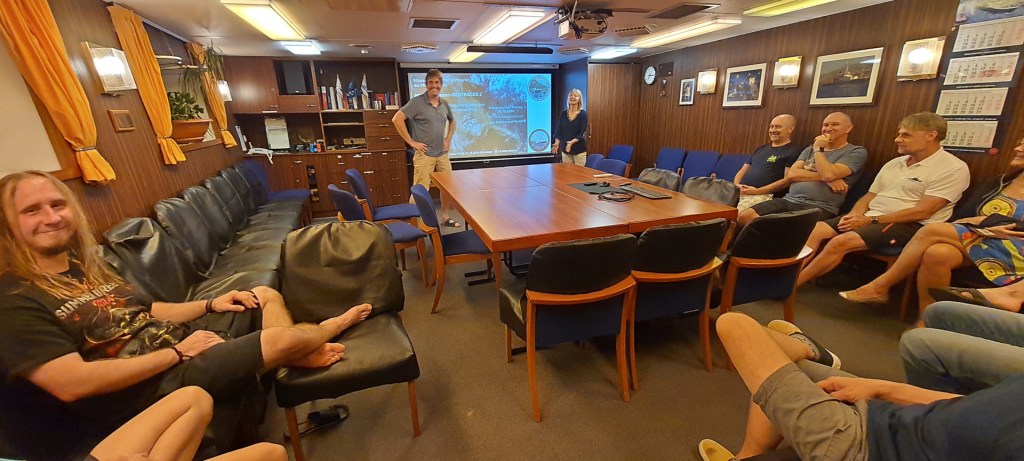
The Chief Scientists gave a presentation to the crew on what we have been doing, with a look at some preliminary results. Meanwhile, individual groups gave their own presentations to us all, and these were much appreciated by everyone.
The stewards put up a nice Christmas tree in the Messroom. We had some nice food and wine yesterday (24th) and we began the day today with Eggs Benedict, which is a bit of a kick start for Christmas Day.
The table tennis championship, open to both crew and scientists, is rapidly coming to a head, although every time I go down to see it, I miss it. Perhaps someone will get me some photos??
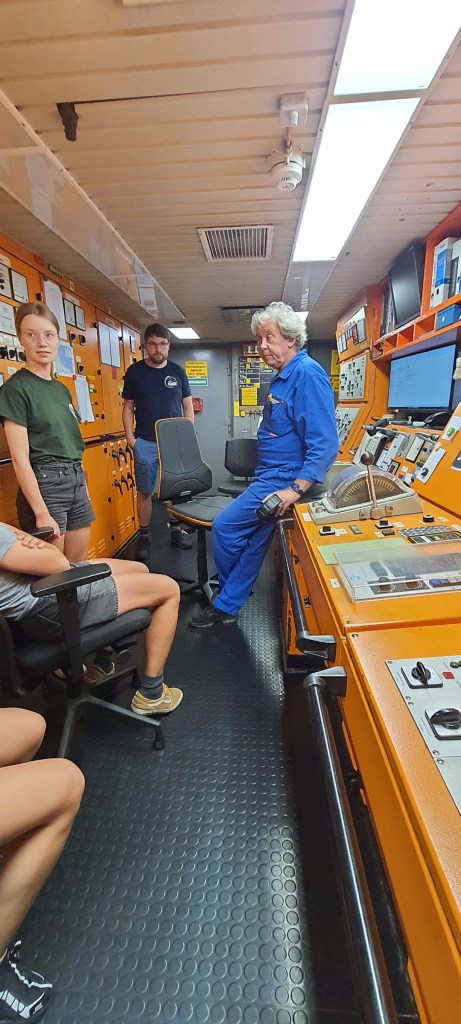
We had a great tour of the engine room(s) by the Chief Engineer Valker Hartig, which has been compiled into a two-minute Instagram video.
I had some very annoying jaw pain which the wonderful Dr Joanna Tomaschewski dealt with efficiently and effectively.
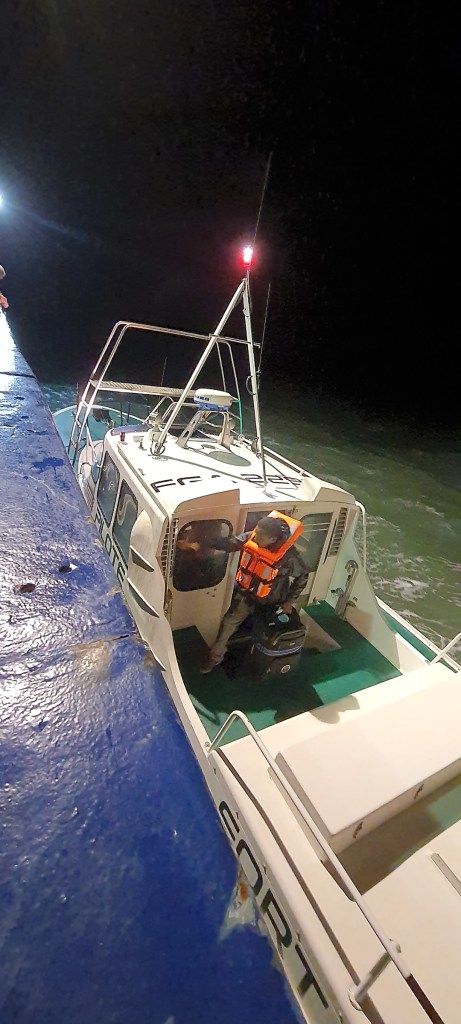
We exchanged a member of the crew at night while standing off some way from the land. It may not be uncommon for the crew, but for most of us it was an interesting exercise in waters that were a little choppy, and I’m pleased to report that the exercise was completed safely and successfully.
Two new young scientist interviews were added to the website – Neele Sander and Elias Lilie – many thanks for this.
At the end of the recent days of lengthy and productive sampling runs, we had an impromptu karaoke evening encouraged by Chief Engineer Volker, which was great fun.
I think that’s it. If I have forgotten anything, I hope I’ll be forgiven. I must go now and see what’s on the work schedule for today. Andrea will no doubt fill in the picture in her daily update (Instagram)
Below are a few photos (apart from of the table tennis championship) which I hope will be self-explanatory.
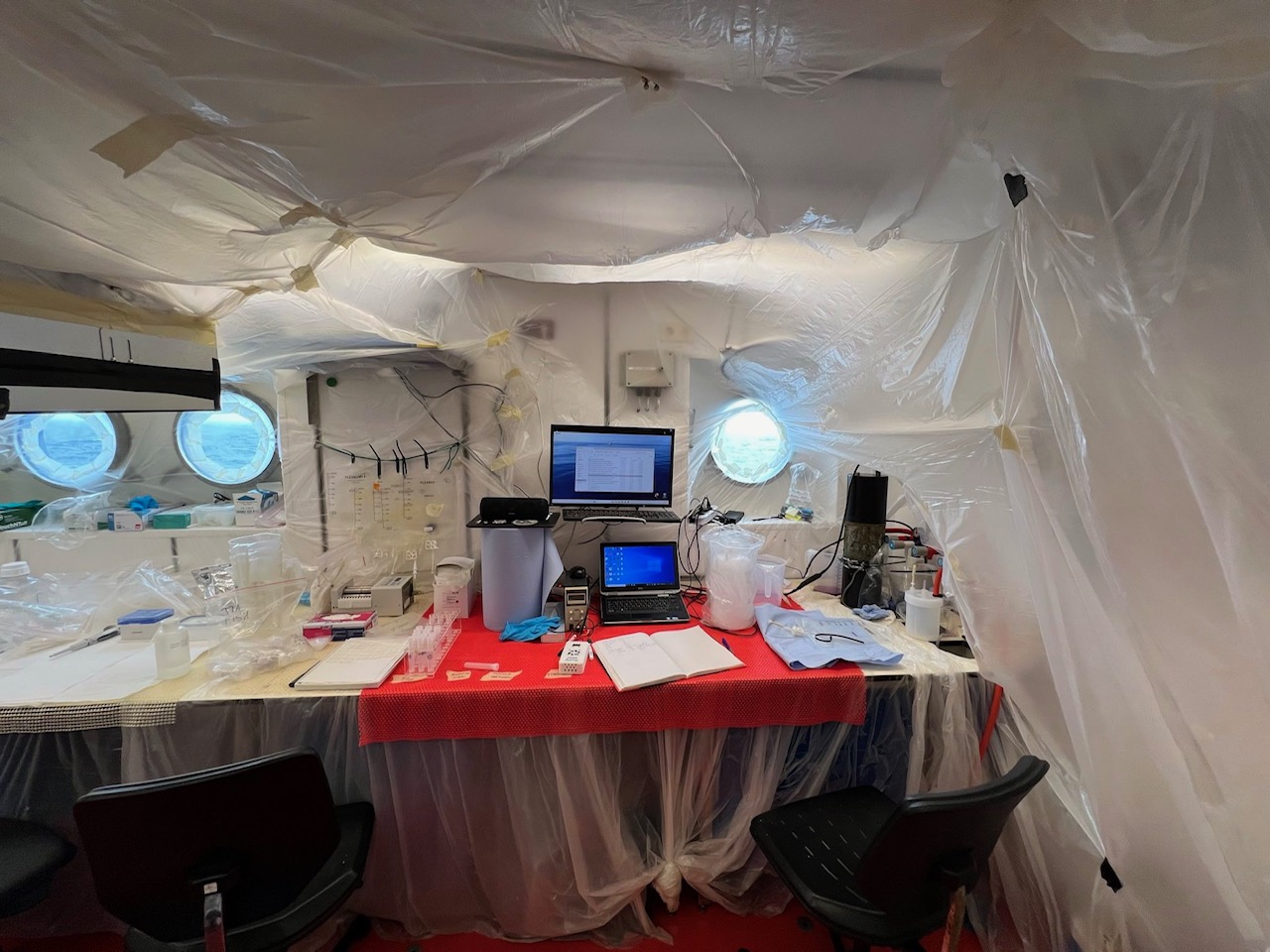
We have some great photos today from the clean bubble. It is so-called, because it is an air-conditioned or filtered ‘bubble’ created inside another room, sealing the working space off to avoid anything that could contaminate the water samples taken from the trace metal (clean) CTD rosette (TMR) and the tow-fish. The rosette and the sample bottles it uses, together with the TMR handling procedures supervised by Nico Fröhberg, are themselves designed to avoid any contamination at the point of sampling.
Anyone entering the clean bubble must also work free of contaminants and must therefore be dressed accordingly in protective suits. On M206, clean bubble operation is managed by Kechen Zhu, aided by Albert Firus,Laurenz van Bonn and Gwendolyn Terguer.
I caught up with Kechen today and he told me that operation of the bubble was going very well and had run smoothly for the whole of the trip so far. I asked him about how the air is circulated or filtered in the bubble, and he told me that it was brought into the bubble from an inlet at the top, and that the filtered air descends and escapes from underneath the bubble’s skirt.
The team is kept working hard, and even when there is no CTD sampling, the tow fish is always there on a station, together with the pump used by David for his radium sampling (more on that later). After filtering, the water is allocated to the other teams as required, and Kechen also takes some for his own analyses.
The photos illustrate that working within the bubble has its own peculiarites. In the pictures, we see Gwendolyn and Albert at work. The photo (above right), taken just outside the bubble, are of Kechen (left) and Laurenz. On deck, Albert and Kechen are at work on tow fish preparation and Nico supervises the Trace Metal Rosette.
Grateful thanks to Kechen for the interview and Gwendolyn for the photos!
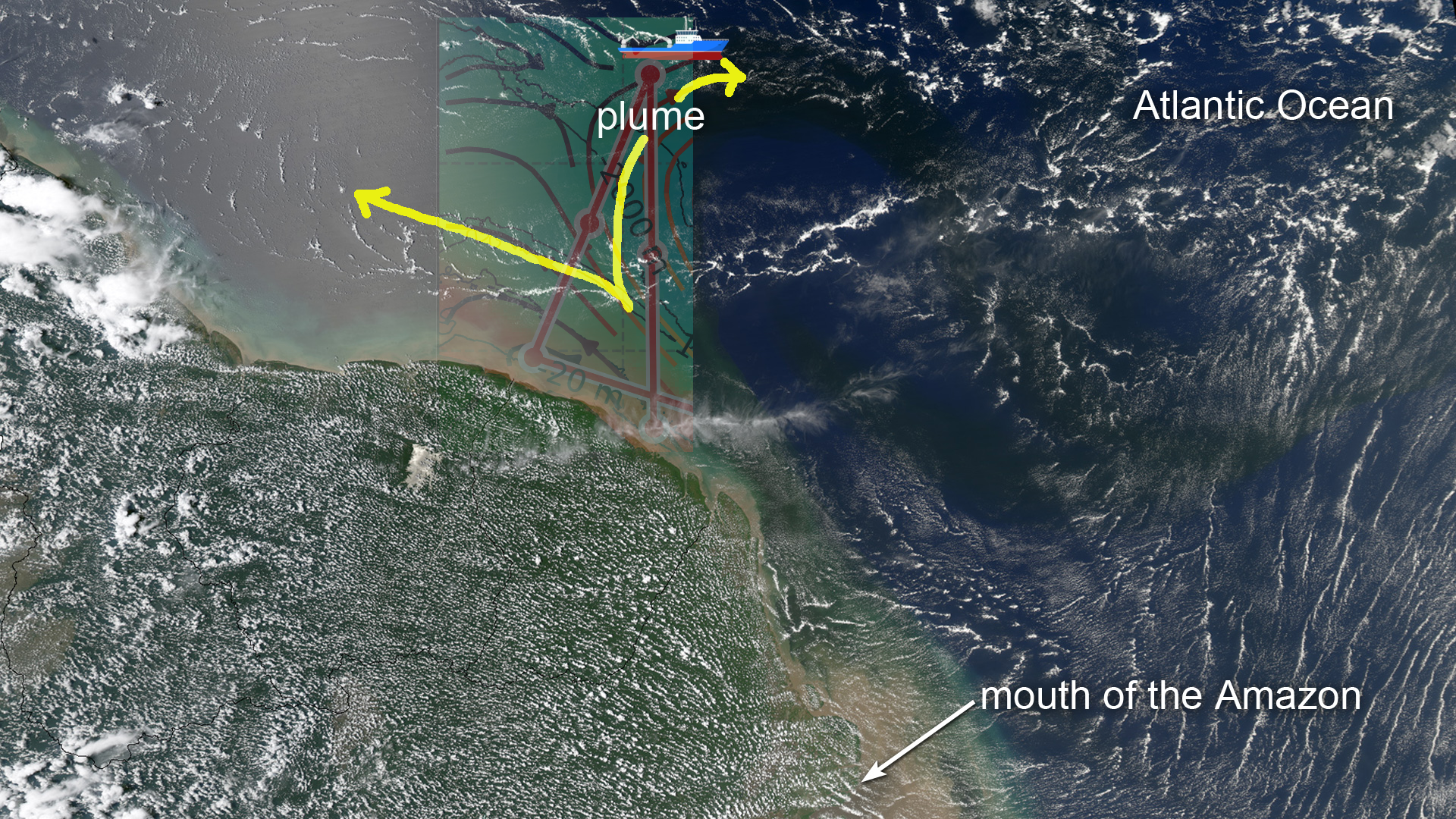
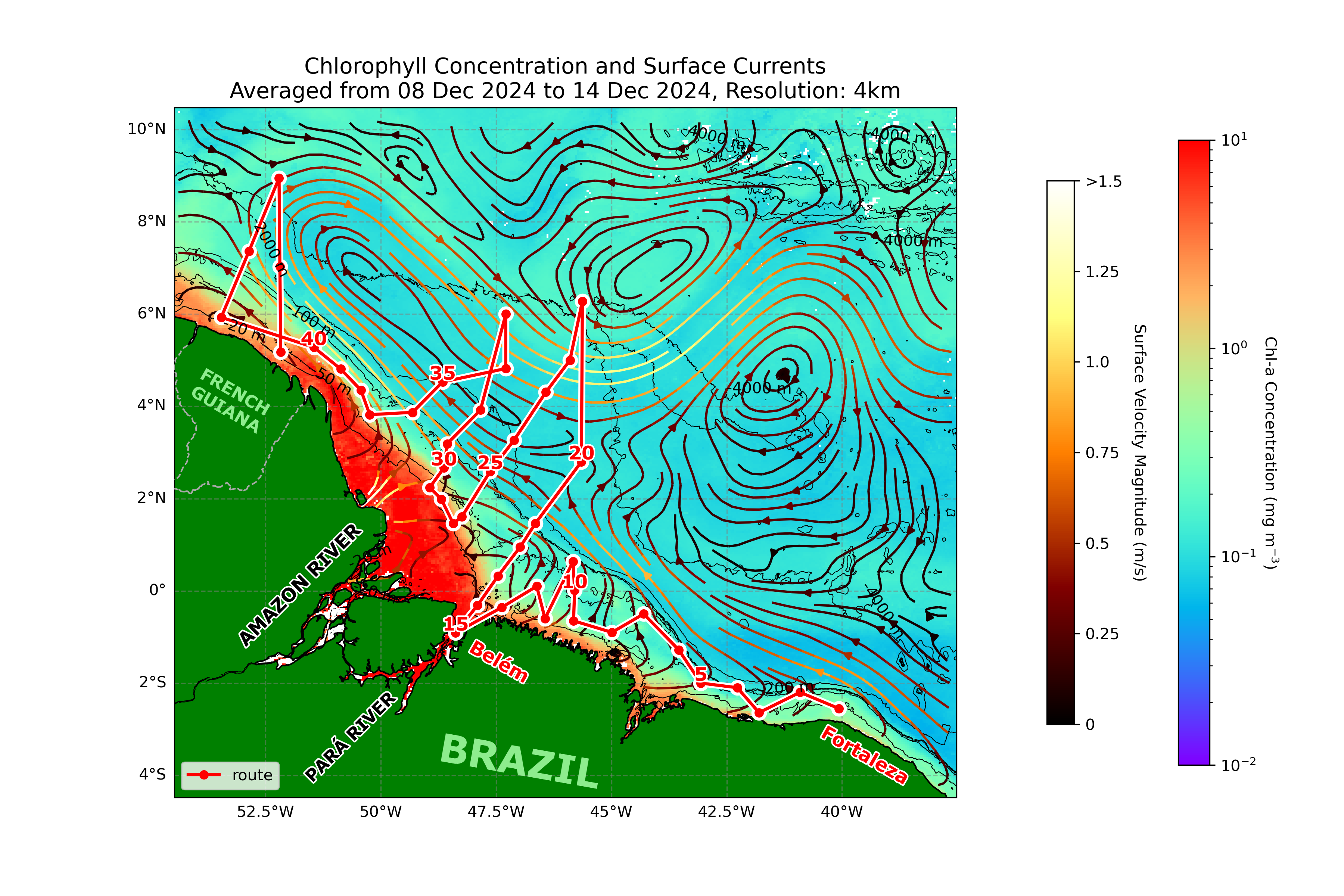
The chlorophyll overlay (from the chart below) shows the separation of the plume and our final sampling point on this transect.
Chart of chlorophyll concentrations at the mouth of the Amazon
Today we have been moving NE towards a station within the detached plume area, as indicated by the satellite image showing chlorophyll concentrations (left). From this, it can be seen that while the main part of the Amazon plume moves NW towards the Caribbean, another section splits off to move further E. For those who like to see images in “real” colours, the same phenomenon is also visible in the older (2012) satellite image from NASA (above). Chlorophyll is a good indicator of the plume, because the nutrients in the Amazon water allow microscopic, surface-dwelling ocean phytoplankton to feed and grow, and chlorophyll is the energy-producing pigment that gives plants their colour.
Of course the motion of the ship also takes its toll on some of the scientists on board, and sometimes we see a relatively empty canteen in the morning at breakfast time (although this is more often simply because some of the team have been up half the night working the equipment or taking water samples). At least it didn’t rain on us much today, so we can be thankful for this.
The weather has not been very kind to us today, and this has made the deployment and retrieval of of some of our sampling equipment trickier than usual. Strong, variable currents in the water column, coupled with wave action and surface wind, mean that the ship’s sophisticated dynamic positioning systems (and crew) have to work harder to maintain the ship in position over a piece of equipment that is suspended on a steel cable over 2km under the ship. It is interesting (at least to me) to hear the noise of the thruster working downstairs near the front of the vessel while the equipment is being let down or taken up.
So, our immediate goal today and tomorrow is, at least in part, to see if our sampling on this SW-NE transect evidences the presence of the east-moving plume, and our final sampling point on the line is calculated to be within it.
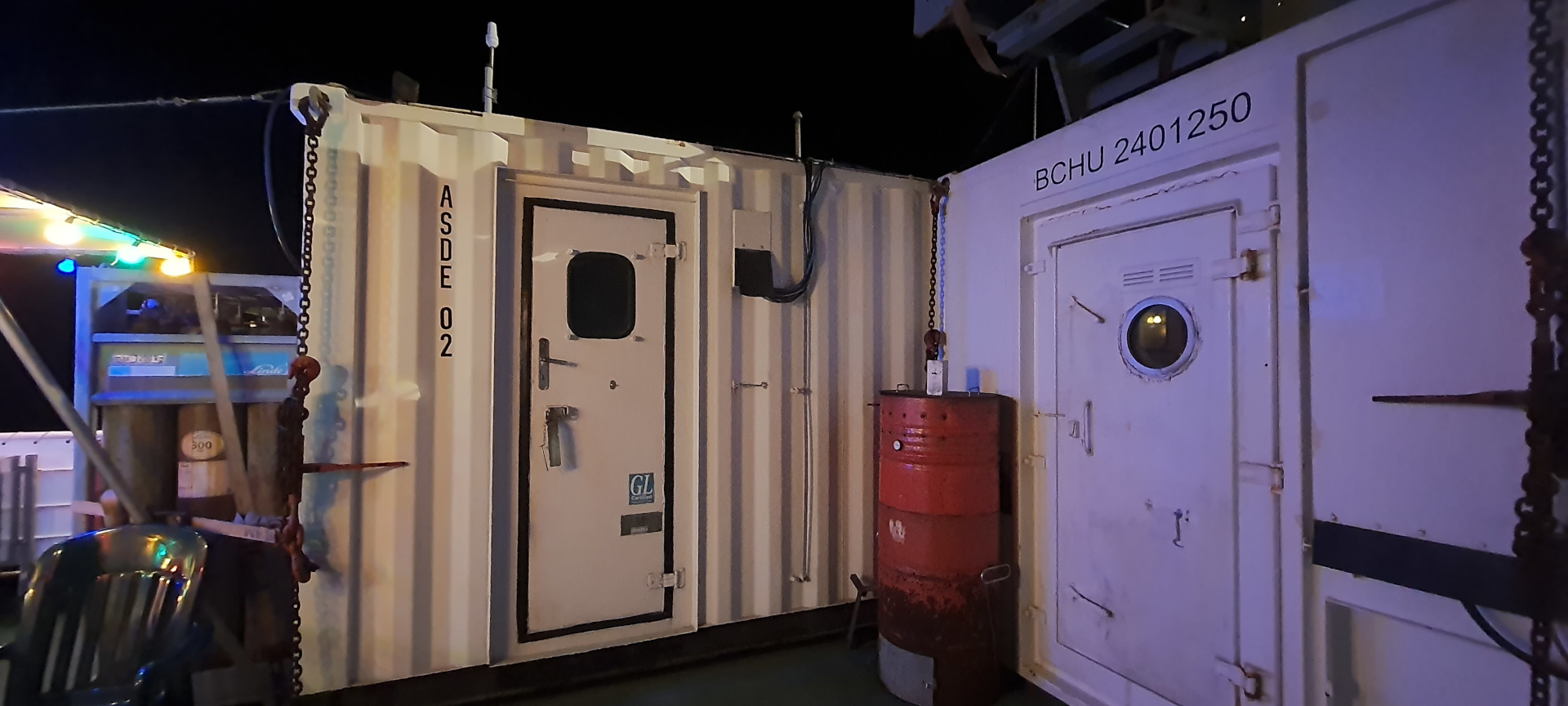
Last night, shortly before 19:30, resident meteorologist Martin Stelzner showed me around the weather balloon container on the Meteor and let me see how things work.
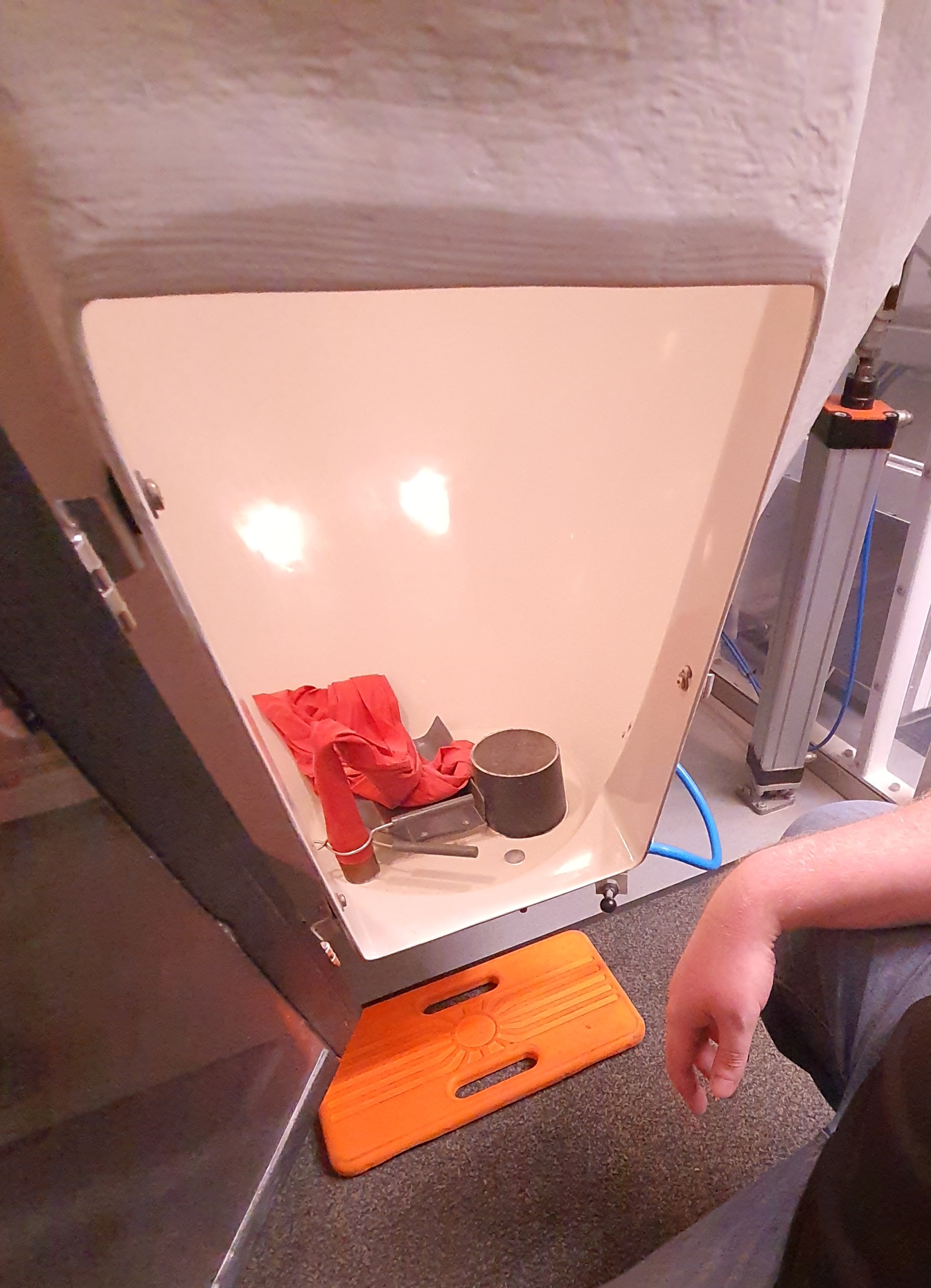
The mechanism for release is cunningly simple – much simpler (and safer, I think) than a hand-launch operation. A large, fibreglass balloon holder contains at its base a tube that releases helium into the balloon. Once the balloon has reached a predetermined size, Martin secures a small radiosonde and gps/transmitter to it.
Special weather balloon container
When ready, Martin simply opens a section in the container on the starboard side of the ship, and the balloon is automatically released. The balloon’s flight takes around 30 minutes, when it will rise to a height of around 25km. The radiosonde measures various atmospheric parameters such as pressure, wind speed and direction, and temperature, and transmits them by radio to a receiver onboard.
When the dataset is complete, Martin sends it directly to the German meteorological service Deutscher Wetterdienst and it becomes part of the complex German and global meteorological systems.
Everything ready and to handMartin next to the balloon holderBalloon in place and ready to be inflated with helium
The release timing is strictly observed at all weather stations, and in our case the release was set to be at 19:30 and in darkness. It made filming and photographing a bit challenging, but with Martin’s help everything went well inside. Outside, I knew it would be a challenge – in 2018, I tried (and failed) to get footage of the balloon flight on the M147 cruise, in daylight: the balloon moves much more quickly than you expect! Now, I was not hopeful of even seeing the balloon in the dark. Watch the video to find out what happened.
It was great to see the device in action, and many thanks to Martin for his time and patience.
We learned today that Andrea has just received an Exceptional Research Achievements award from Constructor University for her work in attracting research grants. This new award will come as no surprise to her colleagues, who are familiar with her unimpeachable professionalism and dedication.
On behalf, I’m sure, of everyone here on the RV Meteor, congratulations Andrea! Looks like the tea and cakes are on you!
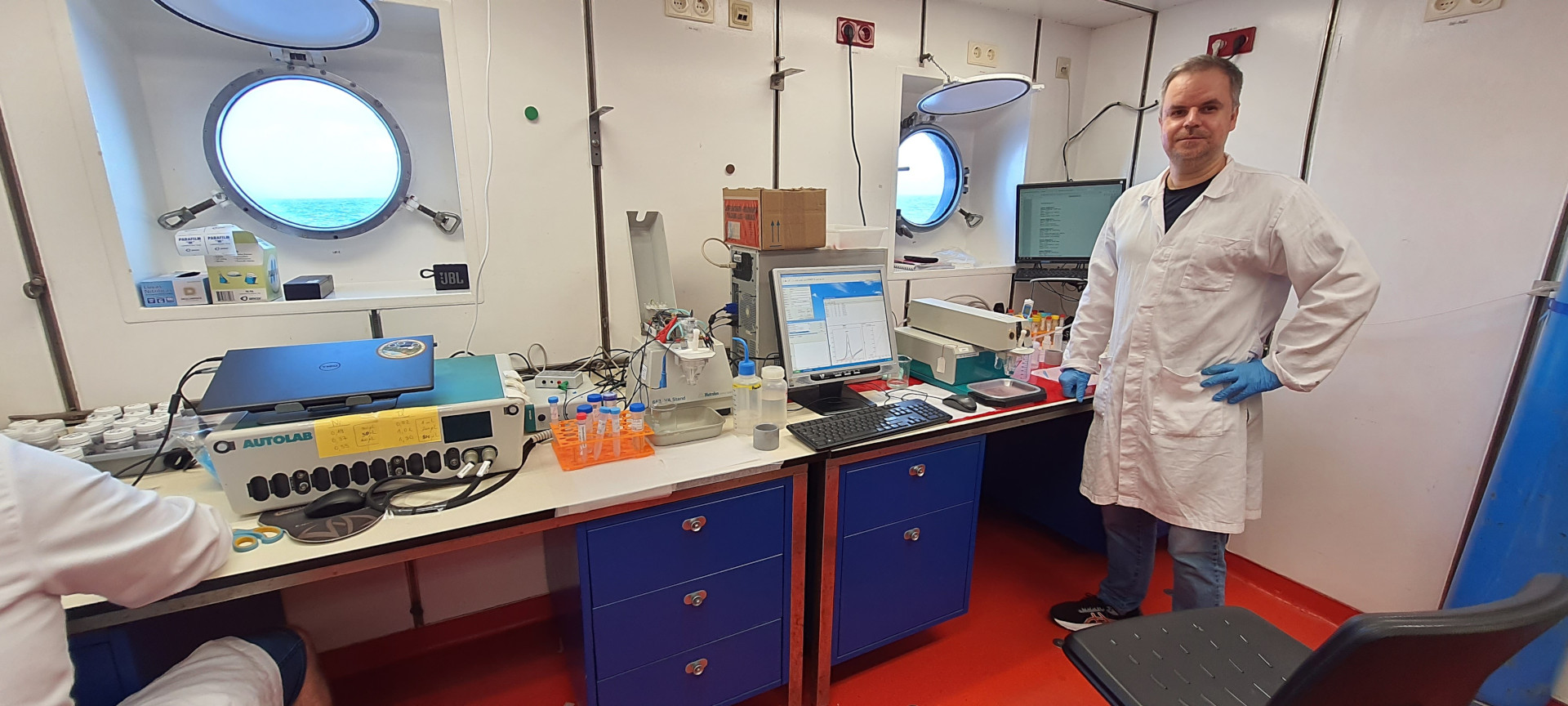
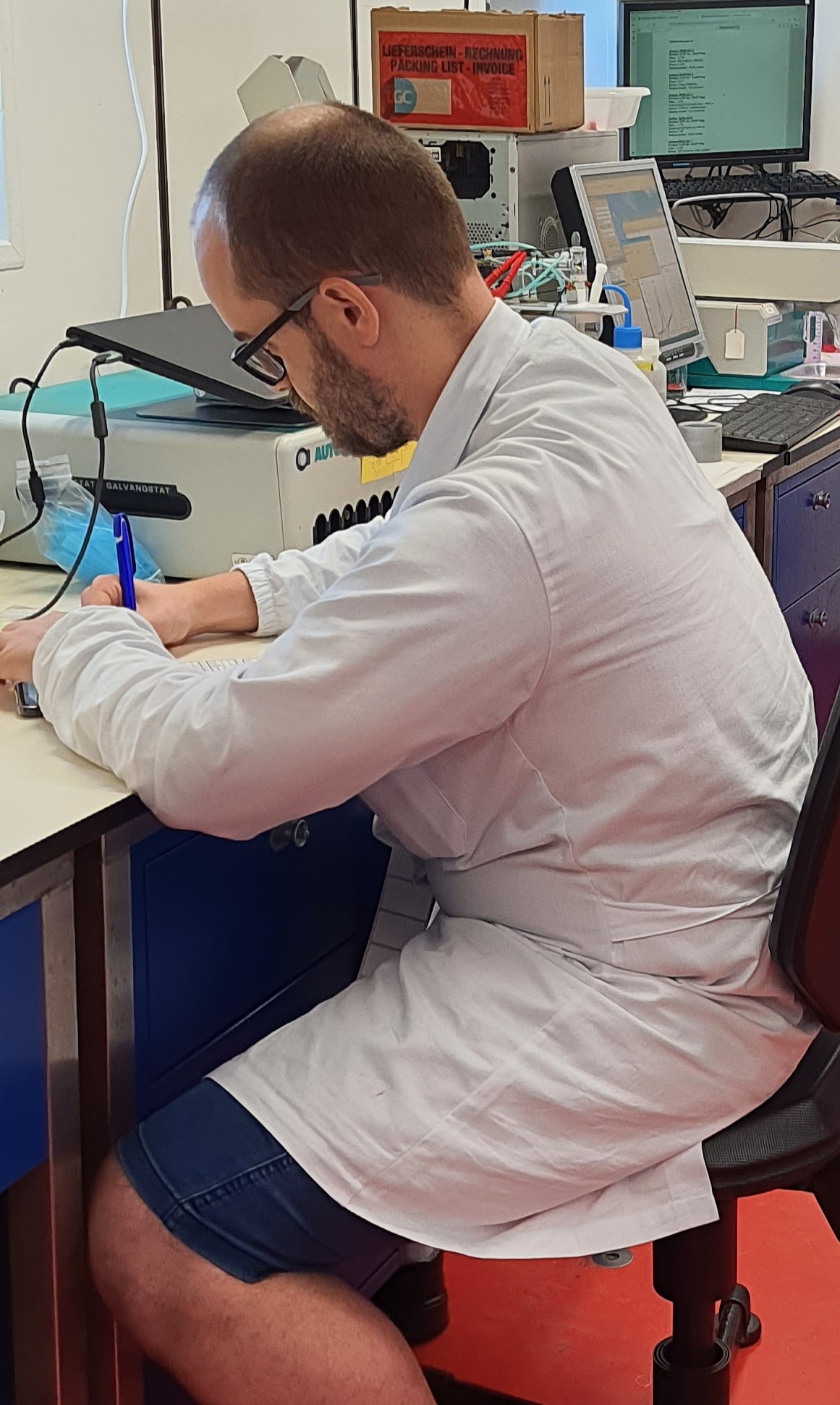
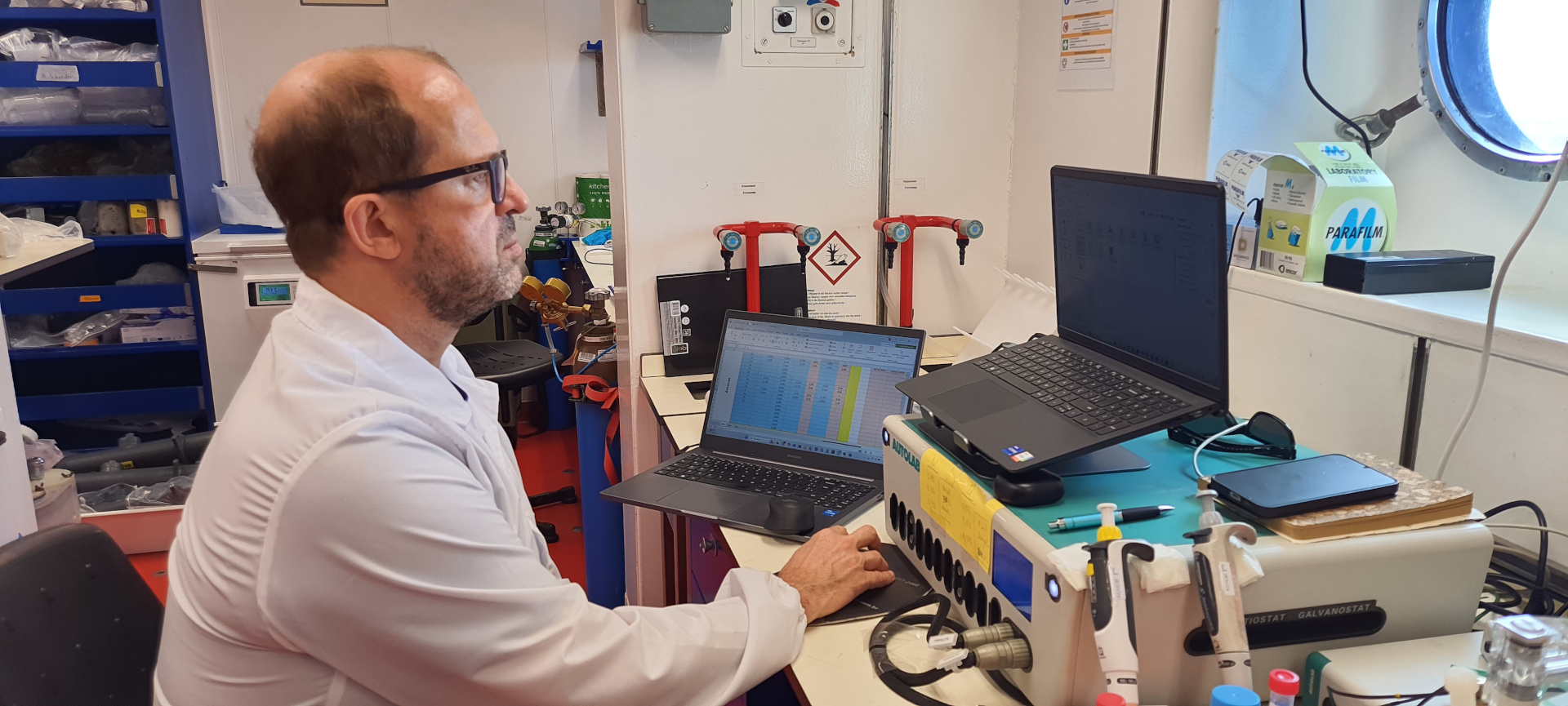
Today I visited the Voltammetry Lab again to ask how things are going so far. After a couple of very busy water sampling days, the lab was quieter, but this was only because they were deep into their onboard analyses of titanium and nickel.
They told me that once the initial teething troubles were over, requiring them to calibrate the equipment and effect some repair and maintenance on a few items, they quickly settled into an efficient routine. They reflected that the water sampling organisation onboard was somewhat different from the previous Geotraces cruise (M147), but seemed to be working well, and there was a good deal of cooperation between the various teams. Indeed Cristian had been able to assist with some of the sampling routines, helping to maintain a smooth flow of sample water for filtration.
Cristian Krause in the lab
Leandro de Carvalho analysing Nickel concentrations
Alexandre was good enough to show me in some detail how the equipment works that they use in their DPAdCSV (I’ve been trying to memorise this for two weeks, but have failed totally – you will obviously know that it stands for Differential Pulse Adsorptive Cathodic Stripping Voltammetry). Rather than go into too much detail (cough), I’ll let you watch the video. It is of course very early for them to say much about the data they have collected, and much of the detailed analysis will only be done in the home lab. However, Alexandre reported that initial findings showed the amount of titanium found in samples was generally lower in the Pará transect than in 2018, which he attributes to the fact that there is now a much lower flow of freshwater into the estuary than at high water. He found little difference in the mangrove transect. On the other hand, Leandro had observed an increase in the concentration of nickel, which again may be attributable to the reduced flow of freshwater. In both cases, they are keen to get some samples from further into the river, if we are able to enter the northern Macapá channel.
Everyone agreed that there was the same level of friendly cooperation amongst all the teams and with the Captain and crew of the Meteor, and I’m happy to confirm this. Thanks for your time, guys. 🙂