Today my guest is Mariana Freitas de Souza, who joins me on the last day of the M206 cruise to tell me a little about herself, her work and her career.
Many thanks Mariana!
Today my guest is Mariana Freitas de Souza, who joins me on the last day of the M206 cruise to tell me a little about herself, her work and her career.
Many thanks Mariana!
We will soon be arriving in Belém and, given the season, it is very likely to be raining. We must not grumble, though – at least it is warm rain and generally falls on your head or your bumbershoot, rather than hitting you in the face like the windblown, horizontal winter rain, sleet, hail and snow with which we shall soon be reacquainting ourselves.
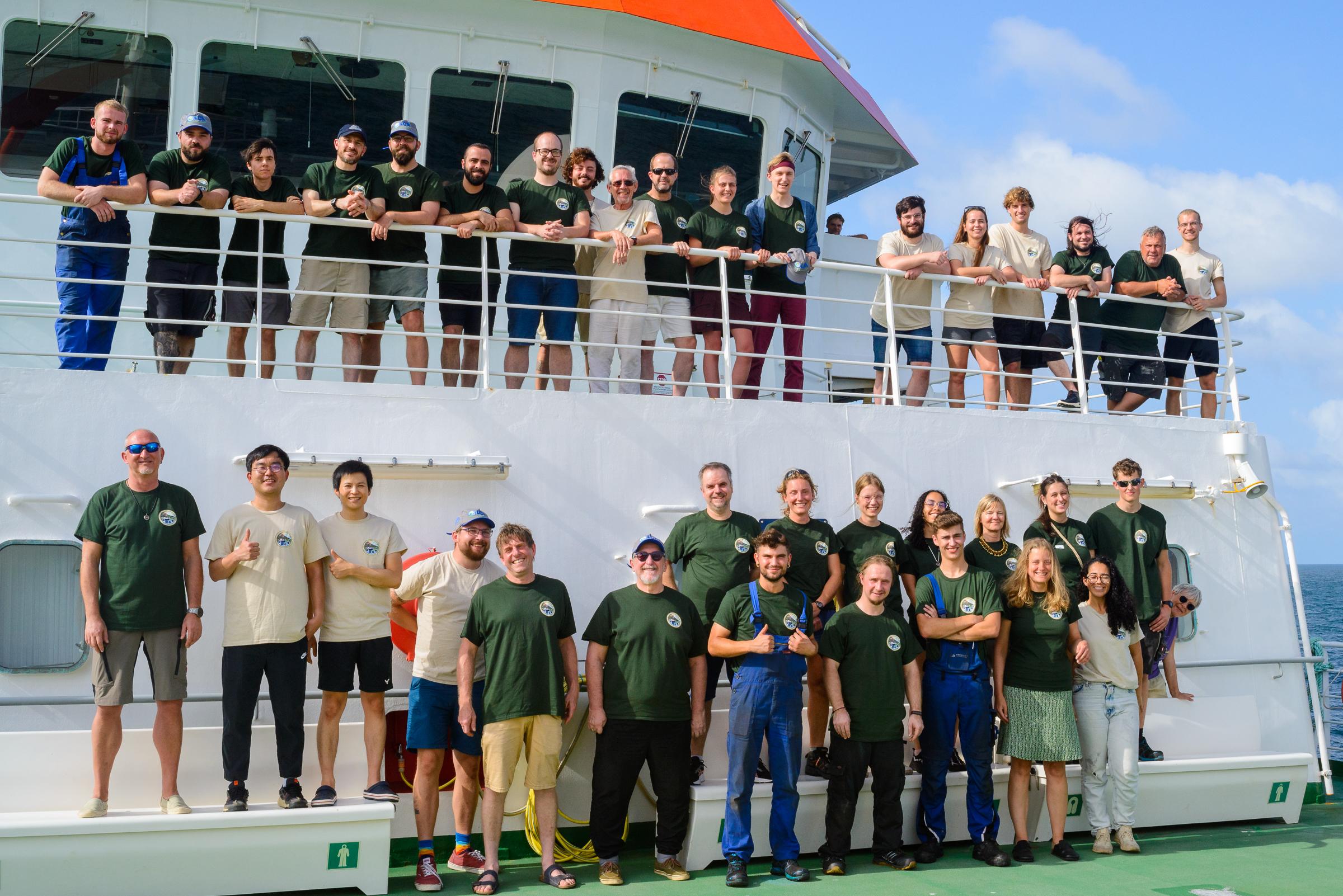
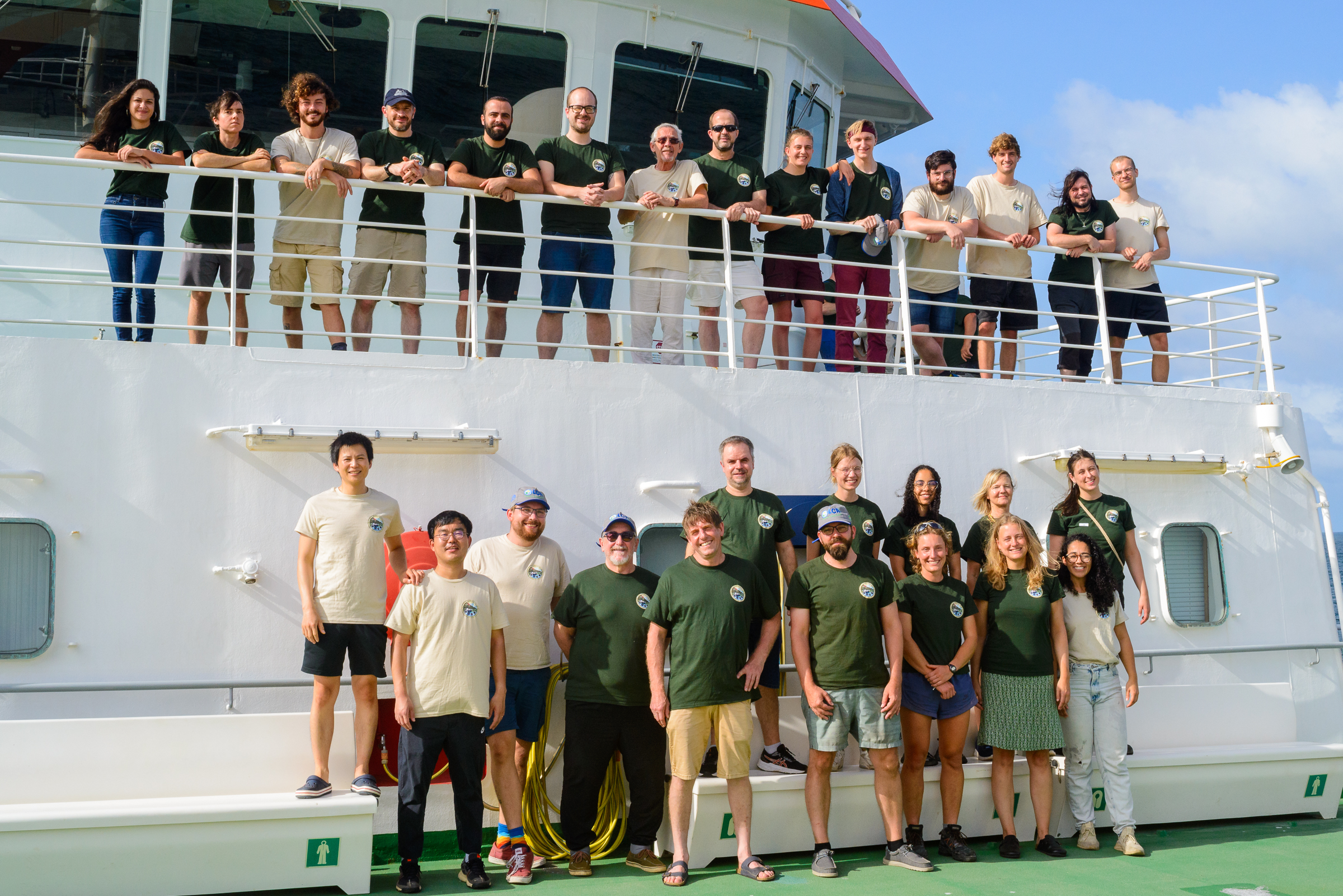
To distract ourselves for a moment, it is good to take a look at the group photos taken by Nico as well as a handful of other ‘making of the’ photos. It will be a relatively quiet day now, I think, although we may visit Belém tonight for a meal. The Captain and crew will be concerned with the inevitable formalities of arriving in port, Chief Scientists Andrea and Martin will be doing their admin., and we will all have our own formalities to deal with over the next day or so.
Some people will be leaving the ship tomorrow to fly home in time for the New Year’s celebrations, and some will stay an extra night and either celebrate in Belém or, in at least one case, on the plane. A few people have arranged to take some leave and spend extra time in Brazil, either in and around Belém or Algodoal, or further into the Amazon. For the moment, however, we’re all still together on board 🙂


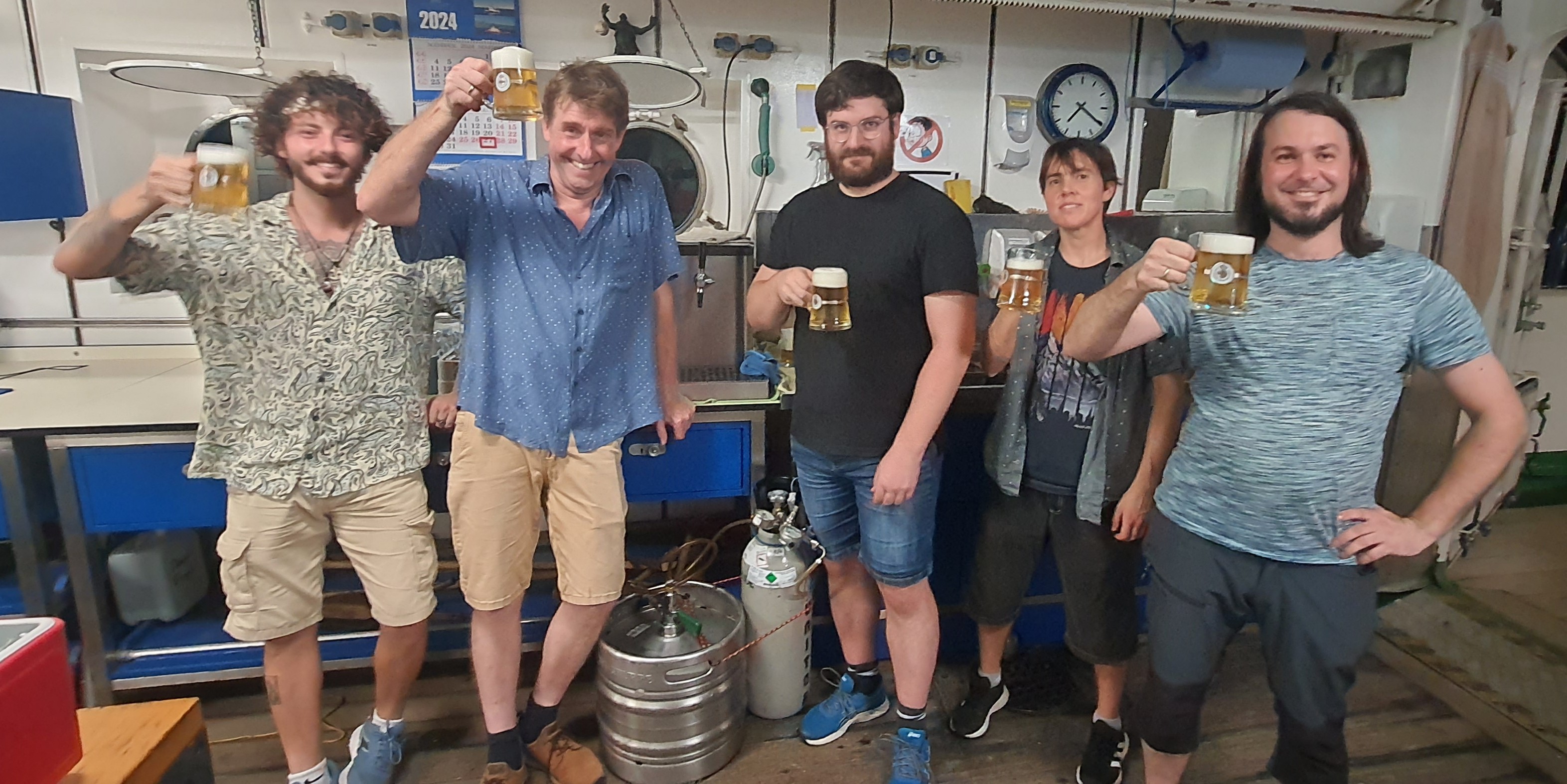
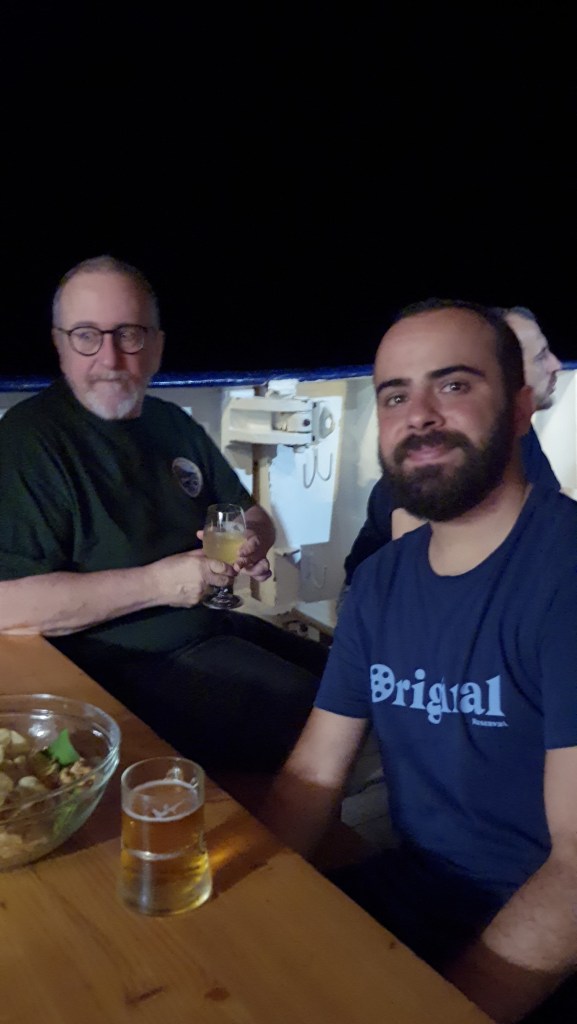
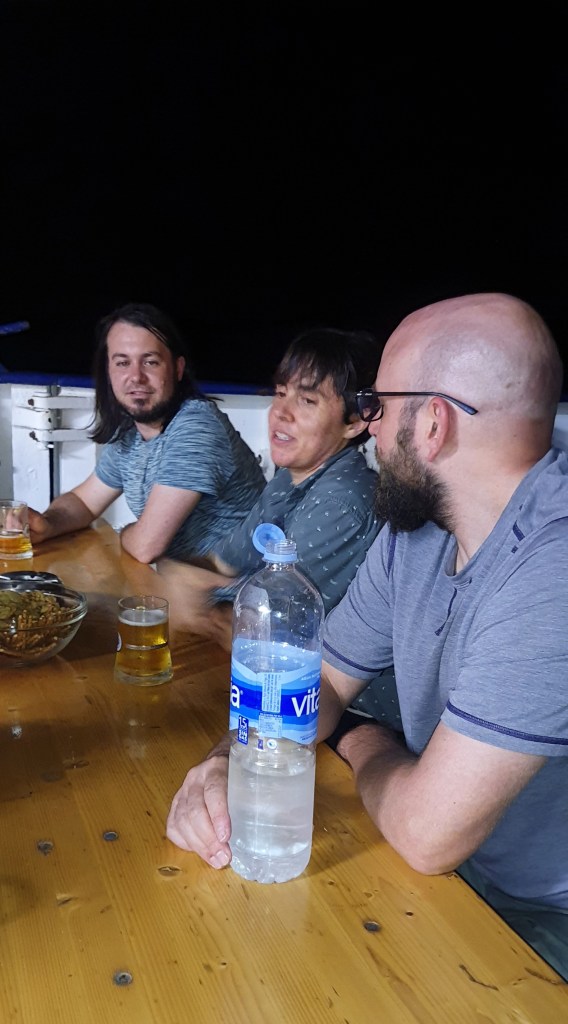
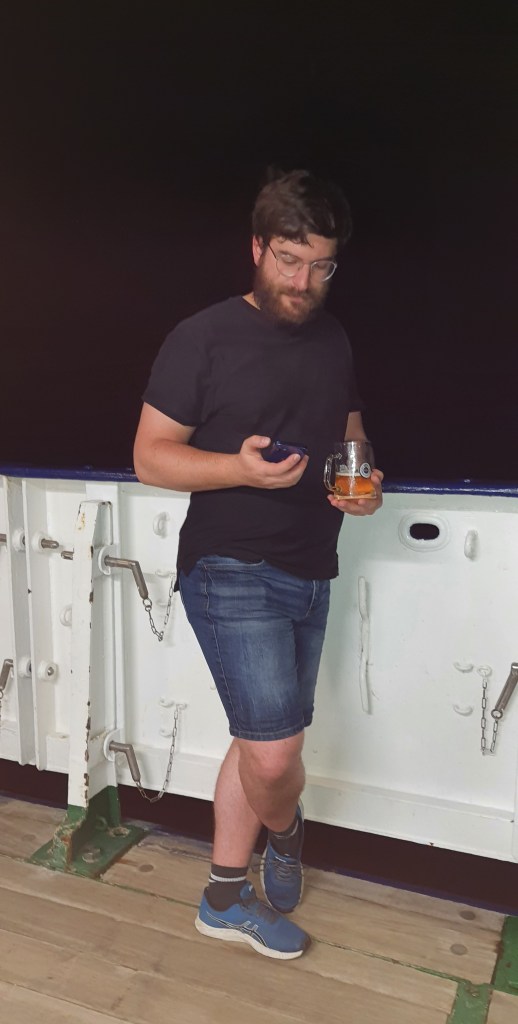
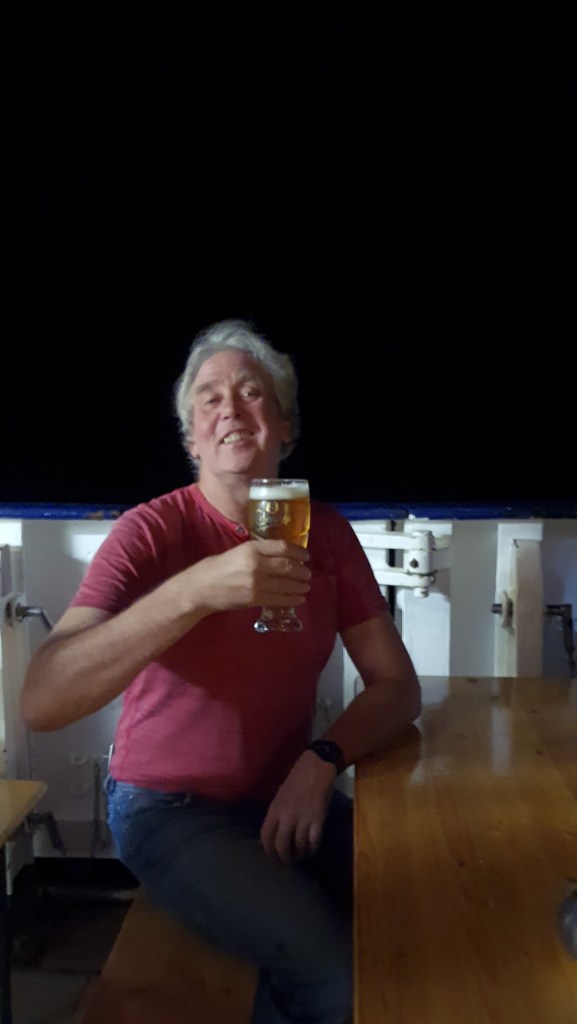
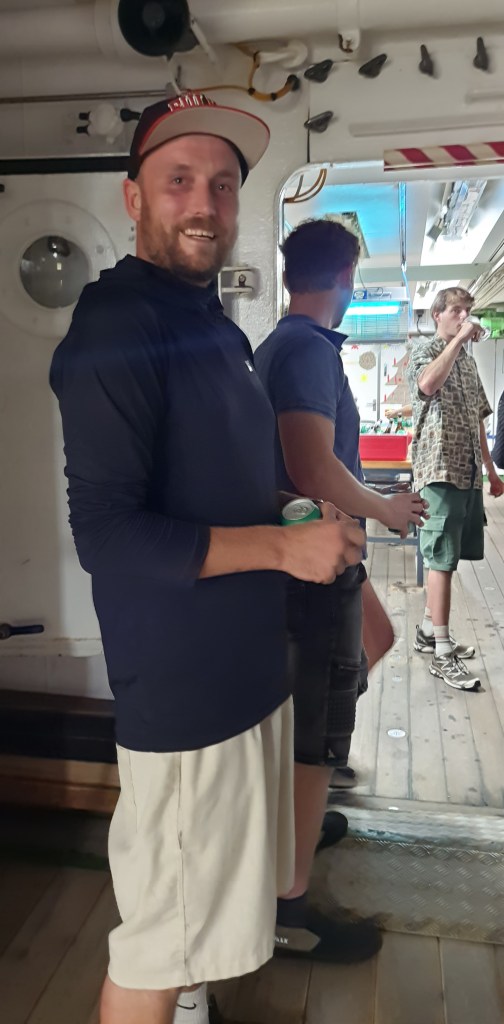
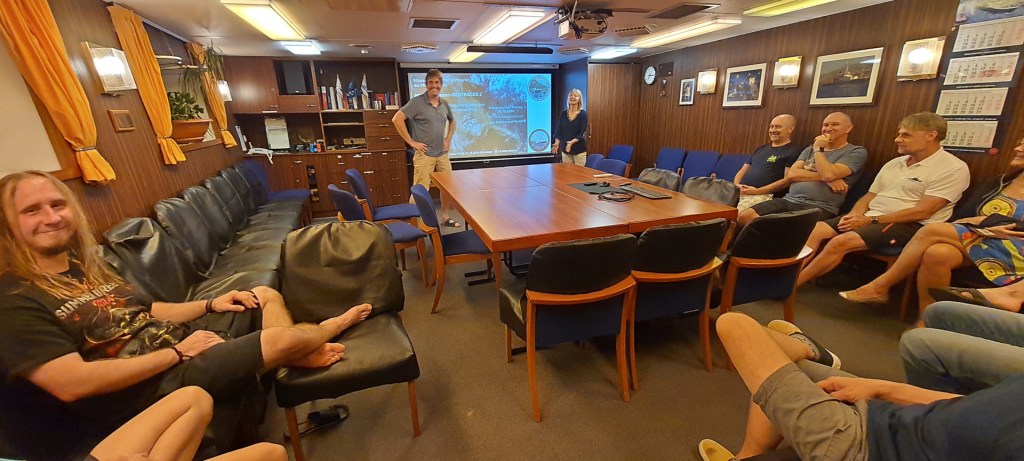
After a perfect pre-party pasta meal, a small but select band of men gathered together to organise the drinks for the delayed Christmas get-together for scientists and crew (photo).
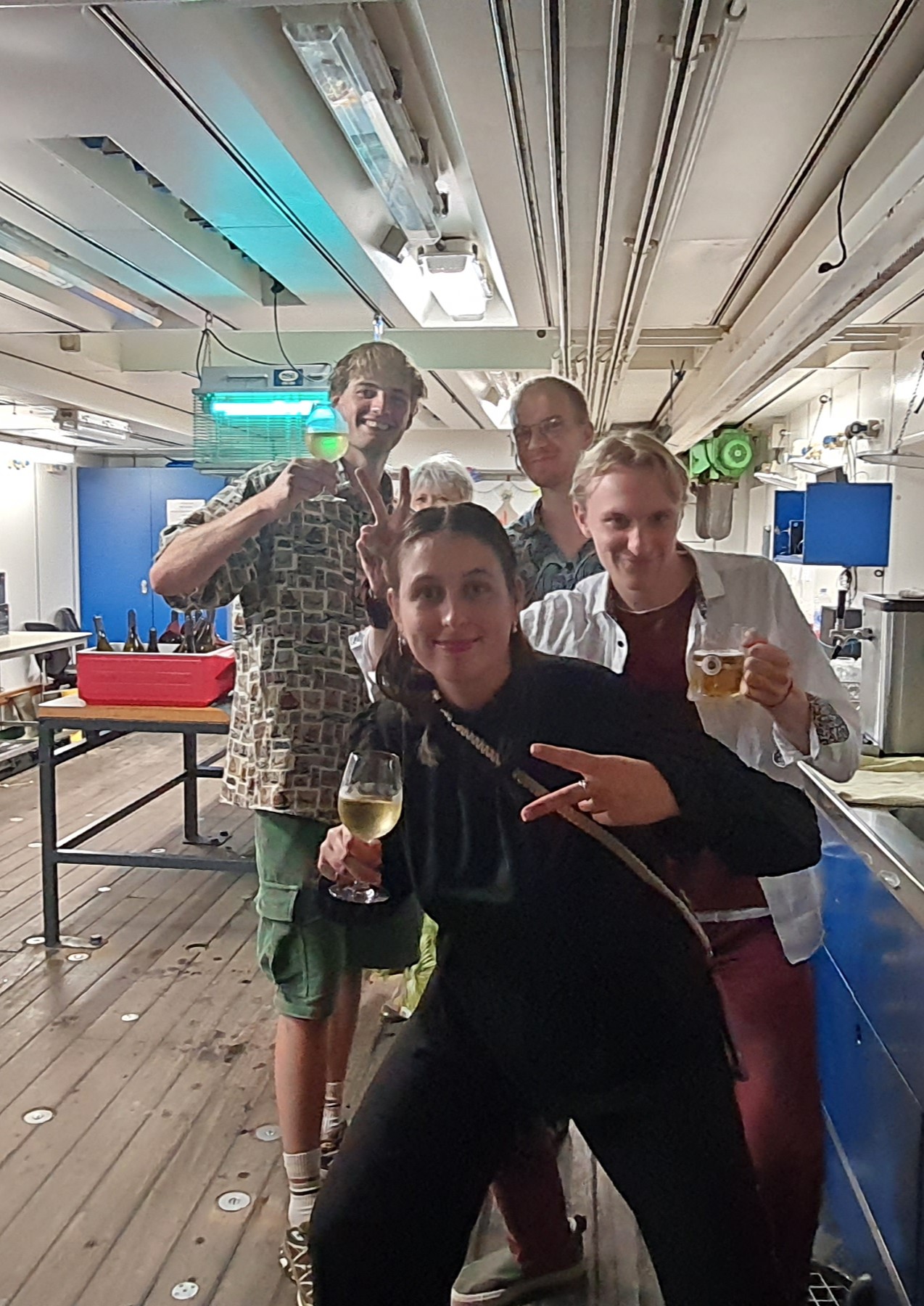
The organisation of all the tables and snacks, plus the Secret Santa and arrangements for the speeches by the Captain and Chief Scientist were handled by the crew with their customary efficiency, and the party was launched by the Captain at 19:30. In addition to the Secret Santa exchange of gifts, the scientists gave M206 T-shirts to the crew, to which Nico Fröhberg thoughtfully added some tiny M206 souvenir sample bottles.
The delayed party also marks the end of a successful cruise, as now we will be making our way back to the port of Belém and labs will be packing and stowing samples and equipment.
It was a fine evening, warm and dry and with little wind, and the party was a great success and a fitting end to all the hard work done over the past weeks.
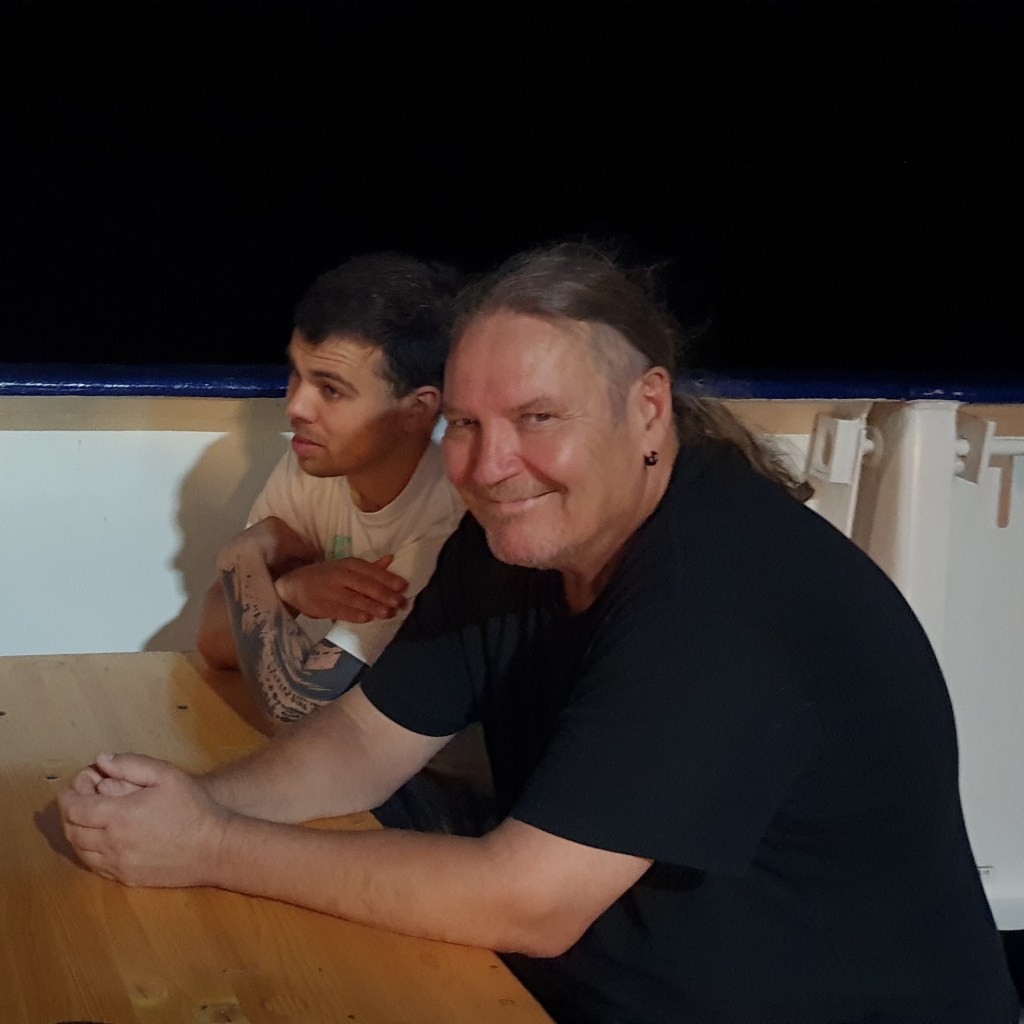
Thanks to everyone who made it possible, and below are a few photos for the record.
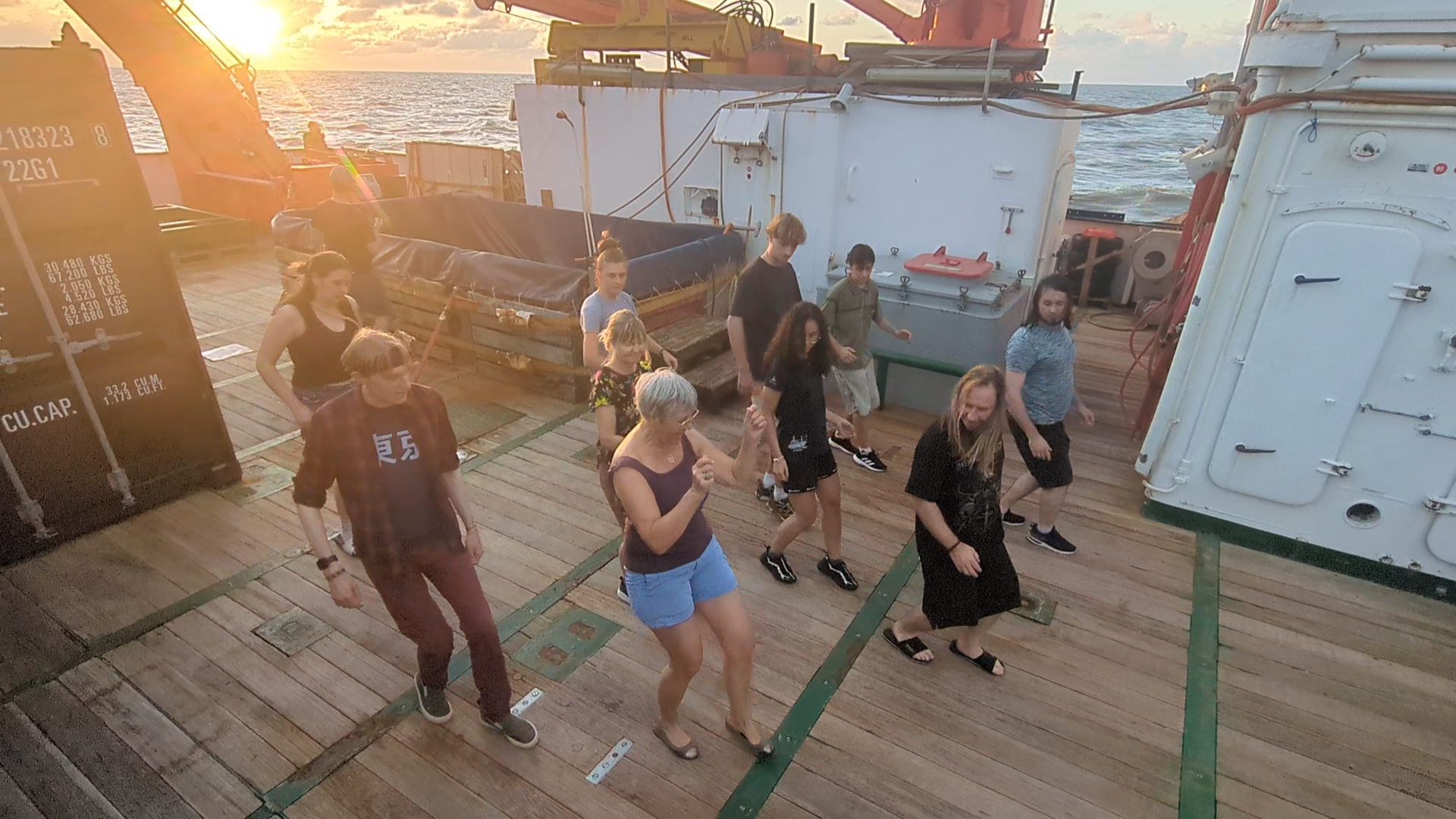
Work hard, play hard, they say. Toiling up and down the Brazilian coast collecting and filtering water samples involves a lot of late nights, early mornings and long afternoons – and sometimes a lot of sitting or standing in one place for long periods.
But the antidote is here! Yesterday afternoon in a quiet period, there was an impromptu line dance organised and led by redoubtable ‘trainee deck hand’ Christine Hammacher (aka the Captain’s wife).
It was, by all accounts, a lot of fun – and thankfully the sea was quiet, which meant no-one fell in (although from the evidence, it seems that some of the participants were a little directionally challenged at times).
Thanks to Christine for her organising skills and excellent training!
(Flash Mob, definition: “a group of people who organize on the Internet and then quickly assemble in a public place, do something bizarre, and disperse.”)
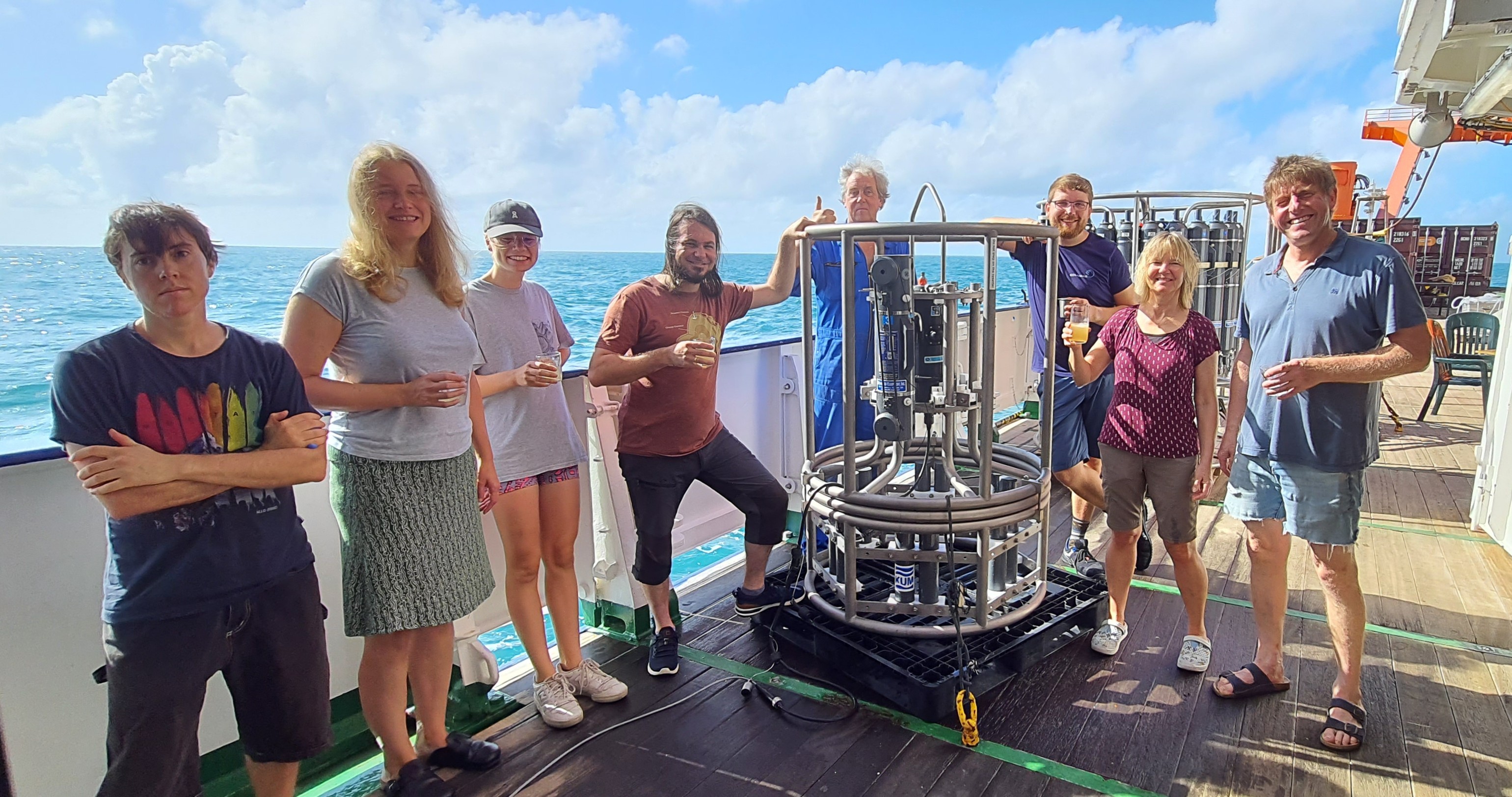
With the final CTD rosette sampling completed, and as tradition dictates, a final round of drinks must be taken from the bottles before the equipment is cleaned and mothballed. On this occasion, bitter lemon is the ‘poison’, with the toast arranged from the Clean CTD by Nico at 09:00hs on Friday 27th December 2024.
Here’s to your good health!


Today, I am joined by Alana Delatorre, who talks to me about her role on board the Meteor and her budding career in biogeochemistry. Many thanks to her for taking time out of her busy sampling schedule to talk to me!

I’ve had to spend the last few days grappling with the arcane machinations of Instagram (grrr), so I’ve missed a blog post or two. Let’s have a quick catch-up!
Well, firstly, HAPPY CHRISTMAS from everyone aboard the Meteor! Although we miss family and friends back home, we know that we will soon be home again to see them.
Now, after a successful sampling run along the coast of French Guiana, we are back in Brazilian waters and have just reached the point furthest into the mouth of the Amazon and struck fresh water, which has been eluding us for some time. Happy sampling times are here! (is there a song about that?) It is currently raining and overcast, but it’s still pleasantly warm.
There are various other things to note, not in any particular order:
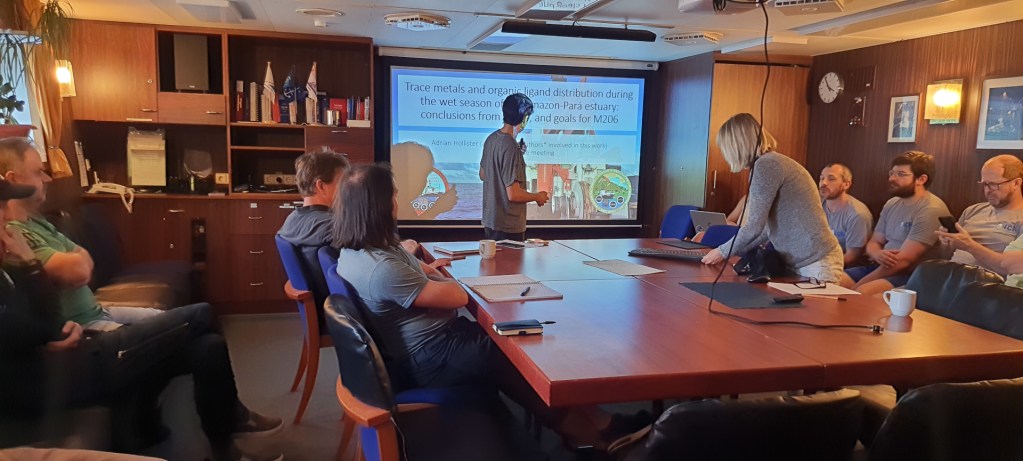
The Chief Scientists gave a presentation to the crew on what we have been doing, with a look at some preliminary results. Meanwhile, individual groups gave their own presentations to us all, and these were much appreciated by everyone.
The stewards put up a nice Christmas tree in the Messroom. We had some nice food and wine yesterday (24th) and we began the day today with Eggs Benedict, which is a bit of a kick start for Christmas Day.
The table tennis championship, open to both crew and scientists, is rapidly coming to a head, although every time I go down to see it, I miss it. Perhaps someone will get me some photos??
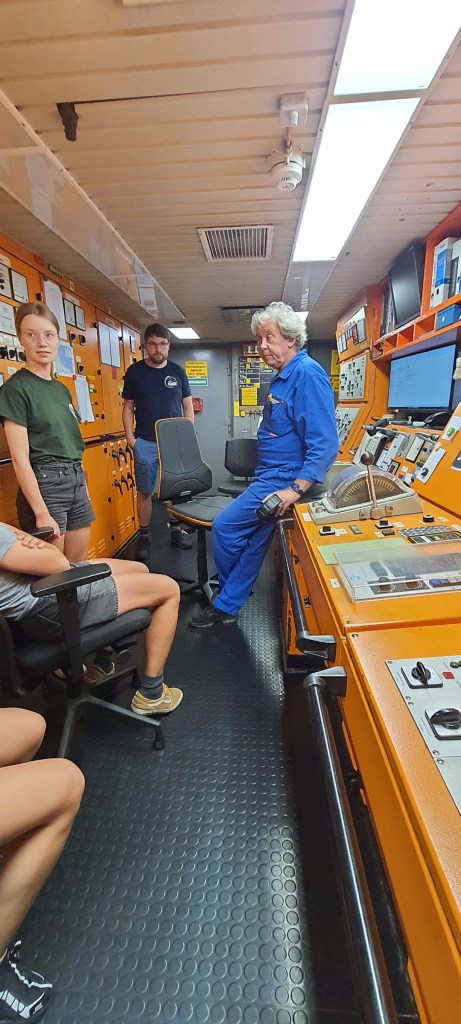
We had a great tour of the engine room(s) by the Chief Engineer Valker Hartig, which has been compiled into a two-minute Instagram video.
I had some very annoying jaw pain which the wonderful Dr Joanna Tomaschewski dealt with efficiently and effectively.
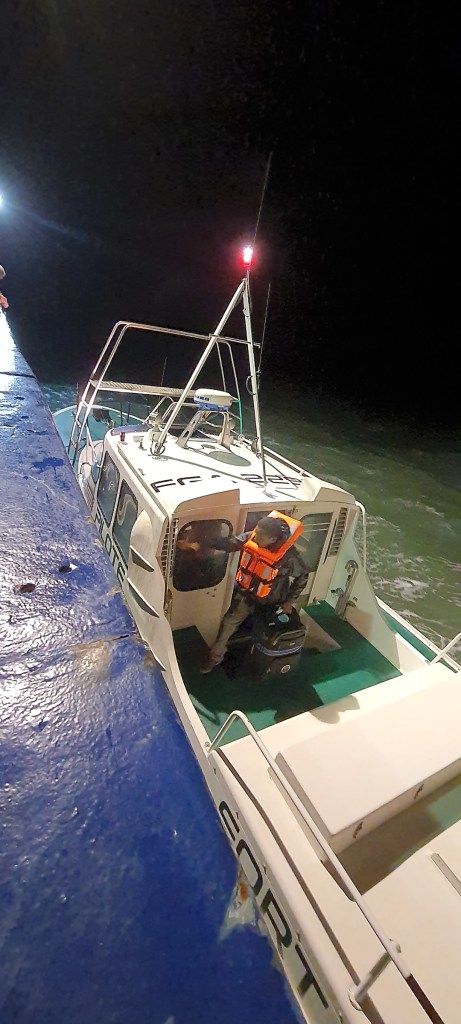
We exchanged a member of the crew at night while standing off some way from the land. It may not be uncommon for the crew, but for most of us it was an interesting exercise in waters that were a little choppy, and I’m pleased to report that the exercise was completed safely and successfully.
Two new young scientist interviews were added to the website – Neele Sander and Elias Lilie – many thanks for this.
At the end of the recent days of lengthy and productive sampling runs, we had an impromptu karaoke evening encouraged by Chief Engineer Volker, which was great fun.
I think that’s it. If I have forgotten anything, I hope I’ll be forgiven. I must go now and see what’s on the work schedule for today. Andrea will no doubt fill in the picture in her daily update (Instagram)
Below are a few photos (apart from of the table tennis championship) which I hope will be self-explanatory.
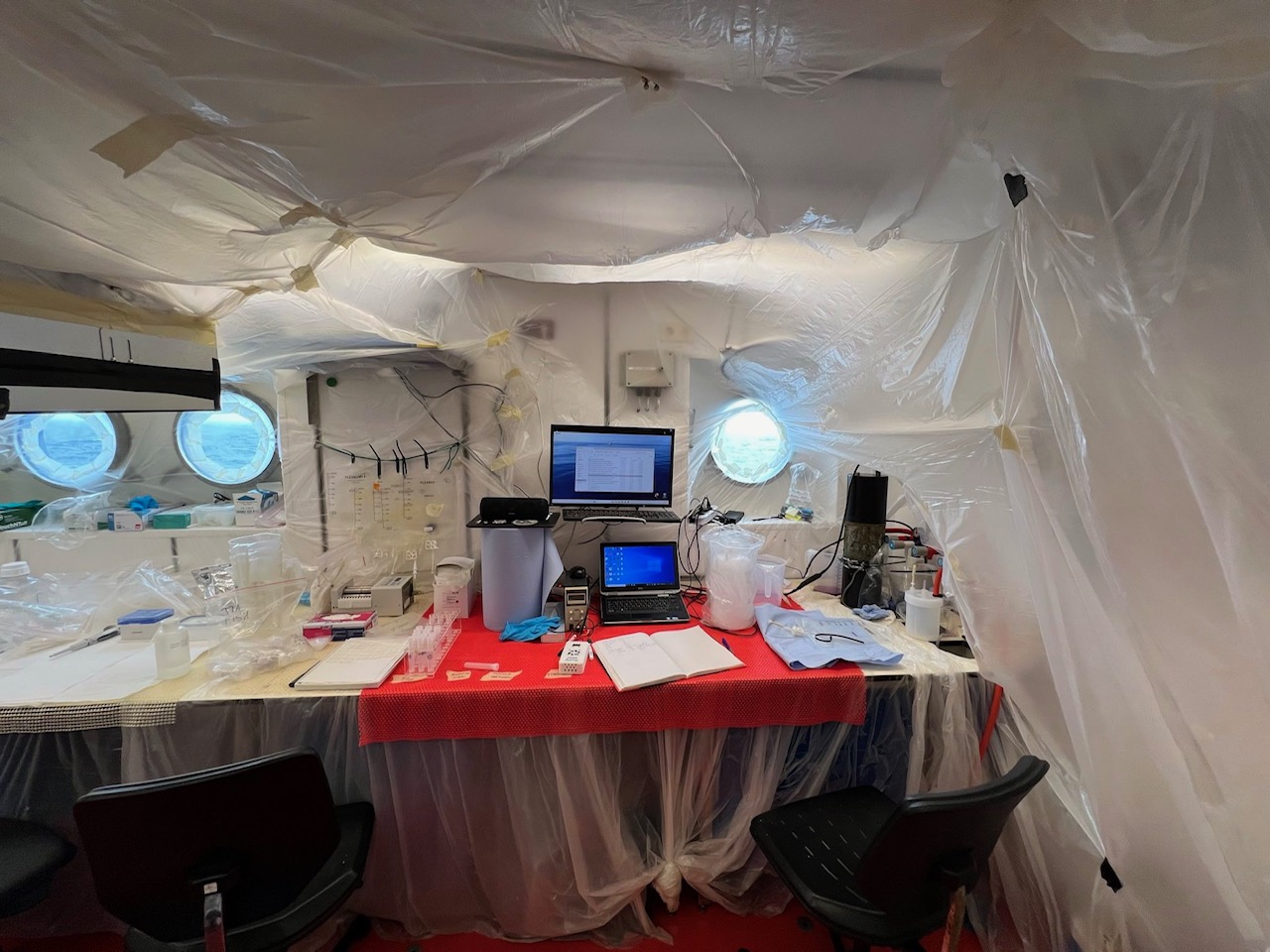
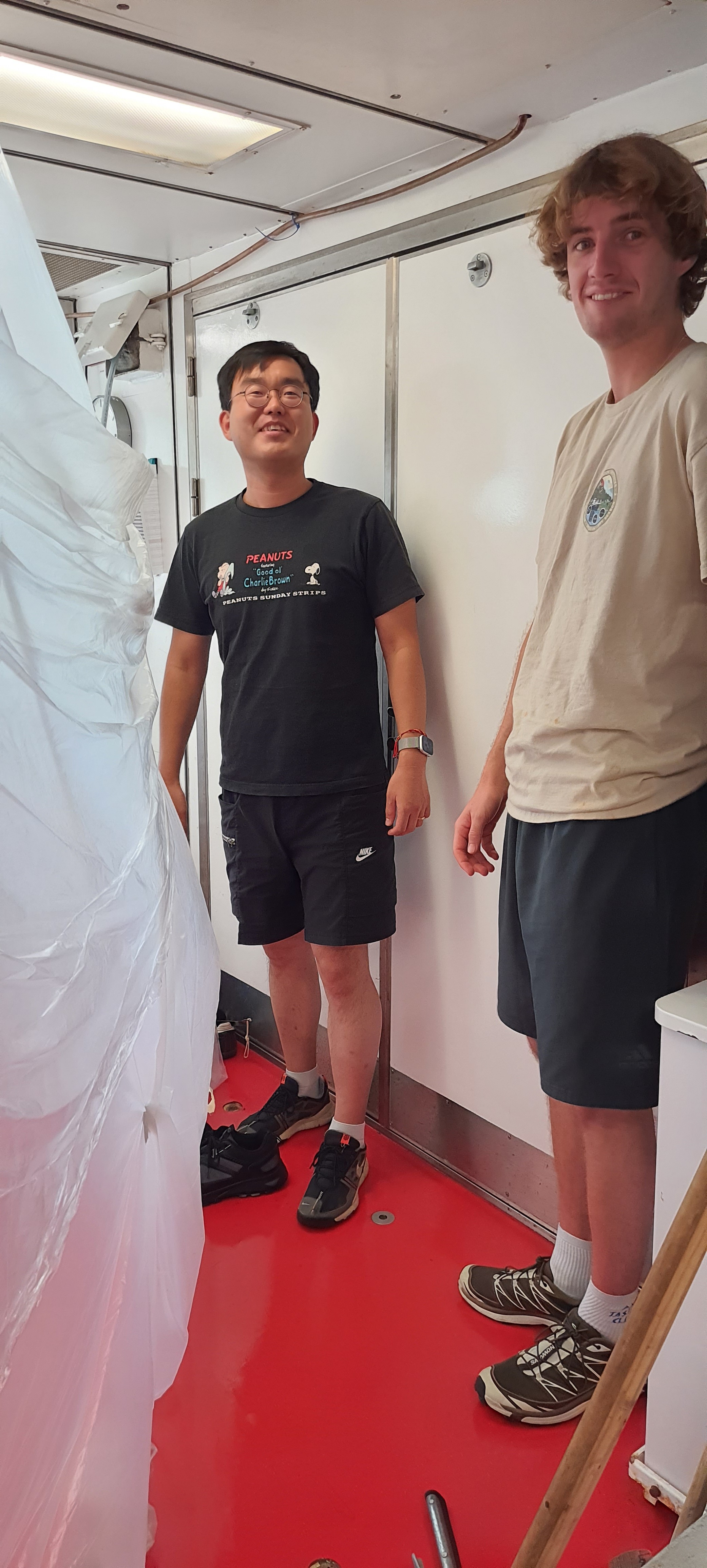
We have some great photos today from the clean bubble. It is so-called, because it is an air-conditioned or filtered ‘bubble’ created inside another room, sealing the working space off to avoid anything that could contaminate the water samples taken from the trace metal (clean) CTD rosette (TMR) and the tow-fish. The rosette and the sample bottles it uses, together with the TMR handling procedures supervised by Nico Fröhberg, are themselves designed to avoid any contamination at the point of sampling.
Anyone entering the clean bubble must also work free of contaminants and must therefore be dressed accordingly in protective suits. On M206, clean bubble operation is managed by Kechen Zhu, aided by Albert Firus,Laurenz van Bonn and Gwendolyn Terguer.
I caught up with Kechen today and he told me that operation of the bubble was going very well and had run smoothly for the whole of the trip so far. I asked him about how the air is circulated or filtered in the bubble, and he told me that it was brought into the bubble from an inlet at the top, and that the filtered air descends and escapes from underneath the bubble’s skirt.
The team is kept working hard, and even when there is no CTD sampling, the tow fish is always there on a station, together with the pump used by David for his radium sampling (more on that later). After filtering, the water is allocated to the other teams as required, and Kechen also takes some for his own analyses.
The photos illustrate that working within the bubble has its own peculiarites. In the pictures, we see Gwendolyn and Albert at work. The photo (above right), taken just outside the bubble, are of Kechen (left) and Laurenz. On deck, Albert and Kechen are at work on tow fish preparation and Nico supervises the Trace Metal Rosette.
Grateful thanks to Kechen for the interview and Gwendolyn for the photos!


Today I am joined by Elias Lilie, who talks to me about why he chose his career path, and what he has been doing aboard the RV Meteor. Thanks Elias!
1. …that the oceans have holes and bumps in them?
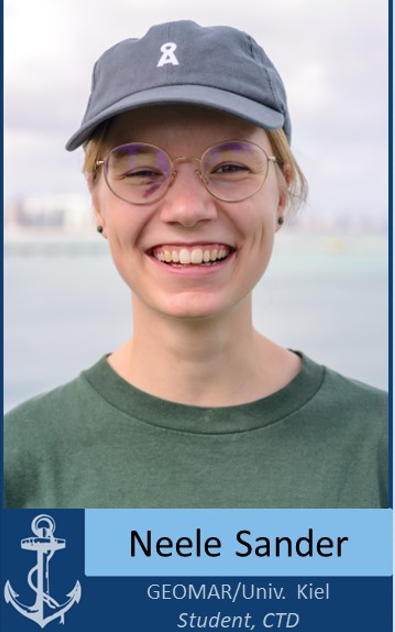
Neele Sander recently explained more to me after she had presented some of her initial observations to her colleagues aboard the RV Meteor.
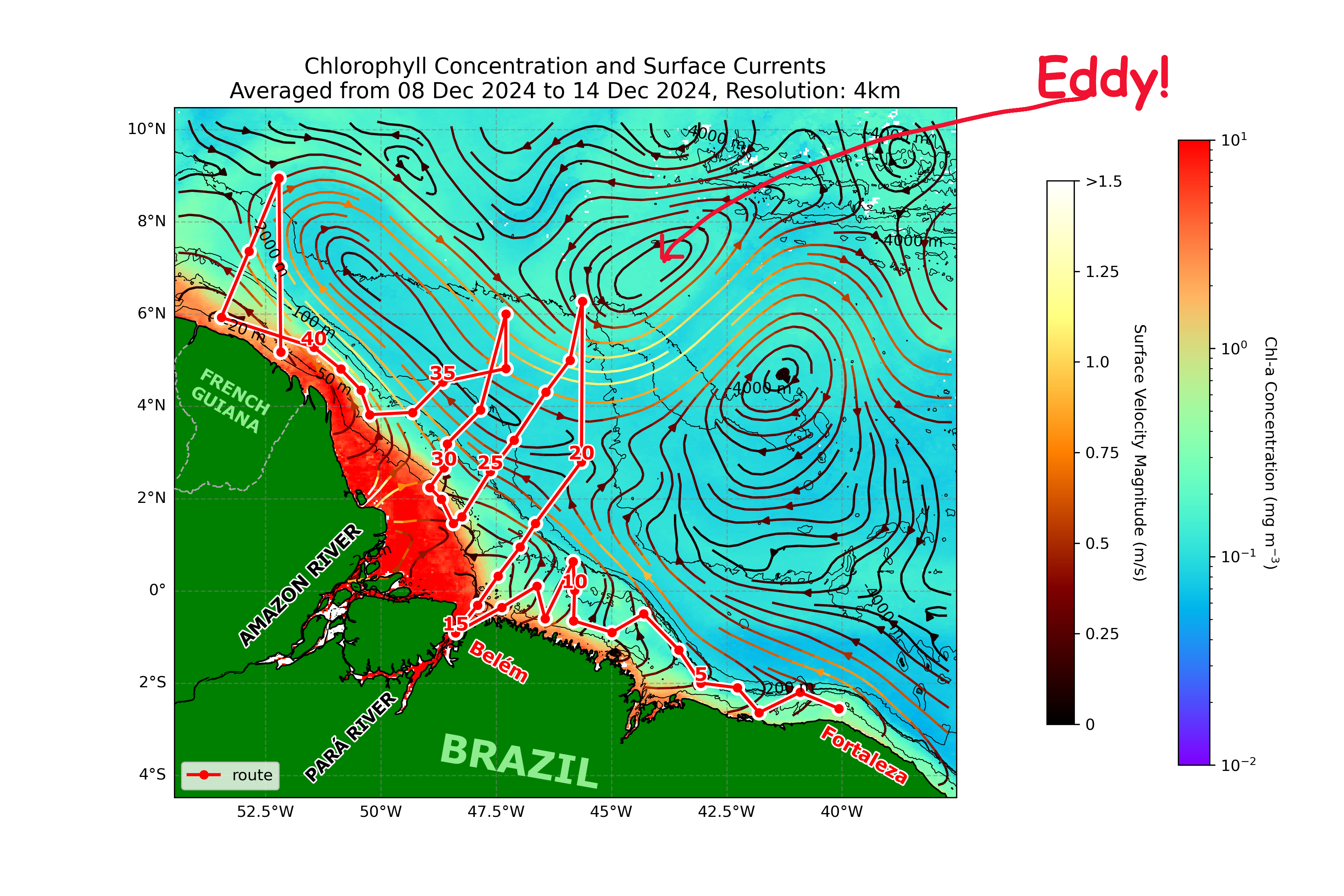
The oceans are in constant movement, and the patterns of movement are known as the currents. However, sometimes something interrupts the general flow of the currents, and the water begins to circulate in an eddy that can be very large indeed.
In her recent work for M206 Amazon-Geotraces 2, Neele observed one such eddy, which can be seen in the satellite image (right). She told me that it measured around 100km across and that, in the middle, it formed a hole (okay, a ‘depression’, of around 30cm!). The movement of the eddy where she made the observation is circular, in a counter-clockwise, or ‘anti-cyclonic’ movement; but in the southern of half of the planet it would move around the other way – clockwise, or in a cyclonic movement. She also told me that some eddies can produce a rise in the water level so that it is higher than the surrounding sea – for me, that’s definitely a ‘bump’ in the ocean.
So, next time you’re looking across the sea, remember that it’s not all just one big flat surface – it has bumps and holes in it too!
2. …that the amount of river water entering the oceans is equivalent to 1,200,000,000 1-litre bottles of water every second?
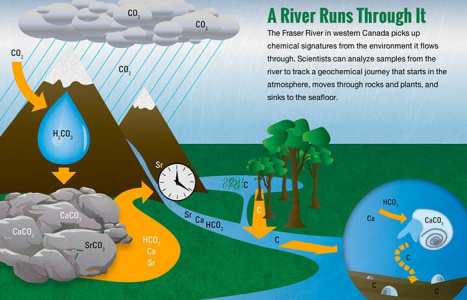
If you prefer, this is 1,200,000,000 x 31,536,000 every year, which is… a lot! The Amazon makes up a big percentage of this, and it also carries billions of tons of nutrient-rich sediment into the ocean. That’s why the Amazon-Geotraces programme is putting together as much information as possible about how river water mixes with the sea water and how it is transported around the oceans.
3. …that the oceans store an immense amount of carbon and are a vital part of our carbon cycle?
The oceans are carbon reservoirs or ‘sinks’ that help maintain the balance of the planetary carbon cycle. Carbon is both a building block for all life, and a key part of our climate. There is a lot of important work being done to understand what happens to dissolved organic matter (DOM) and the carbon it contains, that flows into the sea from rivers and other areas like mangroves.
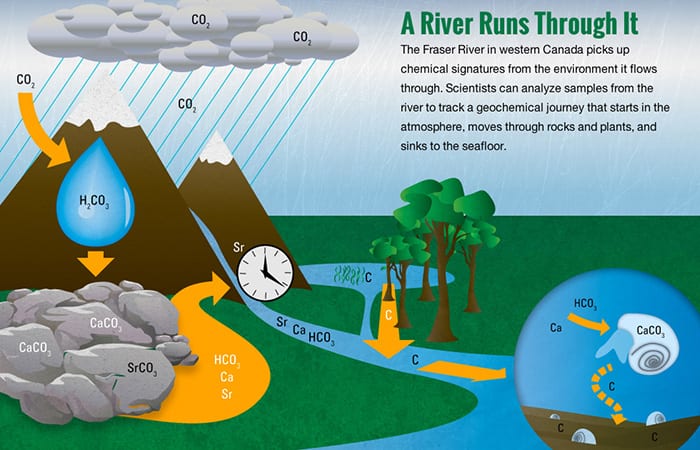
Michael Seidel, one of the scientists on the M206 Amazon-Geotraces programme, explained to me that the world’s oceans absorb and store 25% or more of our carbon emissions, and with existing carbon stores under threat from deforestation and the use of fossil fuels (forests, coal and oil deposits are are carbon sinks too), we must urgently understand what the impact of the changes will be on the ocean.
Thanks to Neele and Michael!
Now, can you put the other rivers below in the correct order for the amount of water they discharge into the oceans?

Check your answers on wikipedia or on our site here.
Don’t forget to have a look at the other resources available on our Young Learners Page