Last night, shortly before 19:30, resident meteorologist Martin Stelzner showed me around the weather balloon container on the Meteor and let me see how things work.
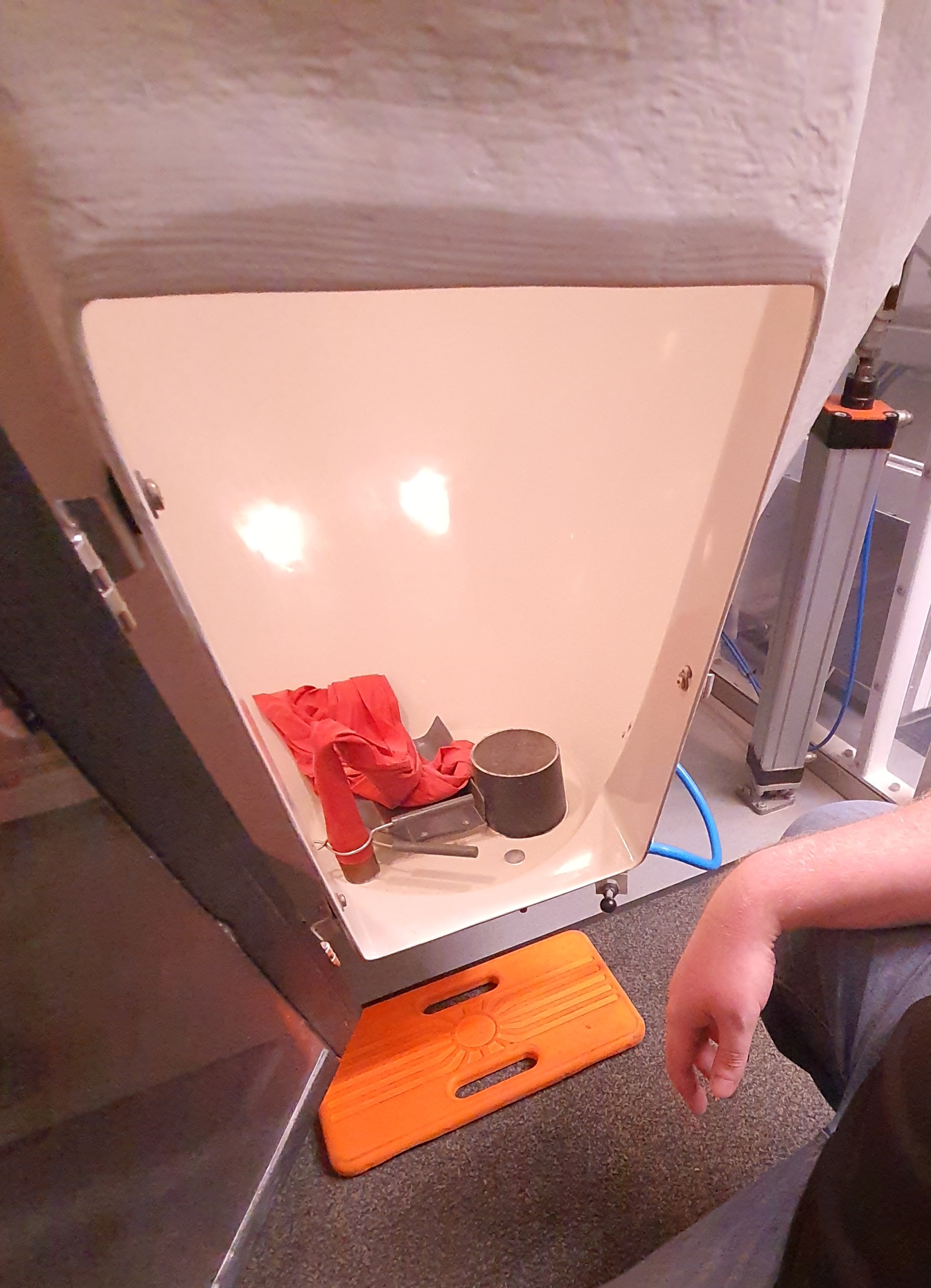
The mechanism for release is cunningly simple – much simpler (and safer, I think) than a hand-launch operation. A large, fibreglass balloon holder contains at its base a tube that releases helium into the balloon. Once the balloon has reached a predetermined size, Martin secures a small radiosonde and gps/transmitter to it.
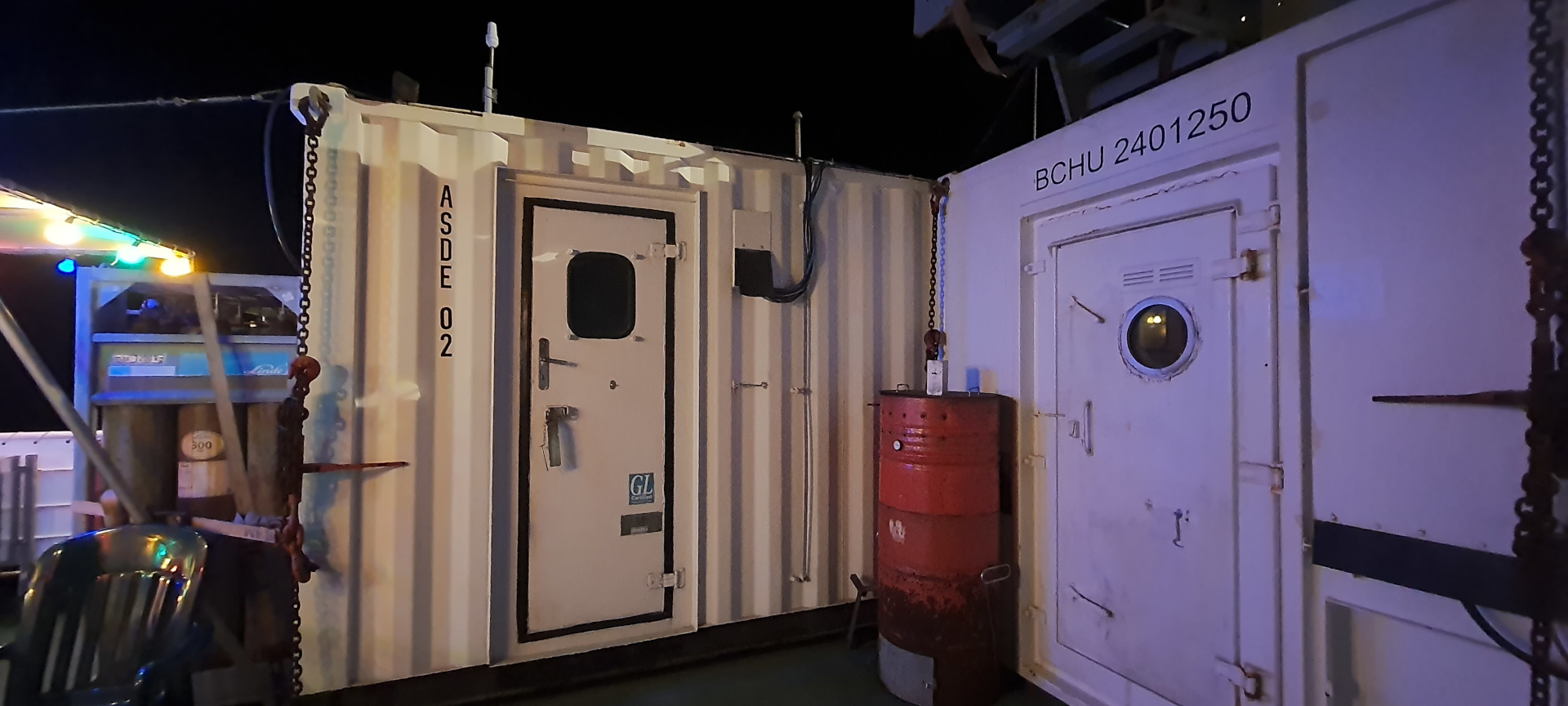
When ready, Martin simply opens a section in the container on the starboard side of the ship, and the balloon is automatically released. The balloon’s flight takes around 30 minutes, when it will rise to a height of around 25km. The radiosonde measures various atmospheric parameters such as pressure, wind speed and direction, and temperature, and transmits them by radio to a receiver onboard.
When the dataset is complete, Martin sends it directly to the German meteorological service Deutscher Wetterdienst and it becomes part of the complex German and global meteorological systems.


The release timing is strictly observed at all weather stations, and in our case the release was set to be at 19:30 and in darkness. It made filming and photographing a bit challenging, but with Martin’s help everything went well inside. Outside, I knew it would be a challenge – in 2018, I tried (and failed) to get footage of the balloon flight on the M147 cruise, in daylight: the balloon moves much more quickly than you expect! Now, I was not hopeful of even seeing the balloon in the dark. Watch the video to find out what happened.
It was great to see the device in action, and many thanks to Martin for his time and patience.
Don’t forget to check our Young Learner Page for additional posts.