Within the PROBRAL exchange program of DAAD and CAPES, we have a longstanding collaboration with several working groups at brazilian institutions involving exchange of PhD students and PostDocs as well as joint sampling campaigns. Below you find more information about our PROBRAL projects in recent years:
2025: Lab Exchange in Brazil: Collaborative Trace Metal Research

Postdoc Natasha van Horsten and PhD candidate Polina Tselykh from the marine geochemistry research group of Prof. Andrea Koschinsky at Constructor University are taking part in a laboratory exchange at the Federal University of Santa Maria (UFSM) in Brazil at Lachem laboratory with Prof. Leandro Machado de Carvalho. The research stay is funded by DAAD within the PROBRAL project and aims to strengthen German–Brazilian collaboration in cutting-edge marine trace-metal analysis. Natasha and Polina are introduced to the university and Brazilian culture by UFSM postdoc Thais, who may visit the geochemistry lab at Constructor University in the nearest future to learn the methods applied here and further enrich her scientific work and experience.

During their visit, Natasha and Polina are working with adsorptive stripping voltammetry, applying it to seawater samples collected during the GEOTRACES expeditions GP21 and GP11 in the Southern and Equatorial Pacific Ocean. Natasha focuses on voltammetric analyses of chromium redox speciation at Constructor University, while Polina specializes in SeaFAST preconcentration and ICP-MS measurements of high-field-strength elements (HFSE).
By bringing their Pacific samples to UFSM, they can perform interlaboratory and inter-method comparisons, improving the reliability of their trace-metal measurements. Over the course of the month, they will not only work intensively with their samples in the laboratory but also exchange knowledge, techniques, and ideas with Brazilian researchers and students—strengthening scientific networks.

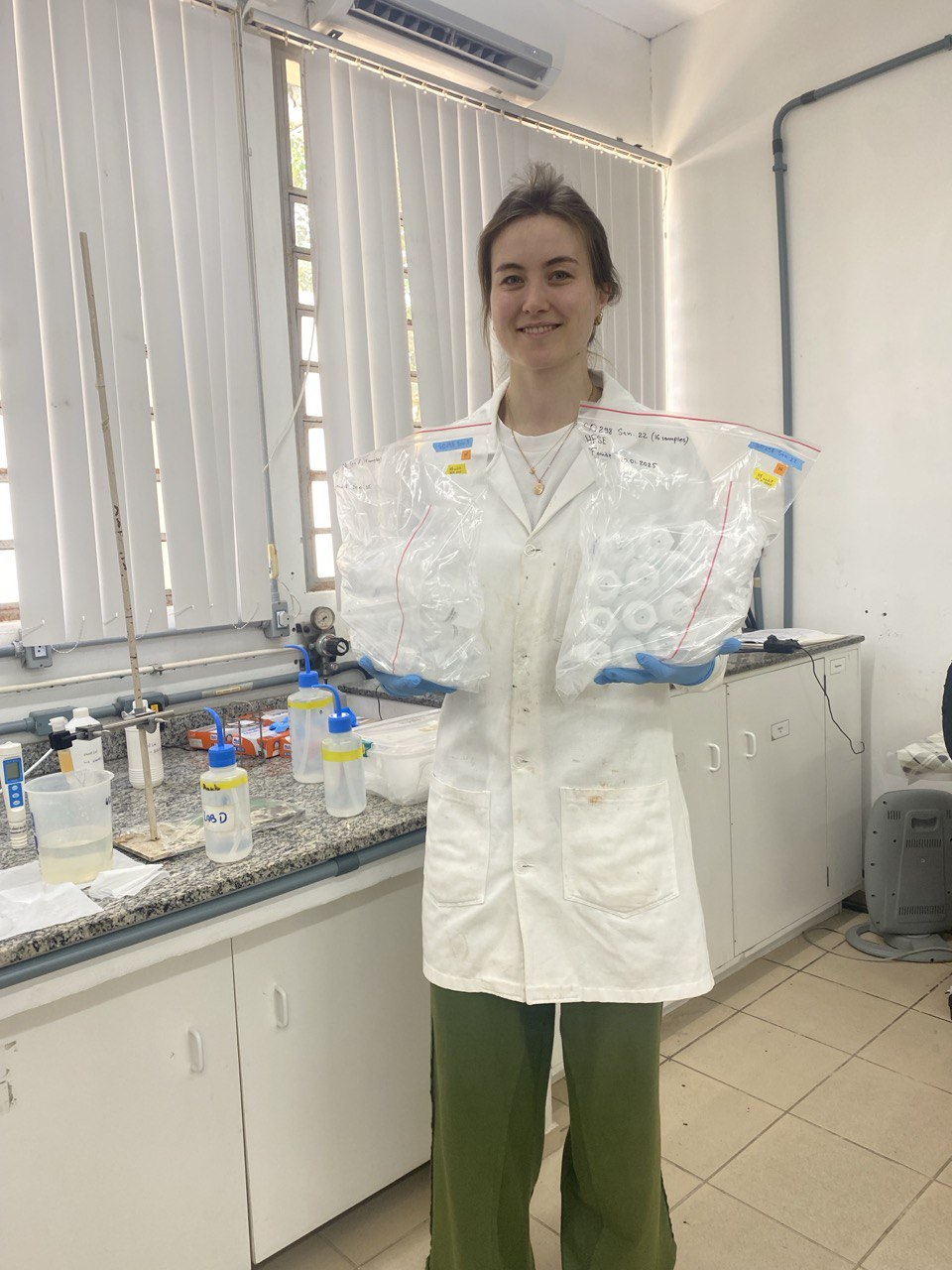
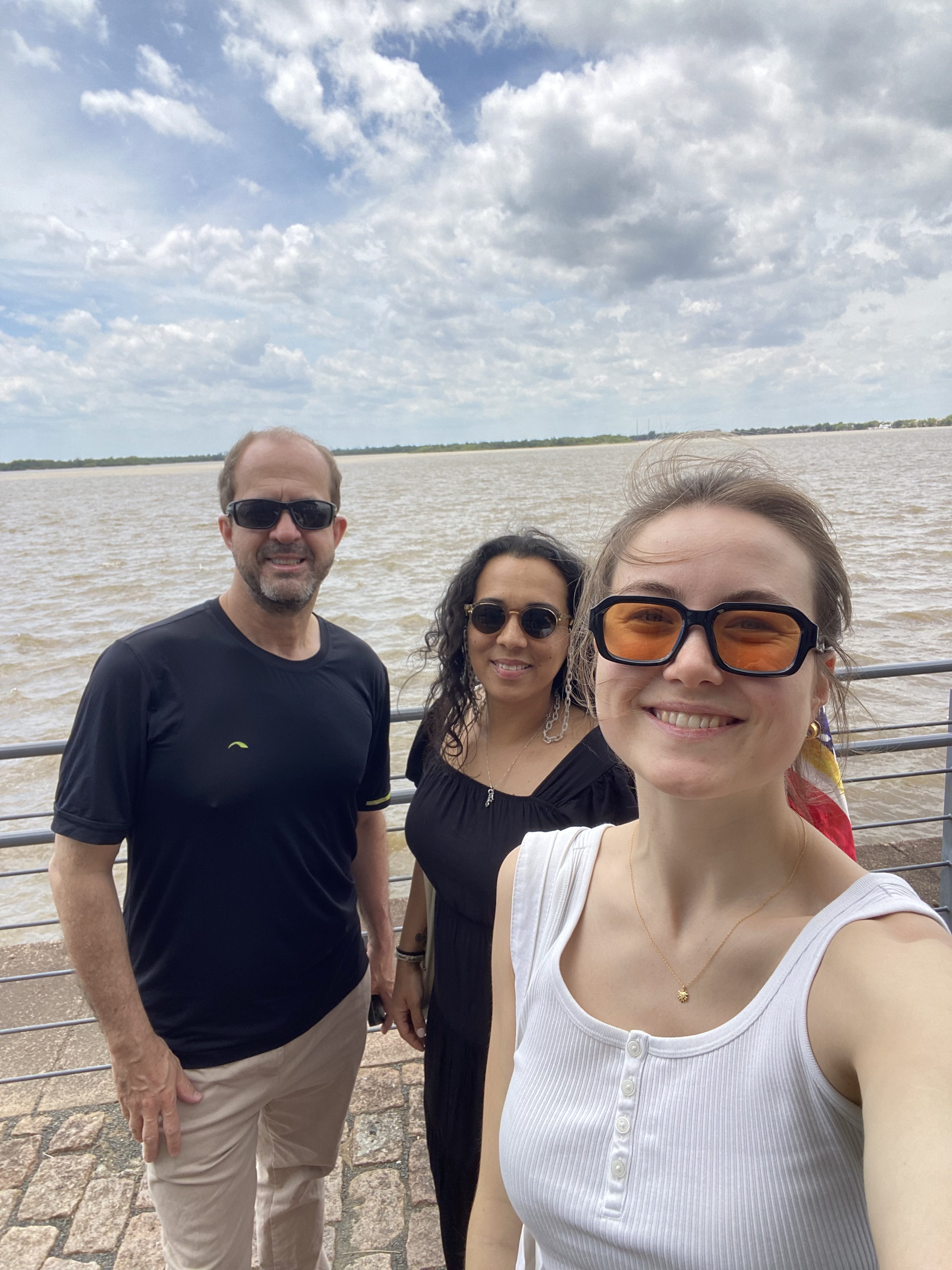
At the same time, PostDoc Christian Krause is visiting our lab in Bremen for 6 months for developing/improving a voltammetric method for thallium concentrations as well as measure reactive/total nickel and concentrations of copper, lead, cobalt, and zinc in the samples we collected during last year’s sampling campaign in the mangroves near Braganca in Brazil.
2024: Sampling campaign in the mangroves in northern Brazil
News posts:
Mangroves which can be found along the coastlines of many tropical countries are not only important for protecting the shore from erosion due to tides and storm surges, but have also been found to discharge freshwater, organic matter and trace metals into the coastal oceans, thus playing an important, but understudied role in biogeochemical processes along tropical coasts. The increasing anthropogenic impact on mangroves including cutting of mangrove forests and climate change challenge these important role of mangrove belts for the environment.
In mid- November, 10 scientists from Constructor University, University of Oldenburg and GEOMAR Kiel start their trip to a sampling campaign in northern Brazil together with Brazilian scientists from UFPA (Federal University of Pará) and UENF (State University of Northern Rio de Janeiro). They will spend two weeks in the mangrove belt near Bragança and collect sediment and porewater samples at several pre-installed wells. One day will be dedicated to the sampling of the nearby River Caeté which flows into the Atlantic Ocean. The scientists’ aim is to cover a large salinity range from freshwater as the riverine endmember to samples as saline as possible to represent the Atlantic seawater.
This sampling campaign will help to better understand the role of the mangrove area for the cycling of organic matter and trace metals of which some are essential for the bioproductivity in the coastal Atlantic Ocean.

The great benefit of this campaign is that it will support the upcoming research cruise M206 which starts directly after this mangroves sampling campaign; during this cruise scientists will sample the coastal waters between Fortaleza and Belém and follow the freshwater plume of the Pará and Amazon rivers during the dry season to study the impact of riverine discharge of organic matter and trace metals into the Atlantic. (https://andrea-koschinsky.org/m206-geotraces/)
This interdisciplinary bi-national project of three German and three Brazilian universities and research institutes is funded by the DAAD (German Academic Exchange Service) and the Brazilian CAPES within the PPP-programme, enabling mutual research visits of Brazilian and German scientists and joint research expeditions for 2-4 years.