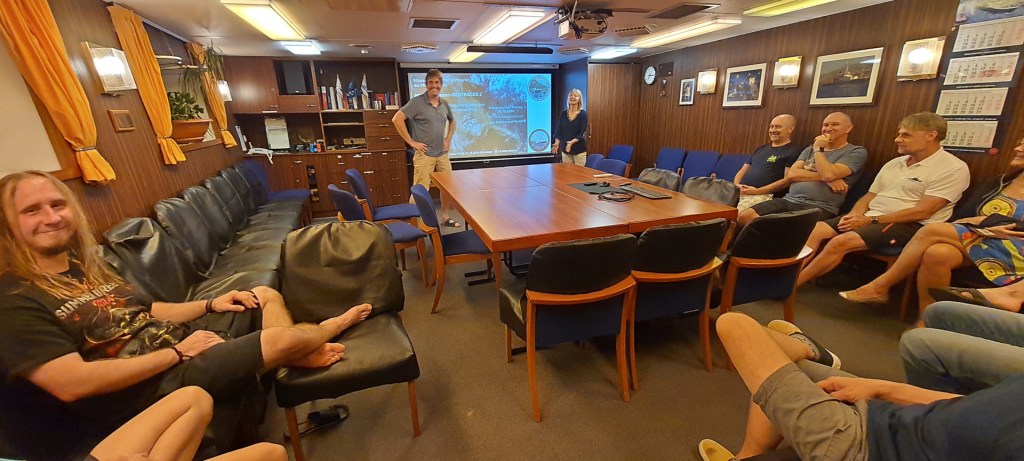
Today my guest is Mariana Freitas de Souza, who joins me on the last day of the M206 cruise to tell me a little about herself, her work and her career.
Many thanks Mariana!
Today my guest is Mariana Freitas de Souza, who joins me on the last day of the M206 cruise to tell me a little about herself, her work and her career.
Many thanks Mariana!
We will soon be arriving in Belém and, given the season, it is very likely to be raining. We must not grumble, though – at least it is warm rain and generally falls on your head or your bumbershoot, rather than hitting you in the face like the windblown, horizontal winter rain, sleet, hail and snow with which we shall soon be reacquainting ourselves.
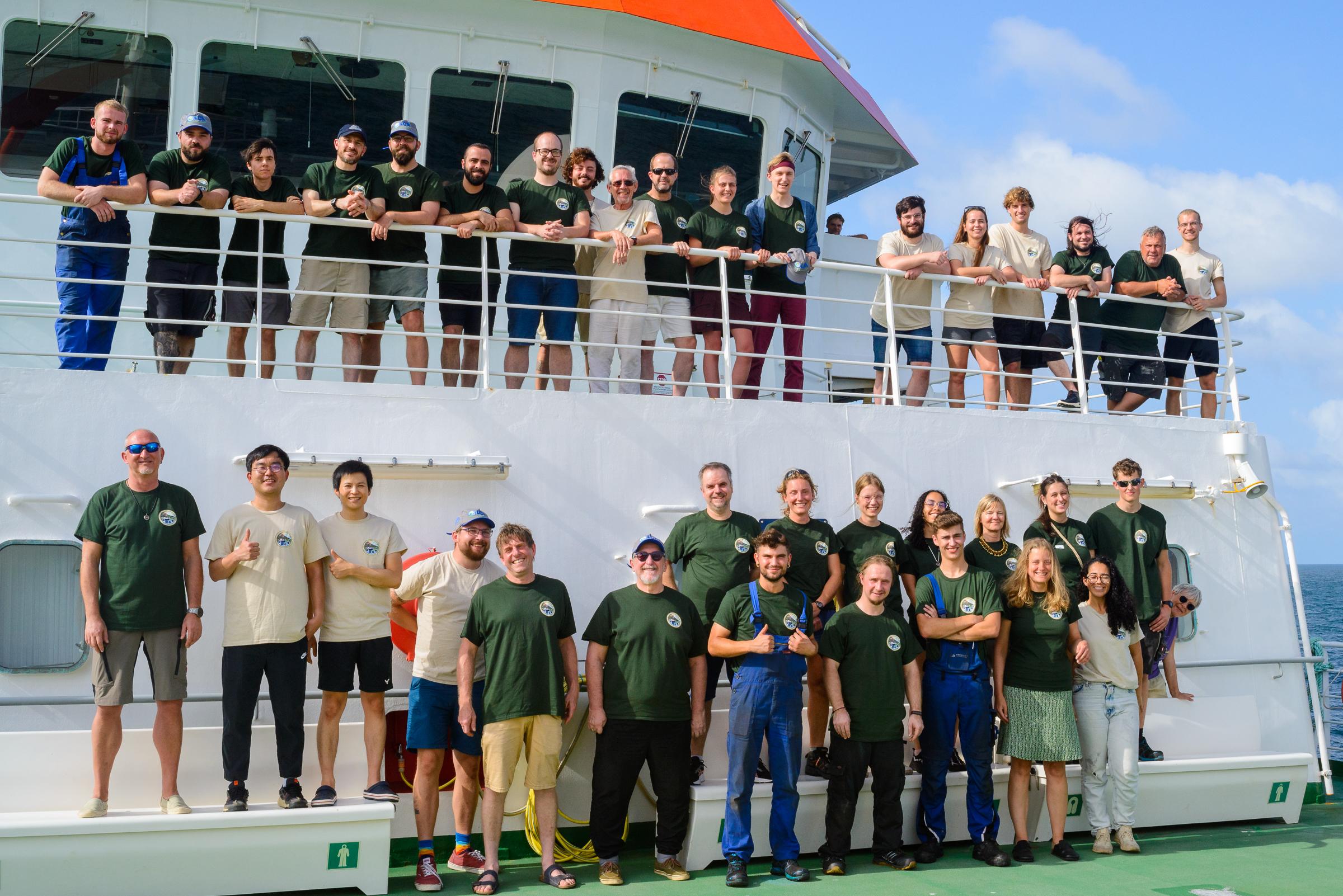
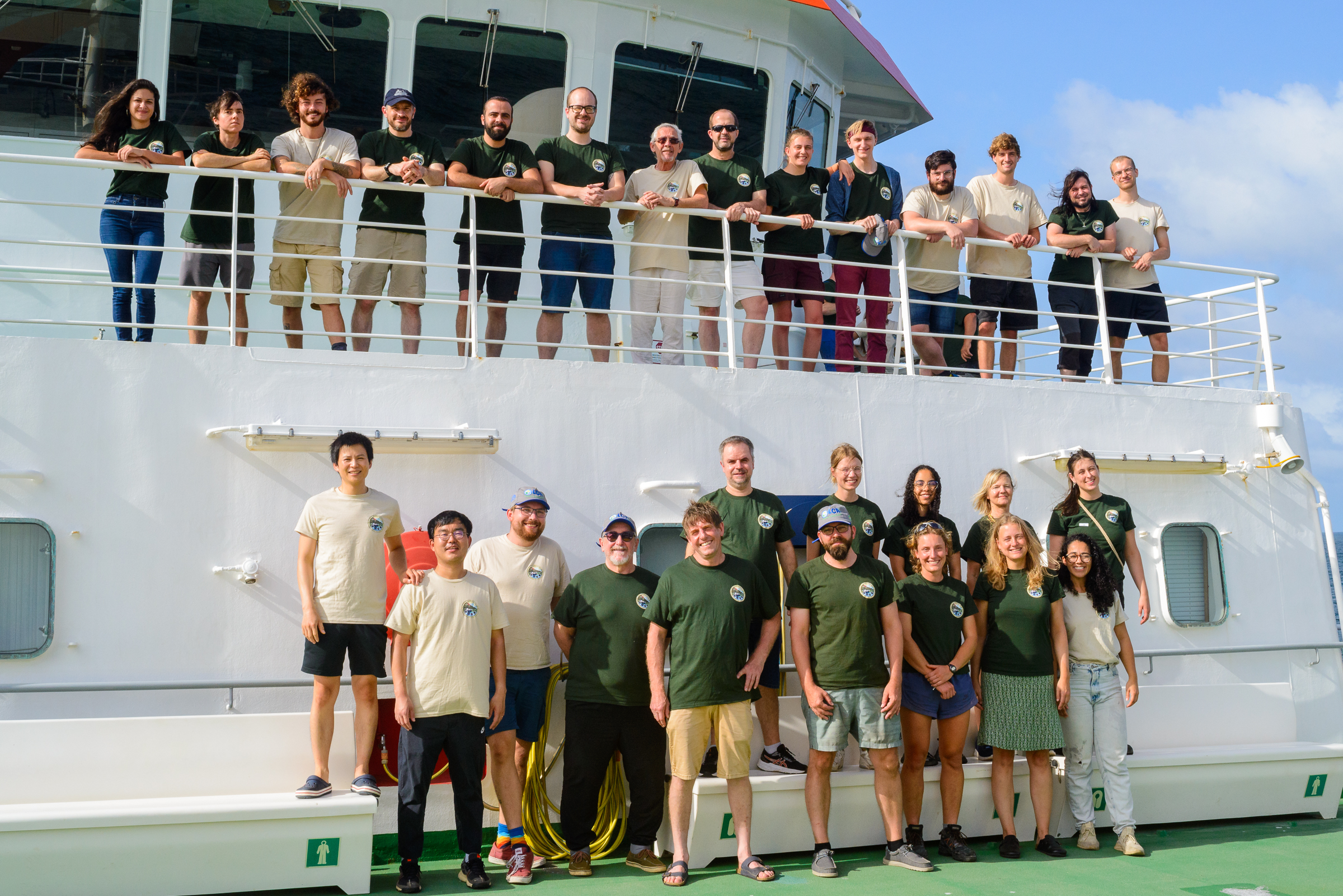
To distract ourselves for a moment, it is good to take a look at the group photos taken by Nico as well as a handful of other ‘making of the’ photos. It will be a relatively quiet day now, I think, although we may visit Belém tonight for a meal. The Captain and crew will be concerned with the inevitable formalities of arriving in port, Chief Scientists Andrea and Martin will be doing their admin., and we will all have our own formalities to deal with over the next day or so.
Some people will be leaving the ship tomorrow to fly home in time for the New Year’s celebrations, and some will stay an extra night and either celebrate in Belém or, in at least one case, on the plane. A few people have arranged to take some leave and spend extra time in Brazil, either in and around Belém or Algodoal, or further into the Amazon. For the moment, however, we’re all still together on board 🙂


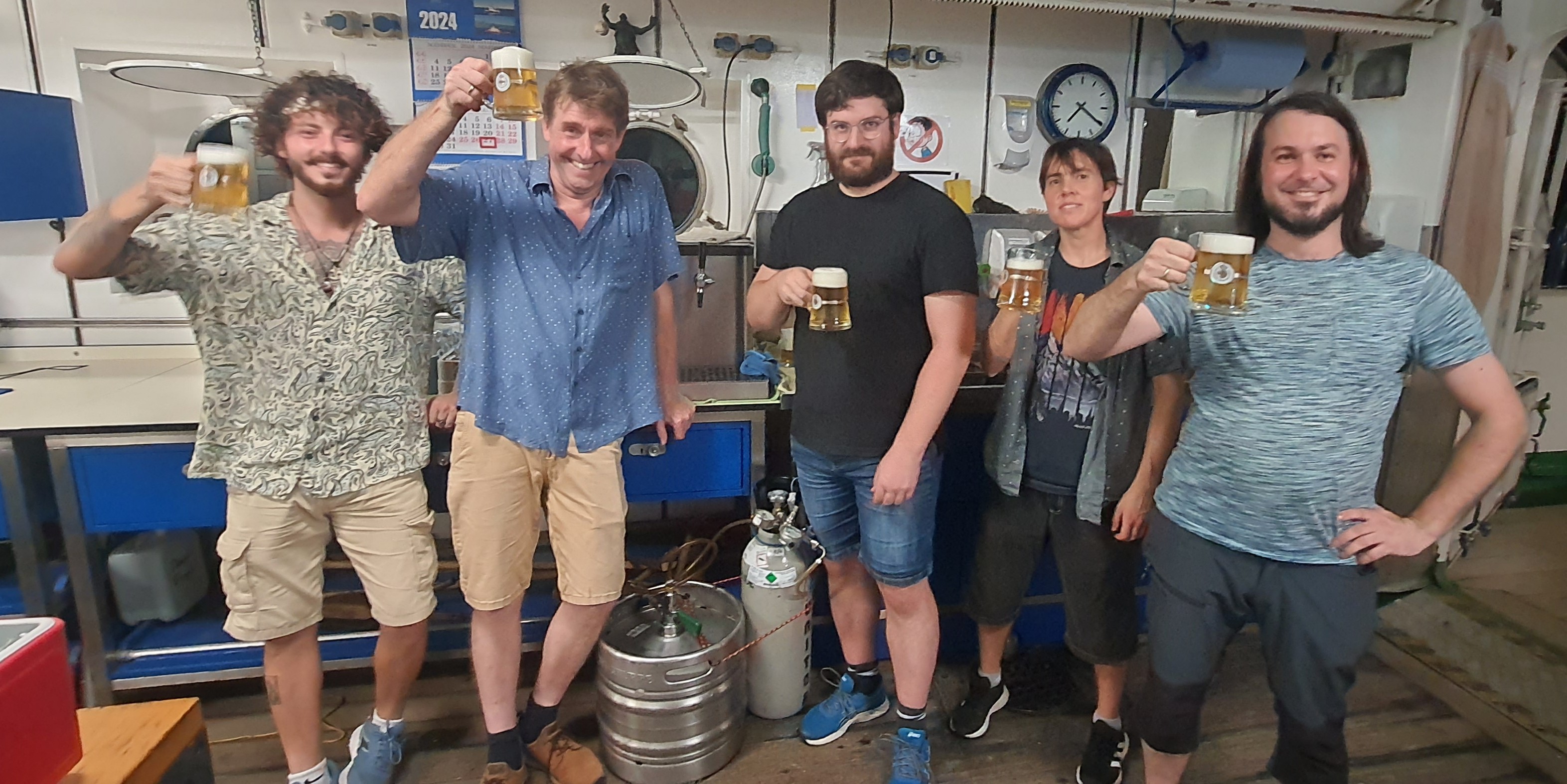
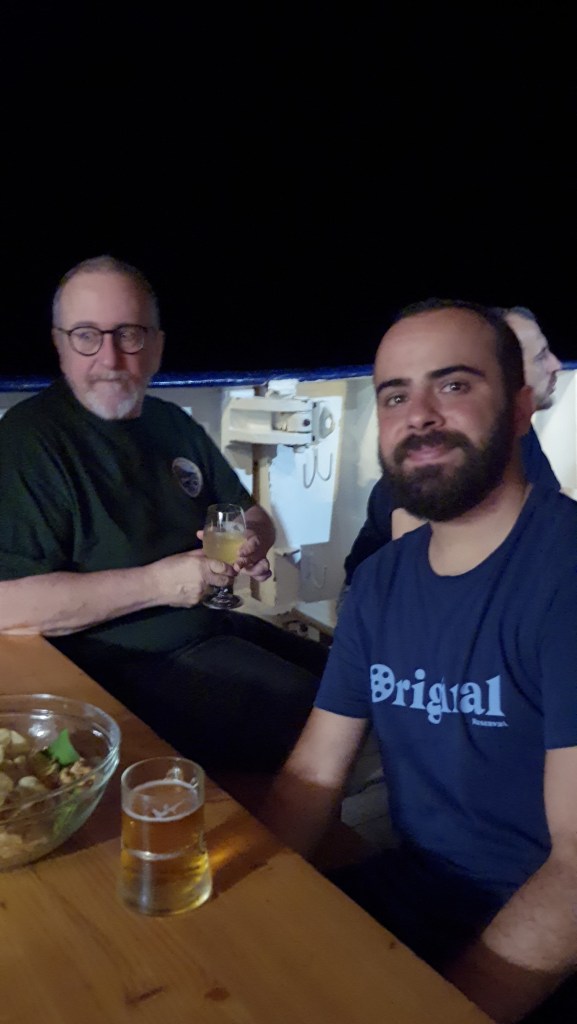
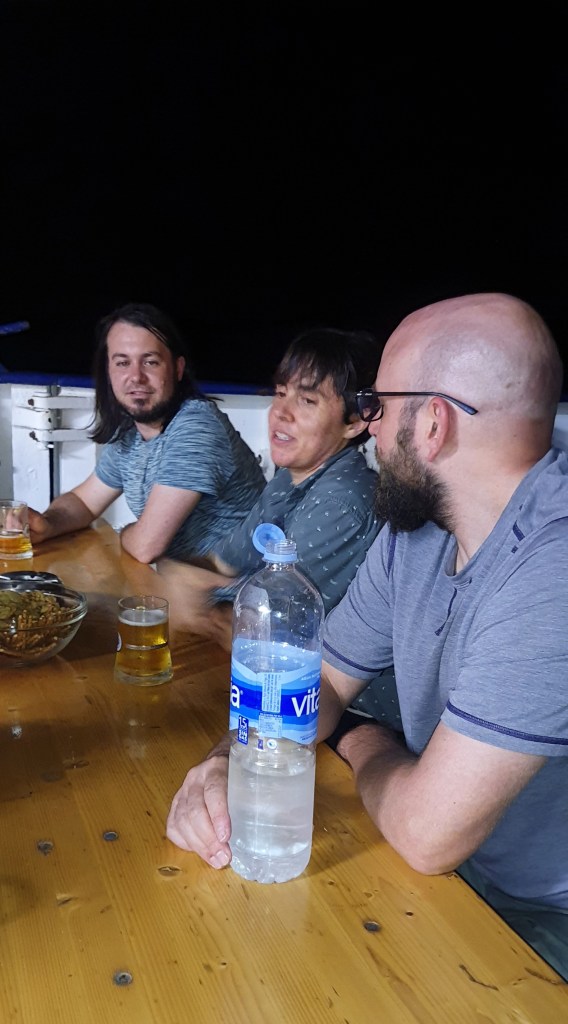
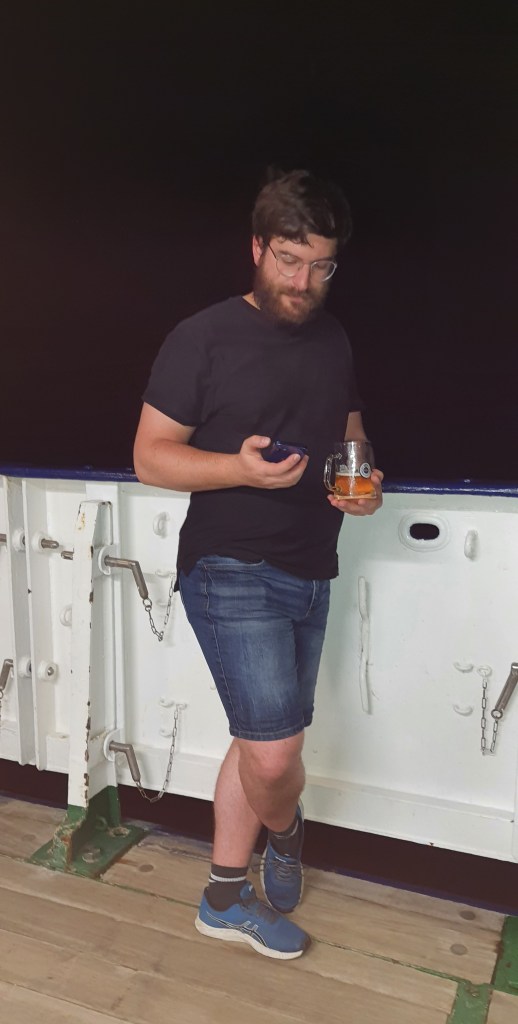
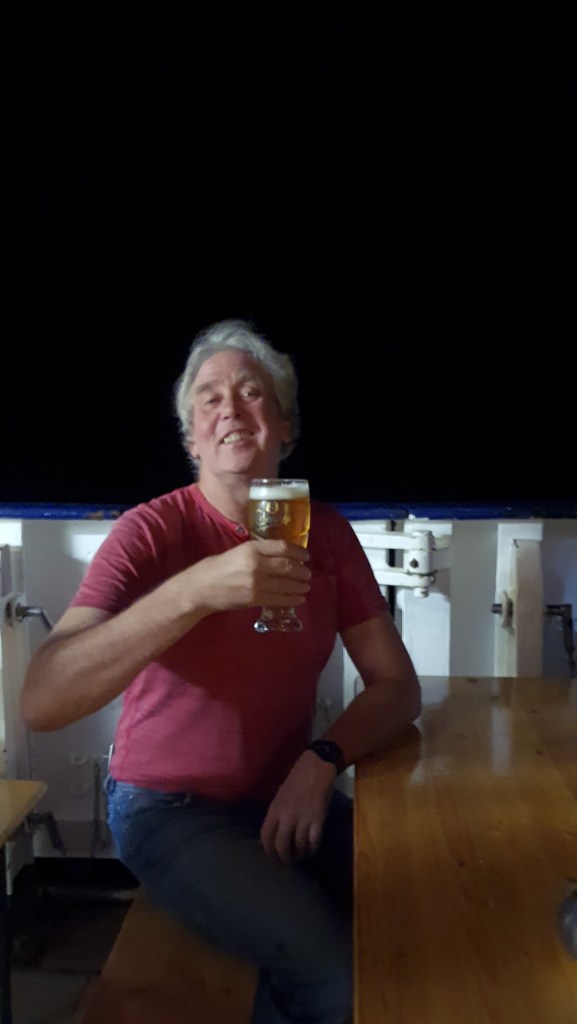
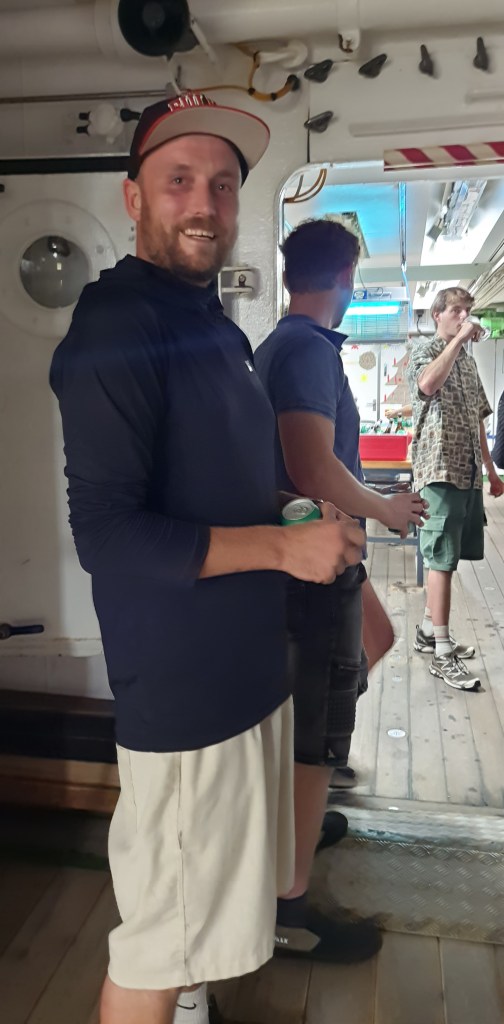
Após uma refeição perfeita de massa no pré-festa, um pequeno, mas seleto grupo de homens se reuniu para organizar as bebidas e os petiscos para o tão esperado encontro de Natal atrasado para cientistas e tripulação (foto).
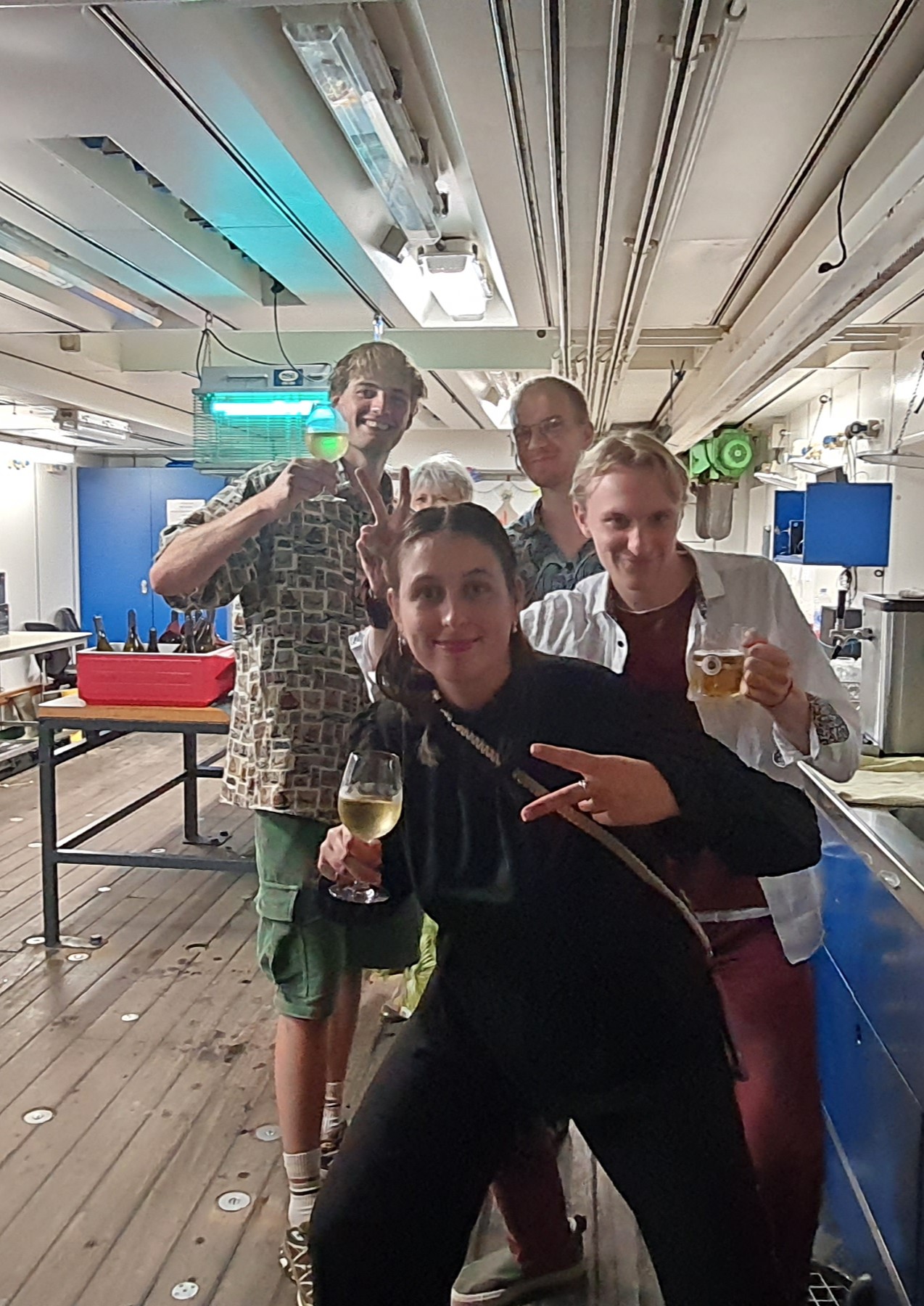
A organização de todas as mesas e petiscos, além do Amigo Secreto e dos discursos do Capitão e do Cientista-Chefe, foi realizada pela tripulação com sua eficiência habitual, e a festa foi inaugurada pelo Capitão às 19h30. Além da troca de presentes do Amigo Secreto, os cientistas presentearam a tripulação com camisetas do M206, às quais Nico Fröhberg acrescentou cuidadosamente alguns pequenos frascos de amostras comemorativas do M206.
A festa atrasada também marcou o fim de um cruzeiro bem-sucedido, pois agora estamos voltando para o porto de Belém e os laboratórios estão embalando e armazenando amostras e equipamentos.
Foi uma ótima noite, quente, seca e com pouco vento, e a festa foi um grande sucesso, sendo um final digno para todo o trabalho árduo realizado nas últimas semanas.
Obrigado a todos que tornaram isso possível e, abaixo, algumas fotos para o registro.
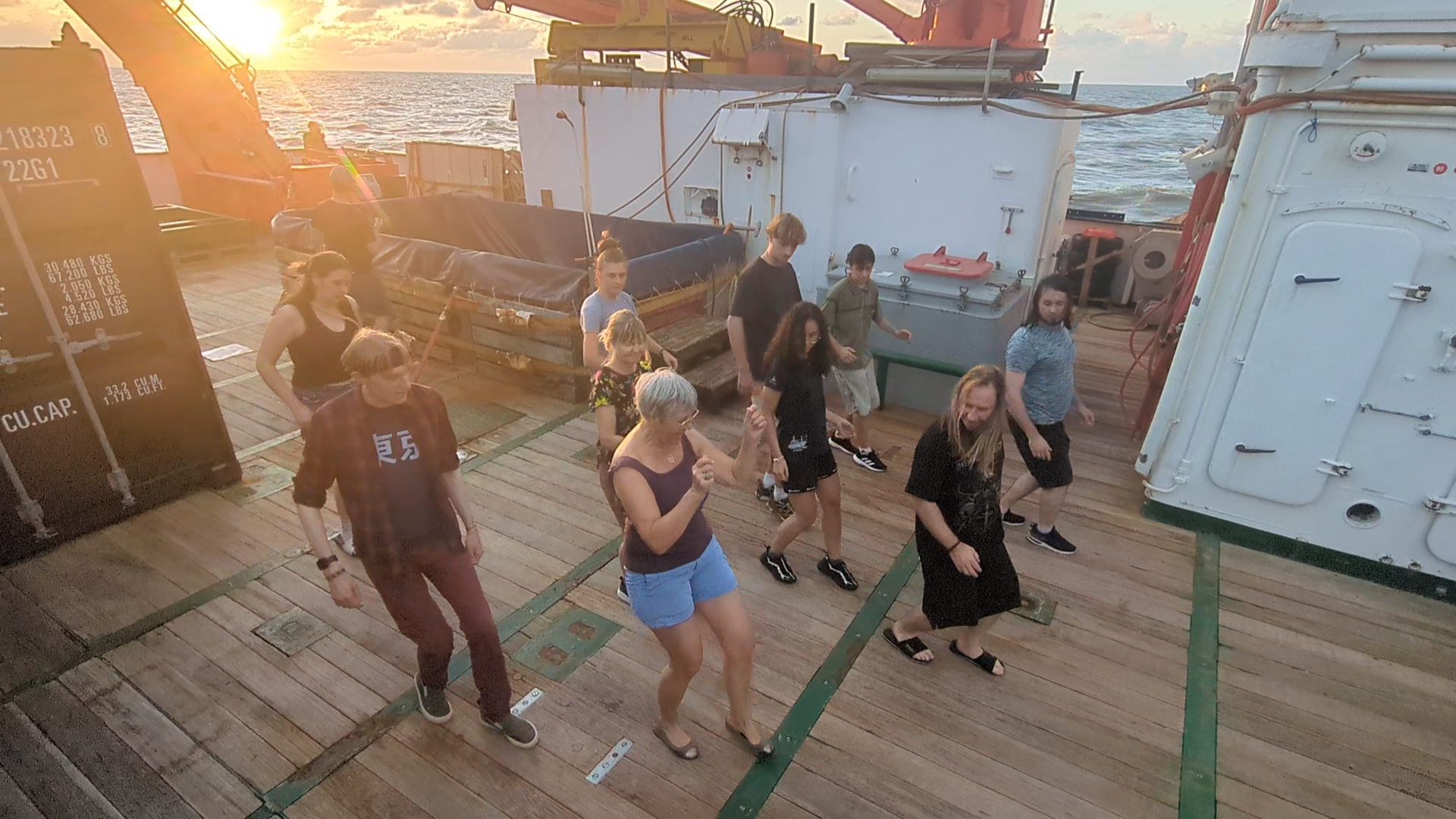
Work hard, play hard, they say. Toiling up and down the Brazilian coast collecting and filtering water samples involves a lot of late nights, early mornings and long afternoons – and sometimes a lot of sitting or standing in one place for long periods.
But the antidote is here! Yesterday afternoon in a quiet period, there was an impromptu line dance organised and led by redoubtable ‘trainee deck hand’ Christine Hammacher (aka the Captain’s wife).
Foi, segundo todos os relatos, muito divertido – e, felizmente, o mar estava calmo, o que significava que ninguém caiu na água (embora, pelo que se viu, alguns dos participantes tenham tido um pouco de dificuldade em seguir as direções em certos momentos).
Thanks to Christine for her organising skills and excellent training!
(Flash Mob, definição: “um grupo de pessoas que se organiza pela Internet e, em seguida, se reúne rapidamente em um lugar público, faz algo inusitado e se dispersa.”)
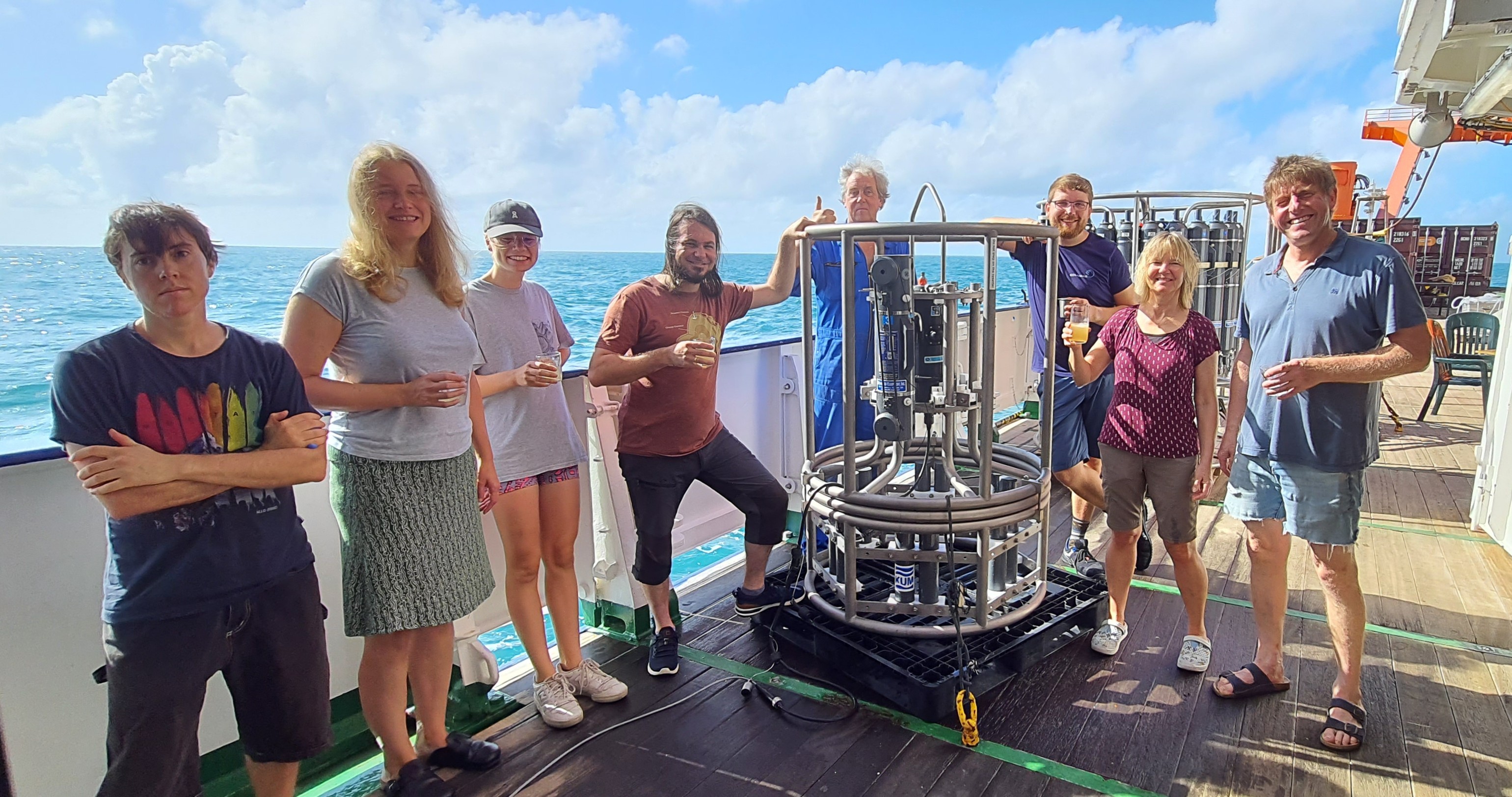
With the final CTD rosette sampling completed, and as tradition dictates, a final round of drinks must be taken from the bottles before the equipment is cleaned and mothballed. On this occasion, bitter lemon is the ‘poison’, with the toast arranged from the Clean CTD by Nico at 09:00hs on Friday 27th December 2024.
Here’s to your good health!


Today, I am joined by Alana Delatorre, who talks to me about her role on board the Meteor and her budding career in biogeochemistry. Many thanks to her for taking time out of her busy sampling schedule to talk to me!

Passei os últimos dias lidando com as complexas maquinações do Instagram (argh), então acabei deixando passar um ou dois posts no blog. Vamos fazer uma rápida atualização!
Well, firstly, HAPPY CHRISTMAS from everyone aboard the Meteor! Although we miss family and friends back home, we know that we will soon be home again to see them.
Now, after a successful sampling run along the coast of French Guiana, we are back in Brazilian waters and have just reached the point furthest into the mouth of the Amazon and struck fresh water, which has been eluding us for some time. Happy sampling times are here! (is there a song about that?) It is currently raining and overcast, but it’s still pleasantly warm.
Há várias outras coisas a serem mencionadas, sem uma ordem específica:
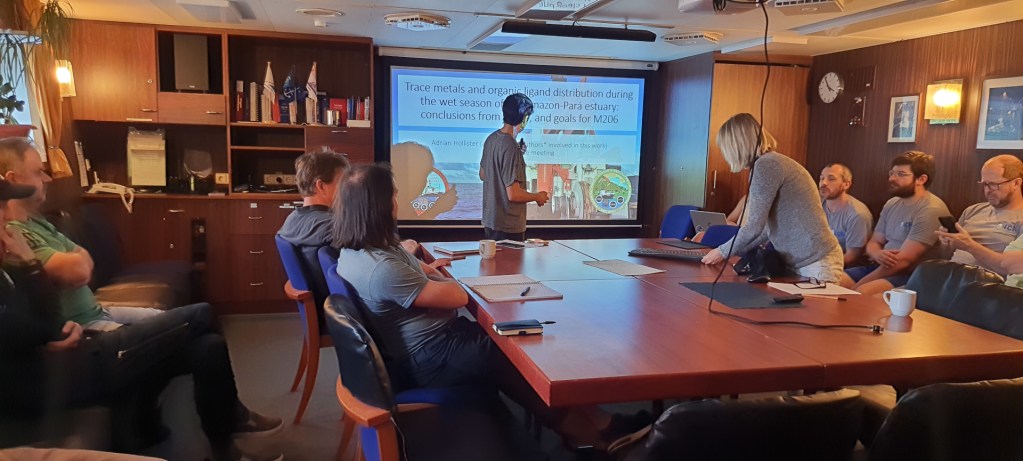
The Chief Scientists gave a presentation to the crew on what we have been doing, with a look at some preliminary results. Meanwhile, individual groups gave their own presentations to us all, and these were much appreciated by everyone.
Os comissários colocaram uma linda árvore de Natal no refeitório. Tivemos uma comida e um vinho agradáveis ontem (24) e começamos o dia hoje com ovos Benedict, que deram um bom impulso ao Dia de Natal.
The table tennis championship, open to both crew and scientists, is rapidly coming to a head, although every time I go down to see it, I miss it. Perhaps someone will get me some photos??
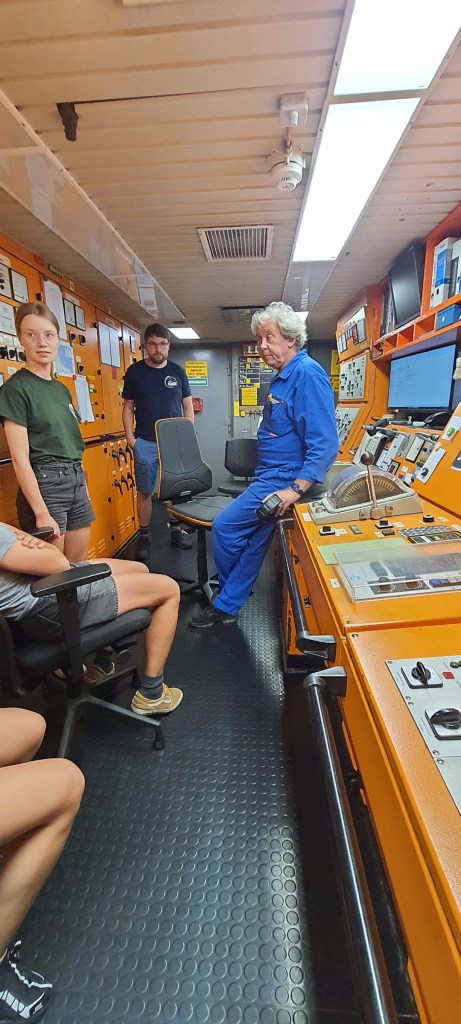
We had a great tour of the engine room(s) by the Chief Engineer Valker Hartig, which has been compiled into a two-minute Instagram video.
I had some very annoying jaw pain which the wonderful Dr Joanna Tomaschewski dealt with efficiently and effectively.
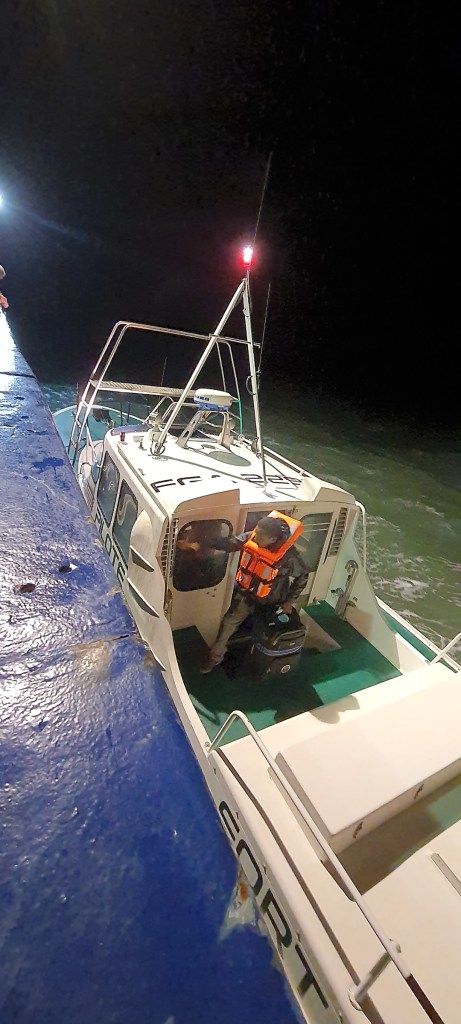
We exchanged a member of the crew at night while standing off some way from the land. It may not be uncommon for the crew, but for most of us it was an interesting exercise in waters that were a little choppy, and I’m pleased to report that the exercise was completed safely and successfully.
Two new young scientist interviews were added to the website – Neele Sander and Elias Lilie – many thanks for this.
At the end of the recent days of lengthy and productive sampling runs, we had an impromptu karaoke evening encouraged by Chief Engineer Volker, which was great fun.
Acho que é isso. Se eu tiver esquecido algo, espero ser perdoado. Preciso ir agora e ver o que está na programação de trabalho para hoje. Andrea, sem dúvida, preencherá o panorama em sua atualização diária (Instagram).
Abaixo estão algumas fotos (exceto do campeonato de tênis de mesa) que espero sejam autoexplicativas.
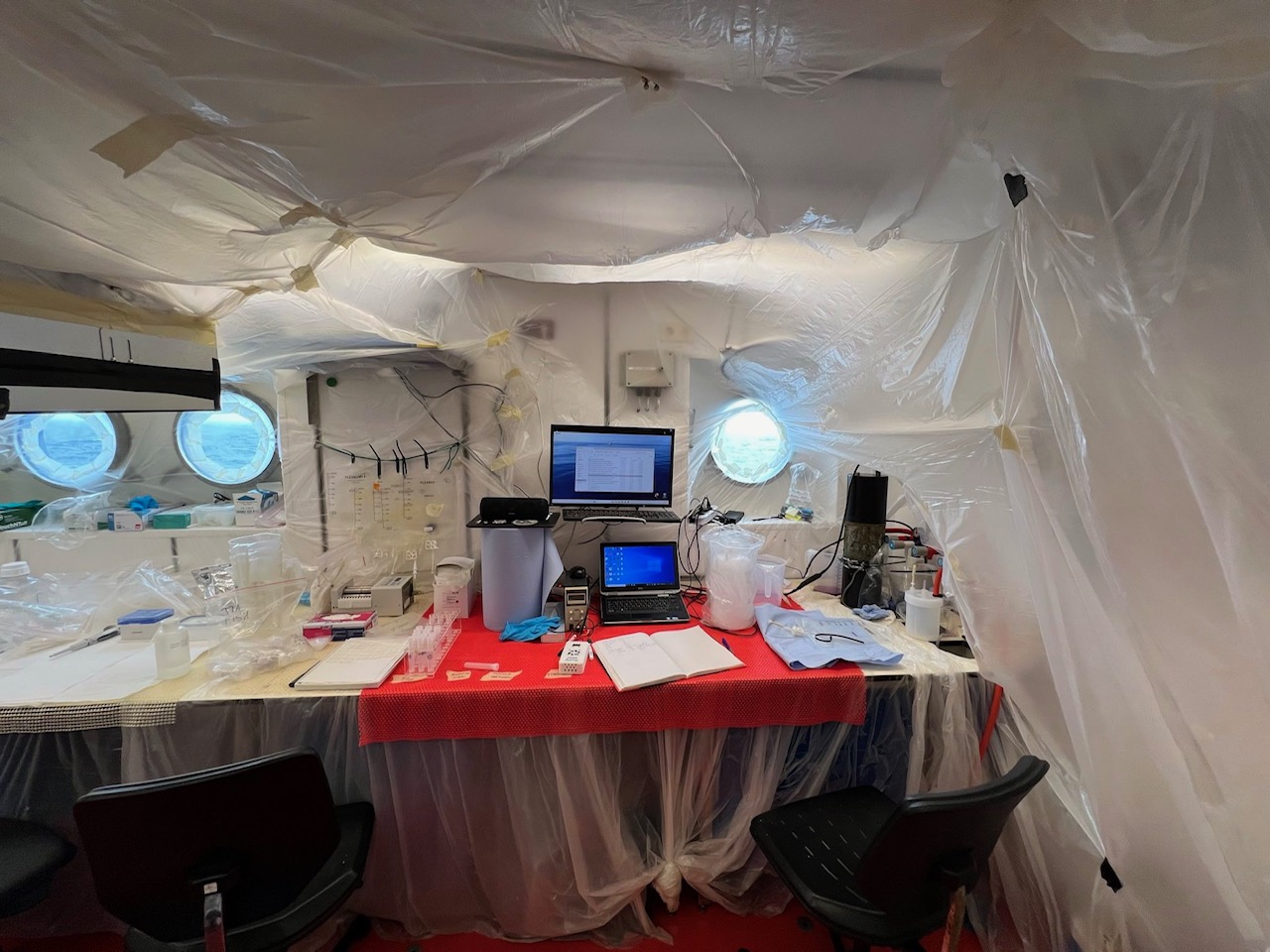
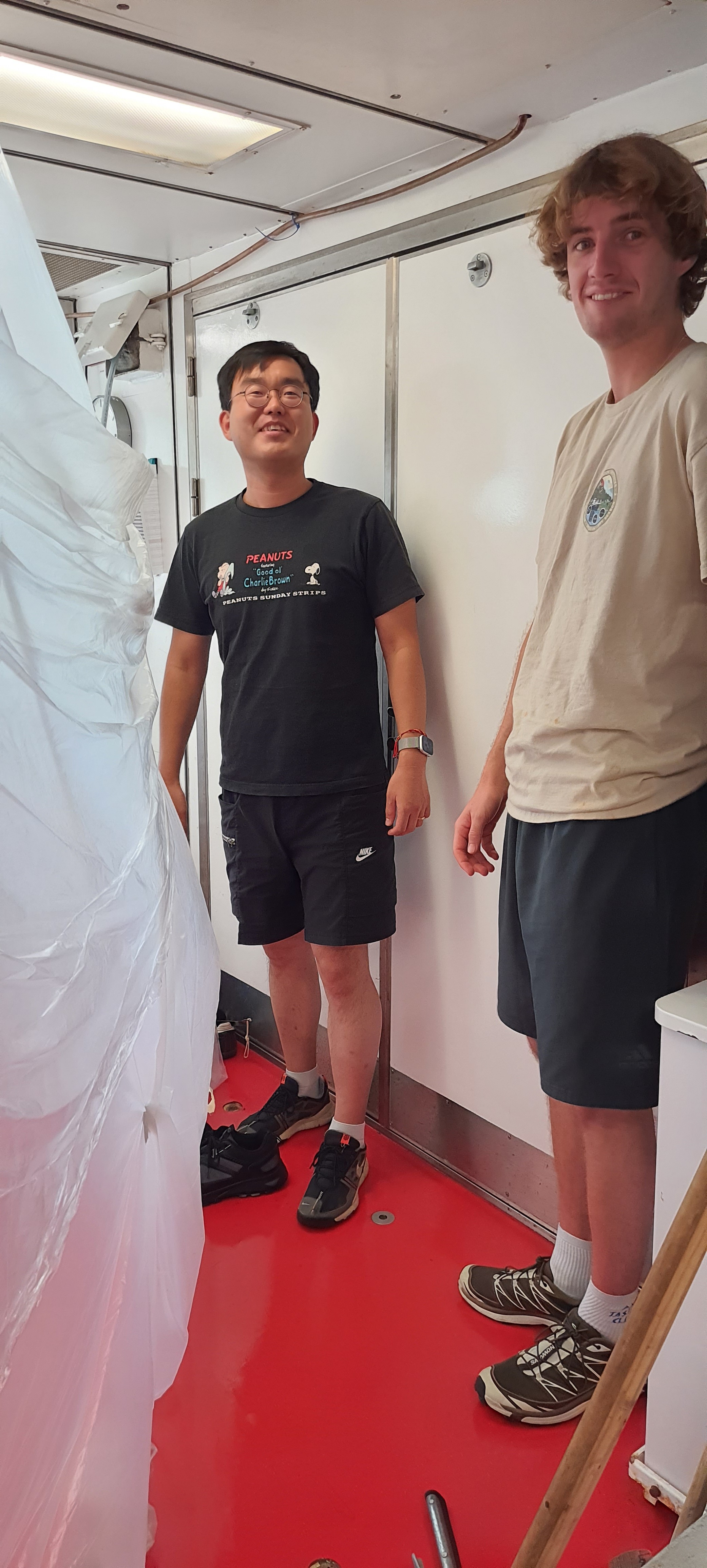
Temos hoje algumas fotos incríveis da bolha limpa. É assim chamada porque é uma “bolha” com ar condicionado ou filtrado criada dentro de outra sala, selando o espaço de trabalho para evitar qualquer coisa que possa contaminar as amostras de água coletadas do CTD de metais traço (limpo) (TMR) e do tow-fish. A roseta e os frascos de amostra que ela utiliza, juntamente com os procedimentos de manuseio do TMR supervisionados por Nico Fröhberg, são projetados para evitar qualquer contaminação no momento da amostragem.
Qualquer pessoa que entrar na bolha limpa também deve estar livre de contaminantes e, portanto, deve estar vestida adequadamente com roupas de proteção. No M206, a operação da bolha limpa é gerenciada por Kechen Zhu, auxiliado por Albert Firus, Laurenz van Bonn e Gwendolyn Treguer.
Conversei com Kechen hoje, e ele me disse que a operação da bolha estava indo muito bem e funcionou sem problemas durante toda a viagem até agora. Perguntei a ele sobre como o ar é circulado ou filtrado na bolha, e ele me disse que ele é trazido para a bolha por uma entrada no topo, e que o ar filtrado desce e escapa por baixo da saia da bolha.
A equipe está trabalhando arduamente, e mesmo quando não há amostragem de CTD, o tow-fish está sempre em uma estação, juntamente com a bomba usada por David para sua amostragem de rádio (mais sobre isso mais tarde). Após a filtração, a água é alocada para as outras equipes conforme necessário, e Kechen também pega algumas para suas próprias análises.
As fotos ilustram que trabalhar dentro da bolha tem suas próprias peculiaridades. Na imagem, vemos Gwendolyn e Albert trabalhando. Logo fora da bolha estão Kechen (esquerda) e Laurenz. Do lado de fora, Albert e Kechen trabalham na preparação do tow-fish.
Agradecimentos especiais a Kechen pela entrevista e a Gwendolyn e Albert pelas fotos!


Today I am joined by Elias Lilie, who talks to me about why he chose his career path, and what he has been doing aboard the RV Meteor. Thanks Elias!
1. …that the oceans have holes and bumps in them?
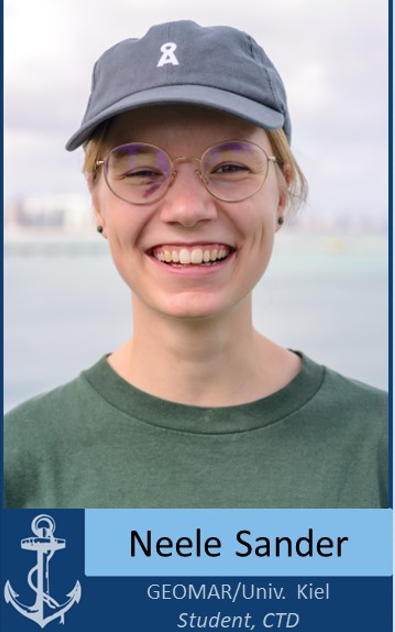
Neele Sander recently explained more to me after she had presented some of her initial observations to her colleagues aboard the RV Meteor.
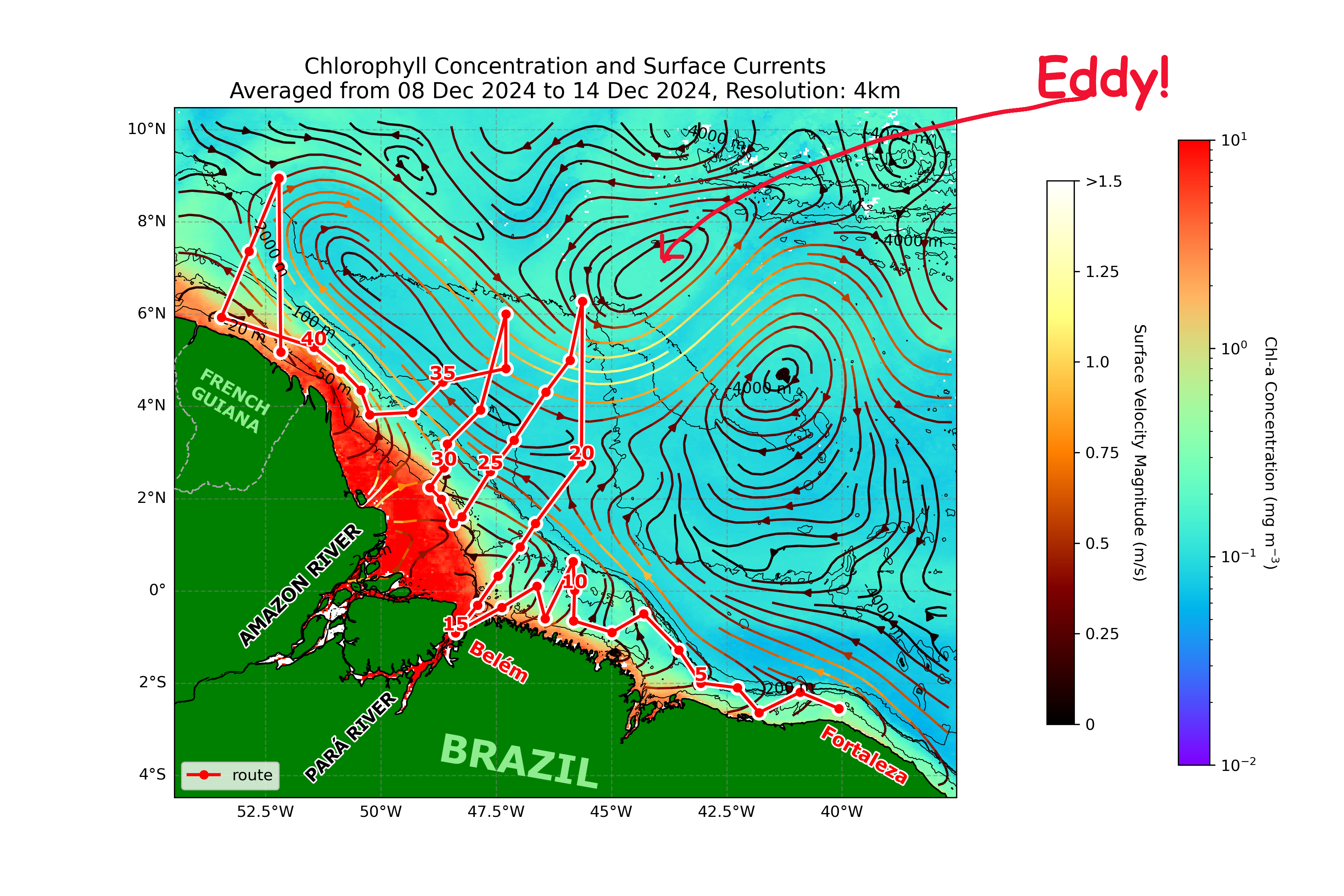
The oceans are in constant movement, and the patterns of movement are known as the currents. However, sometimes something interrupts the general flow of the currents, and the water begins to circulate in an eddy that can be very large indeed.
In her recent work for M206 Amazon-Geotraces 2, Neele observed one such eddy, which can be seen in the satellite image (right). She told me that it measured around 100km across and that, in the middle, it formed a hole (okay, a ‘depression’, of around 30cm!). The movement of the eddy where she made the observation is circular, in a counter-clockwise, or ‘anti-cyclonic’ movement; but in the southern of half of the planet it would move around the other way – clockwise, or in a cyclonic movement. She also told me that some eddies can produce a rise in the water level so that it is higher than the surrounding sea – for me, that’s definitely a ‘bump’ in the ocean.
So, next time you’re looking across the sea, remember that it’s not all just one big flat surface – it has bumps and holes in it too!
2. …that the amount of river water entering the oceans is equivalent to 1,200,000,000 1-litre bottles of water every second?
If you prefer, this is 1,200,000,000 x 31,536,000 every year, which is… a lot! The Amazon makes up a big percentage of this, and it also carries billions of tons of nutrient-rich sediment into the ocean. That’s why the Amazon-Geotraces programme is putting together as much information as possible about how river water mixes with the sea water and how it is transported around the oceans.
3. …that the oceans store an immense amount of carbon and are a vital part of our carbon cycle?
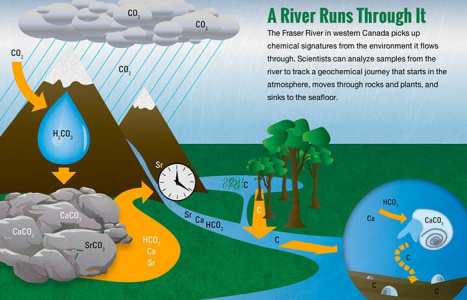
The oceans are carbon reservoirs or ‘sinks’ that help maintain the balance of the planetary carbon cycle. Carbon is both a building block for all life, and a key part of our climate. There is a lot of important work being done to understand what happens to dissolved organic matter (DOM) and the carbon it contains, that flows into the sea from rivers and other areas like mangroves.
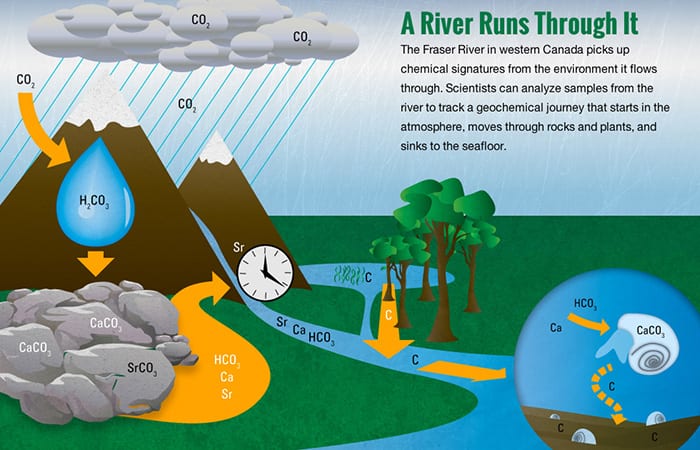
Michael Seidel, one of the scientists on the M206 Amazon-Geotraces programme, explained to me that the world’s oceans absorb and store 25% or more of our carbon emissions, and with existing carbon stores under threat from deforestation and the use of fossil fuels (forests, coal and oil deposits are are carbon sinks too), we must urgently understand what the impact of the changes will be on the ocean.
Thanks to Neele and Michael!
Now, can you put the other rivers below in the correct order for the amount of water they discharge into the oceans?

Check your answers on wikipedia or on our site here.
Don’t forget to have a look at the other resources available on our Young Learners Page