The Porewater Paradox

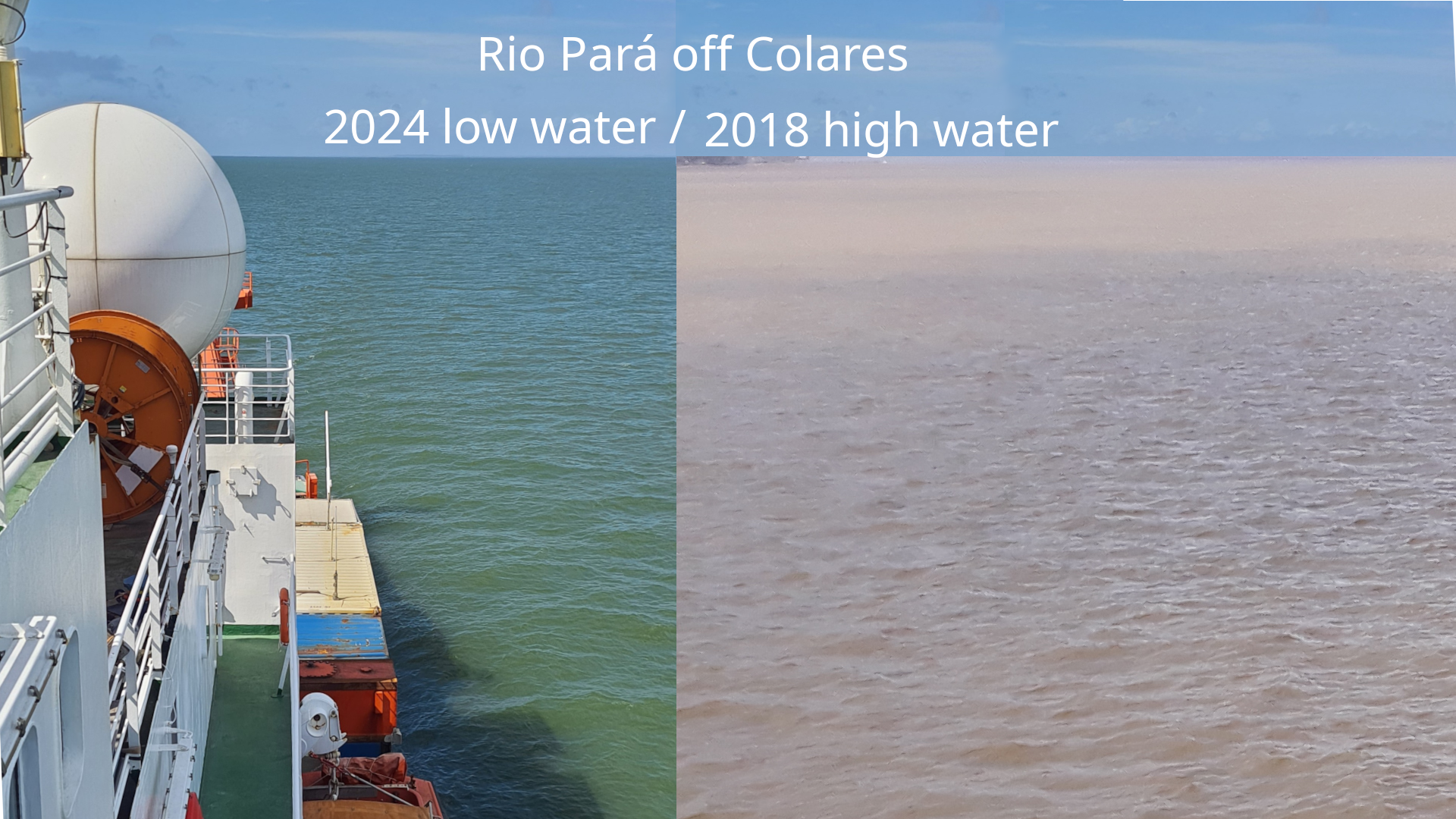
Pará River comparison showing sediment-heavy, brown water in 2018 and current plankton-rich water.

Since conducting my PhD research on the Amazon and Pará River estuary in the wet season, the river mouth, together with the mangrove belt to the south, has been an area of special interest for me. I recently participated in the land-based PROBRAL campaign to collect water from the mangroves and smaller rivers such as the Caeté (see Mud and Mosquitoes).

M206 will add to the results gleaned from research on previous wet-season cruises (M147 in 2018, and M174 in 2021) by gathering a much-needed dataset for the dry season, since the Amazon and Pará River flows vary dramatically in volume (from 120 000 m3/s to 240 000 m3/s for the Amazon; 38 000 m3/s to 9 000 m3/s for the Pará). We have not yet entered the Amazon River estuary itself on M206, but we see is a striking visual difference on the Pará today compared to its appearance in the 2018 wet season (April/May).

In addition, we have made a more extensive transect along the mangrove region in cruise M206 compared to M147 and M174, in some cases running parallel to the region where the PROBRAL samples were collected. The paradoxically higher salinity near the coast in the mangrove-belt region of M206 (as reported in earlier blogs) may reflect what we observed in the mangrove porewater collected during PROBRAL 2-3 weeks ago, which was sometimes much higher than seawater (up to 65 PSU).
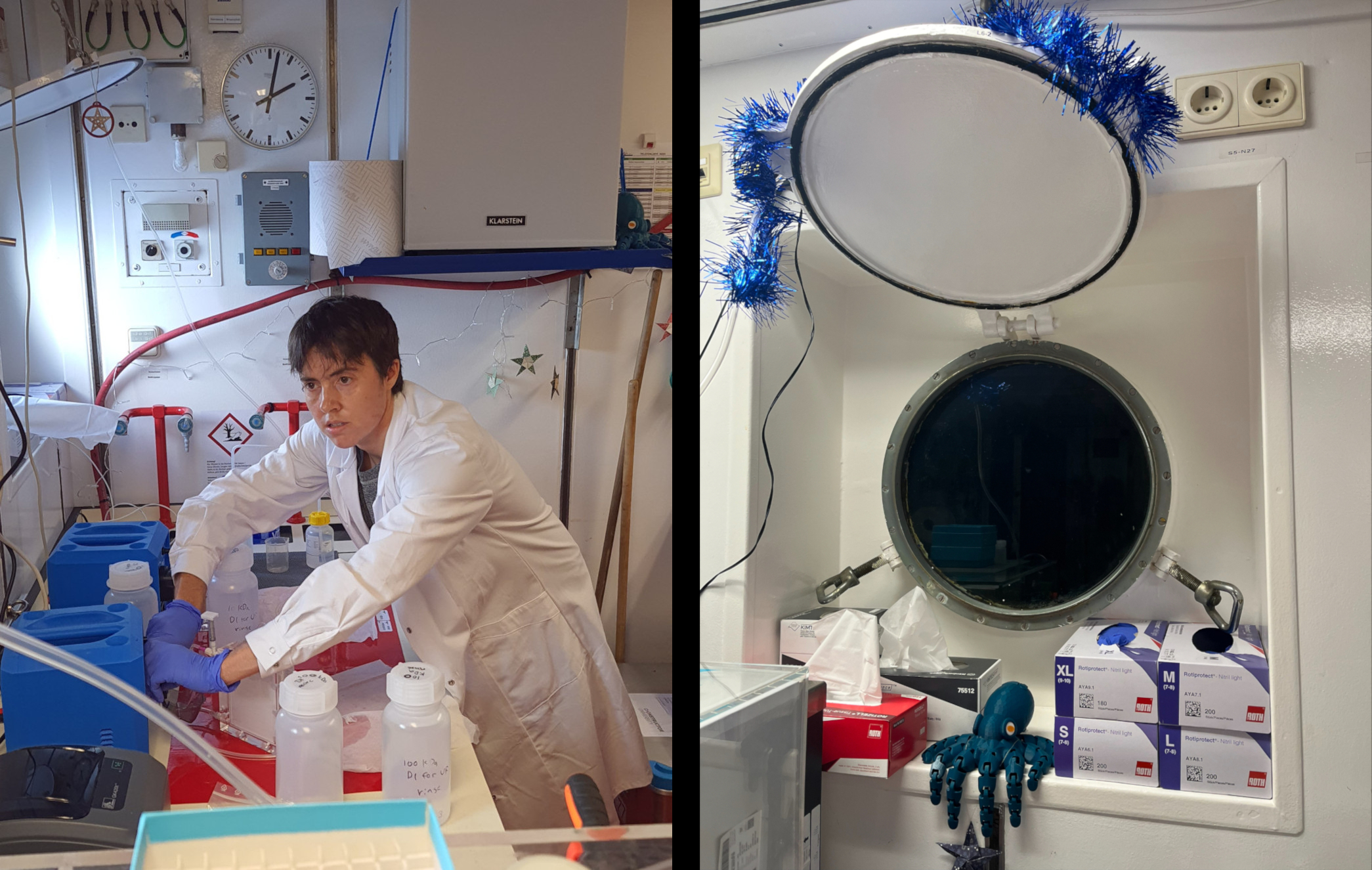
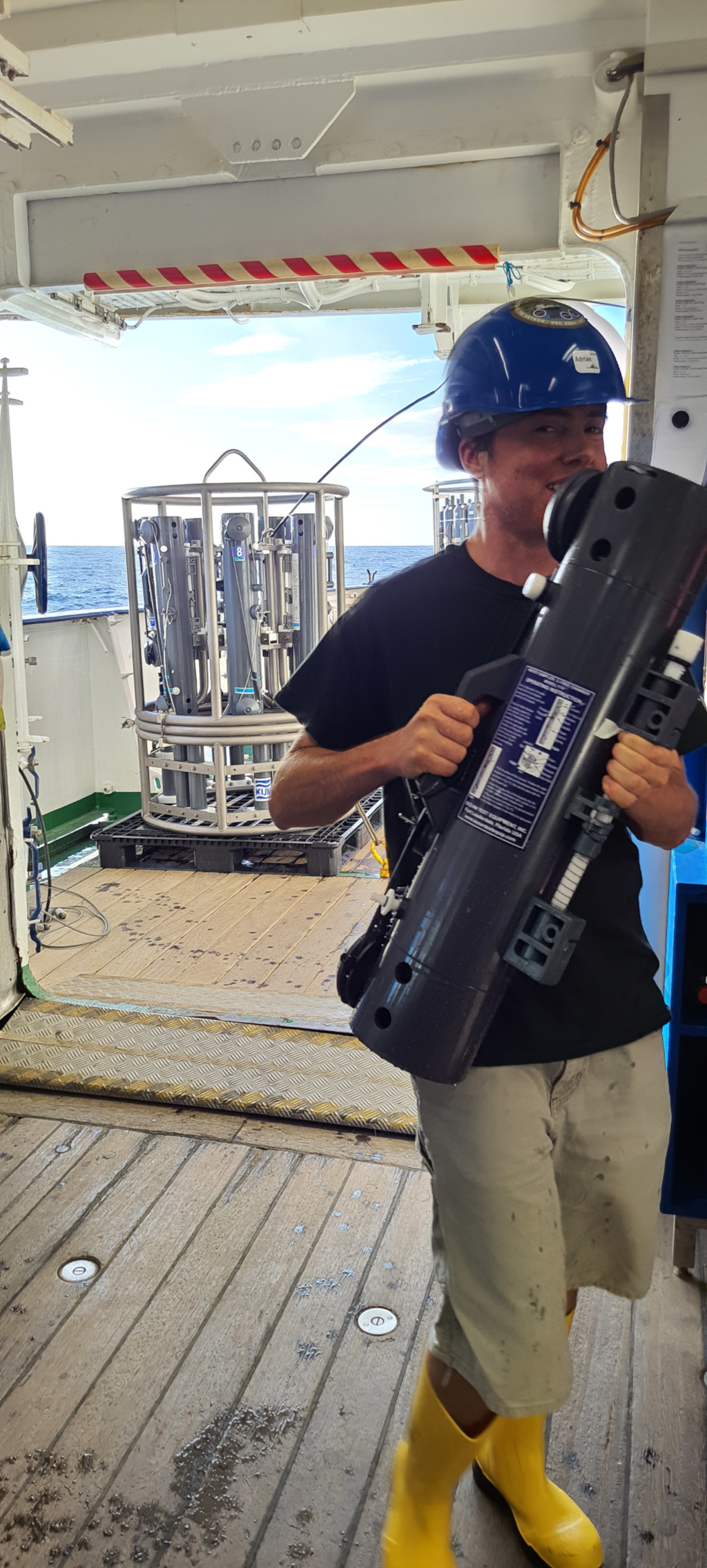
Collecting water samples from the Trace Metal CTD (in background)

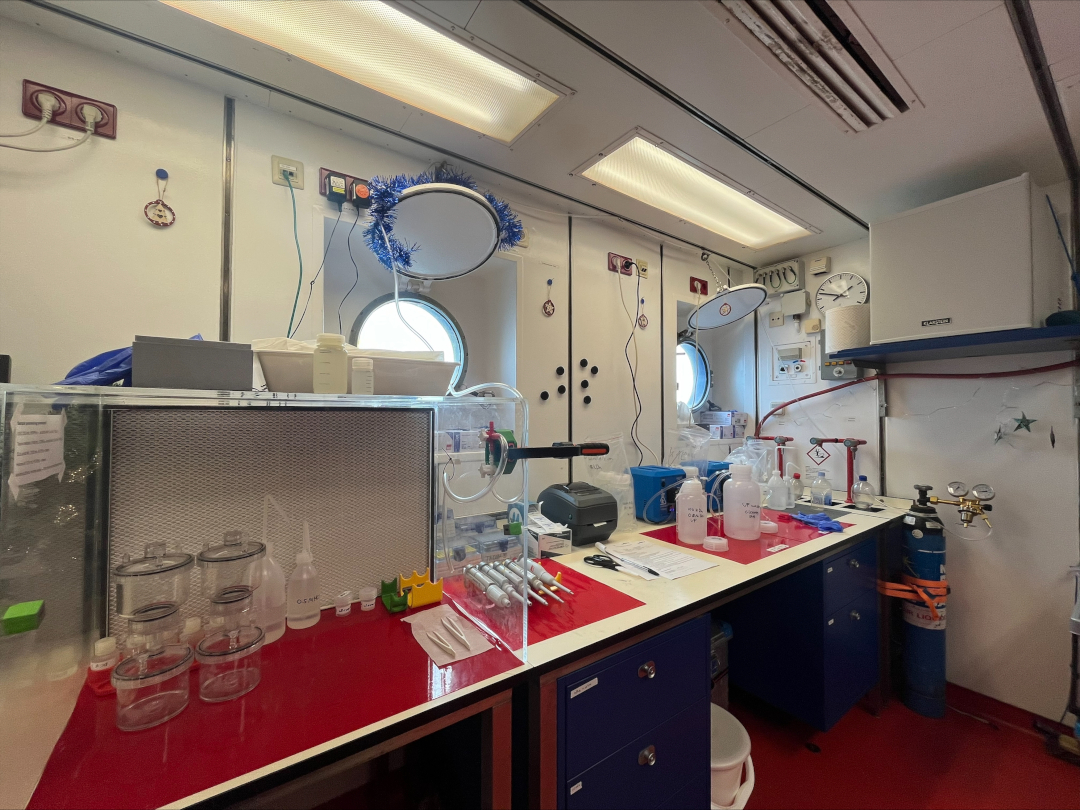
Our previous research on the Amazon-Pará estuary has focused on trace metals (Fe, Co, Ni, Cu, Zn, Cd, Pb) and metal-organic matter interaction. Metals such as Fe, Co, Ni and Zn are heavily complexed to organic matter (a.k.a. organic ligands), which can influence their solubility, toxicity, and bioavailability. In addition, metals and organic matter come in different sizes, which influences how much they remain in the water column and eventually reach the ocean during estuary mixing. On the ship lab on M206 as well as PROBRAL, my own work has focused primarily on filtering and processing seawater samples for trace metals, Cu and Ni-binding organic ligands, humic substances (a major fraction of terrestrially-derived organic ligands) and dissolved organic carbon. In addition to the samples that are already filtered by the team in the clean bubble, we also do further filtering at different pore sizes..

This data, combined with the bottom-water and MUC data, will provide a clearer picture of the processes taking place throughout the water column and salinity gradient during estuary mixing.
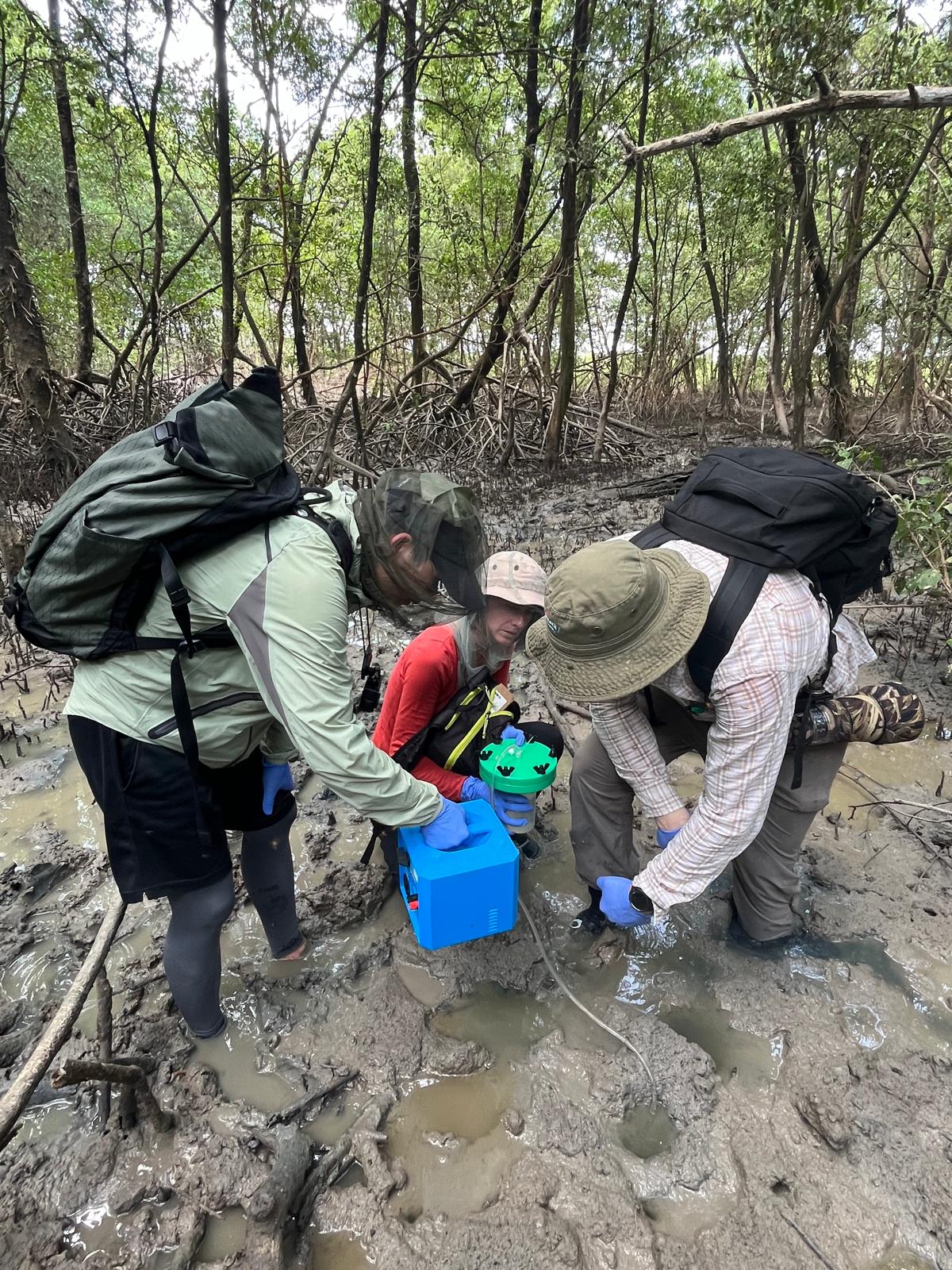
LAMA e MOSQUITOS

Filtrando água diretamente de uma toca de caranguejo nos manguezais.

Nunca digam que os cientistas têm medo de sujar as mãos. Seja caminhando com água até os joelhos na lama ou mergulhando até a cintura em águas turvas, tudo faz parte do trabalho diário da dedicada equipe de cientistas do projeto PROBRAL. Reunindo pesquisadores da Alemanha e do Brasil (Constructor University Bremen, GEOMAR, Universidade de Oldenburg, Universidade Federal do Pará e Universidade Estadual do Norte Fluminense), eles se uniram este mês para analisar a água de manguezais, rios e estuários no norte do Brasil.

Fazendo química juntos

Metais como cobre e ferro estão naturalmente presentes nos oceanos, rios e estuários e podem atuar tanto como nutrientes quanto como toxinas para os organismos vivos. O comportamento desses metais é influenciado pelo tamanho (por exemplo, partículas grandes ou dissolvidas) e por outros componentes da química da água, como salinidade, pH (quão ácida é a água) e a presença de matéria orgânica dissolvida. Rios e estuários frequentemente são ricos em matéria orgânica (à base de carbono) proveniente de plantas e solo. A matéria orgânica dissolvida frequentemente se liga a íons metálicos (quando isso acontece, é chamado de “ligante”), e isso poderia influenciar sua biodisponibilidade (como eles são absorvidos pelos organismos vivos).

Nós amamos os manguezais

Uma garça permanece imóvel, em busca de peixes.

Os manguezais são uma rica fonte de matéria orgânica dissolvida,nutrientes e alguns metais. A equipe coletou água intersticial (água que se acumula no solo nos pequenos espaços entre as partículas) em manguezais degradados e saudáveis. Coletamos amostras cavando buracos e recolhendo a água que os preenchia. Mesmo na maré baixa, tivemos que atravessar lama pesada, muitas vezes afundando até os joelhos. Vimos muitos caranguejos pequenos, pássaros e até um macaco!

Também visitamos diversos riachos e rios, especialmente o rio Caeté, que atravessa Bragança e o norte do Brasil, no estado do Pará. O Caeté é influenciado por marés diárias (duas vezes ao dia), resultando em salinidade que muda ao longo do dia nas regiões próximas à costa. Fizemos coletas em vários pontos ao longo de todo o gradiente de salinidade, desde as águas costeiras (salinidade 35, como a água do mar), até águas estuarinas salobras e águas doces fluviais (salinidade 0). Realizamos as coletas de barco na Baía do Caeté e em terra nos rios e riachos do interior.

Contribuindo para o M206

The PROBRAL campaign will generate lots of great data that will contribute to the M206 cruise, also examining trace metals and organic matter in the Amazon and Pará River estuary, as well as near coastal mangroves to the south-east.